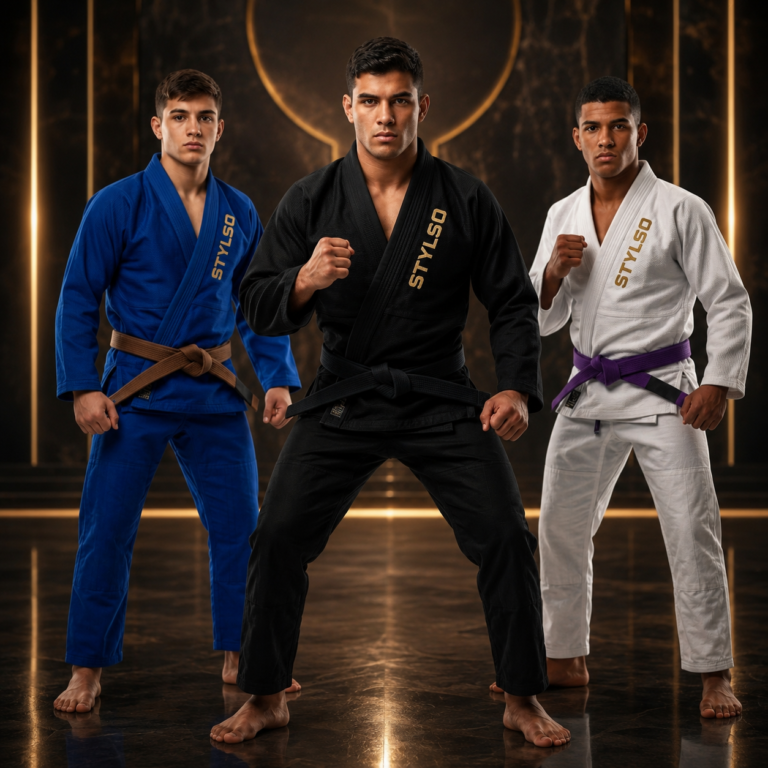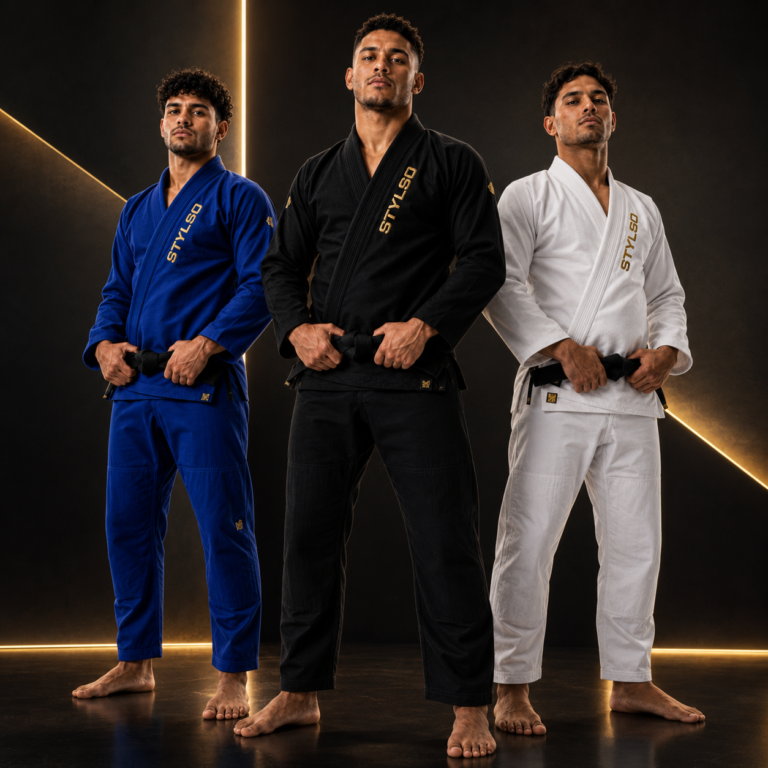
The best BJJ gi for competition is IBJJF-approved, available in white, blue, or black, with a firm collar and a close fit that doesn’t restrict your movement. A pearl weave or lightweight gi works for most tournaments. Check current options on Amazon and confirm your measurements against our sizing chart below.
- IBJJF allows only white, blue, or black — confirm before you register
- Pearl weave is the competition standard: durable, grip-resistant, and mid-weight
- Buy pre-shrunk or pre-wash once — a gi that binds during warm-ups will slow you on the mat
You show up to your first tournament. Everything feels right. Then the ref runs the gi check.
The ref tugs your sleeve. Measures your collar. Checks the color. If anything’s off — you’re sitting out. That gi you’ve trained in for six months? Doesn’t matter. Wrong fit or wrong weave and you’re watching from the bleachers.
Here’s what most beginners don’t find out until it’s too late: not every BJJ gi is competition-legal. And the most expensive gi in your gym might be the one that fails.
Stylso — BJJ gis and combat-sports apparel — designs our gis to meet competition specs from day one. Here’s what you need to know before you buy.
What Makes a Gi Competition-Legal?
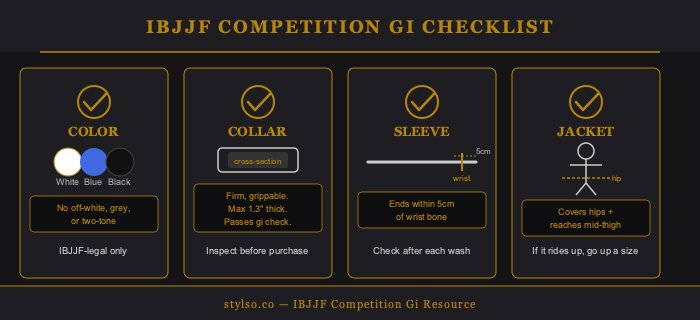
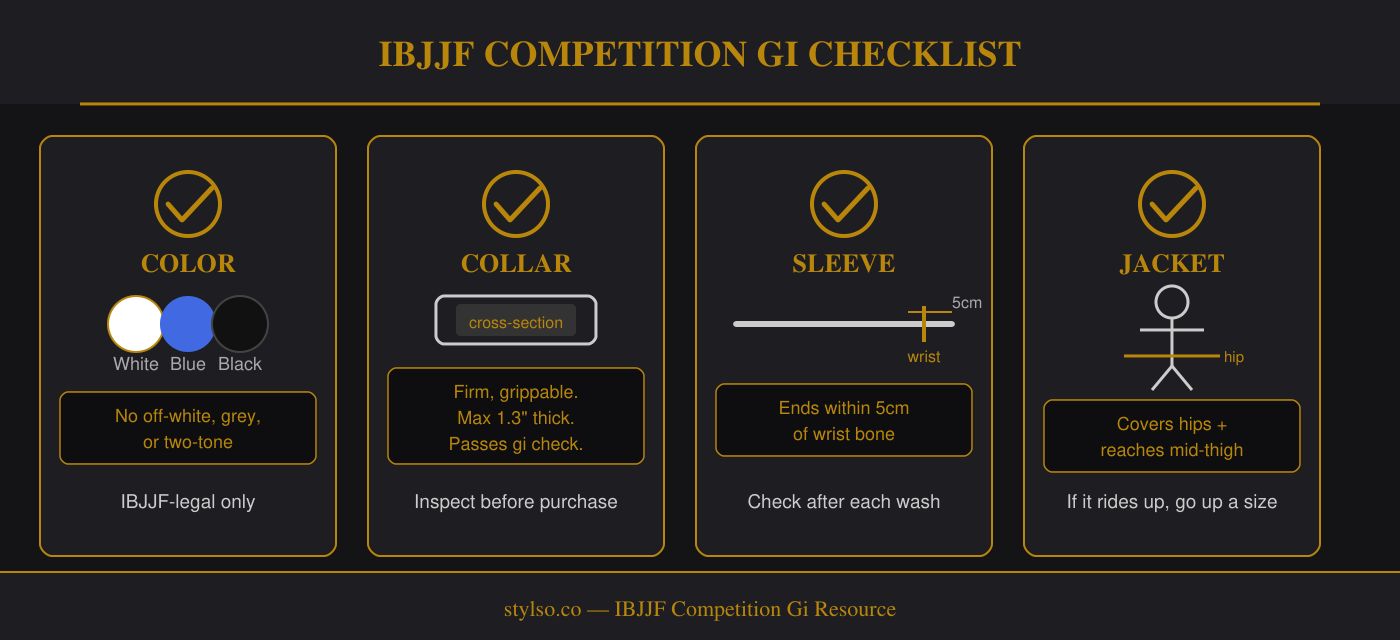
Most tournaments follow IBJJF gi requirements. The checklist is short:
- Color: White, blue, or black. No mixed panels, no patterns. (See our full IBJJF legal gi colors guide.)
- Collar: Must be firm — it should feel stiff when you squeeze it. Floppy collars fail the two-finger check.
- Sleeve length: Should end within 5 cm (about 2 inches) of your wrist bone when your arm is extended.
- Jacket length: Must cover your hips and reach mid-thigh with arms raised.
- Pants length: Should end within 5 cm of the ankle bone.
That’s it. Hit those marks and you’re cleared for most open and IBJJF events.
Pearl Weave vs. Lightweight: Which Wins for Competition?
Most competition gis come in two main weave types. Here’s the honest breakdown — no hype, just what matters on the mat:
| Weave Type | Best For | Weight | Durability | Shop |
|---|---|---|---|---|
| Pearl Weave | Most tournaments, regular training | Medium (~450–550 gsm) | Excellent — holds up to hard rolls | Shop on Amazon |
| Lightweight | Summer comps, hot gyms, cutting weight | Light (~350–420 gsm) | Good — less forgiving with rough grips | Shop on Amazon |
| Double Weave | Grip-heavy training, cold gyms | Heavy (~650+ gsm) | Very high — but you’ll run hot | Shop on Amazon |
Pearl weave wins for most competitors. It balances durability, grip resistance, and temperature — which is why it’s the default at most tournaments worldwide. If you’re cutting to make weight or competing in summer heat, lightweight is the smarter call. Check the current price on Amazon before you commit.
How Should a Competition Gi Fit?
Tighter than you think — but not uncomfortable. A baggy gi gives your opponent free fabric to grab. A close fit takes away those grips and lets you move faster.
The fit rule: arms at your sides, the jacket hem should reach your hip. Sleeves should fall at or just above the wrist. If you can pull the shoulder of the gi more than three or four inches away from your shoulder joint, size down.
Always wash your gi before competition. Most cotton gis shrink 3–5% on the first wash. A gi that fits perfectly at the store might fail the sleeve-length check after laundry day. Wash it once, let it dry, then re-check the fit.
Not sure of your size? Our guide to measuring for a BJJ gi walks you through chest, height, and reach — so you buy right the first time.
Sizing Quick Reference
| Size | Height | Weight | Fit Note |
|---|---|---|---|
| A1 | 5’3″–5’7″ | 120–150 lbs | Slim or athletic build |
| A2 | 5’6″–5’10” | 150–180 lbs | Most common; standard build |
| A3 | 5’9″–6’1″ | 180–220 lbs | Taller or stockier frames |
| A4 | 6’0″–6’3″ | 220–250 lbs | Big frames; double-check sleeve length |
Between sizes? Go smaller if grip advantage is your priority. Not sure between A2 and A3? Our A2 vs A3 guide breaks down the key differences before you order.
The Real Lesson About Collar Stiffness
Judo competitors figured this out decades ago: collar firmness isn’t just a rulebook checkbox — it’s a weapon.
When someone grabs your collar hard in a match, a stiff collar holds its shape. A soft collar bends when someone grabs it, which means your opponent gets a deeper, more secure grip for free. By round three, grip fatigue is real. A firm collar makes every grab harder for them and slower to set.
When you’re shopping, don’t judge by looks alone. Feel the collar. It should feel almost stiff when new — like dense foam or heavy canvas. After the first wash it softens slightly but keeps its shape. That’s the sweet spot for competition.
It’s also worth checking our best lightweight BJJ gi guide if you compete frequently and want a backup that won’t drag you down in the heat.
Our Honest Pick for Competition
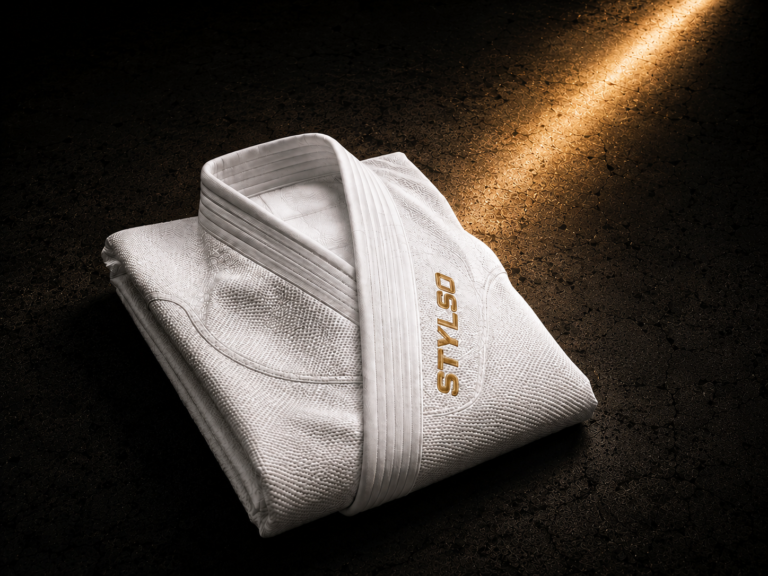
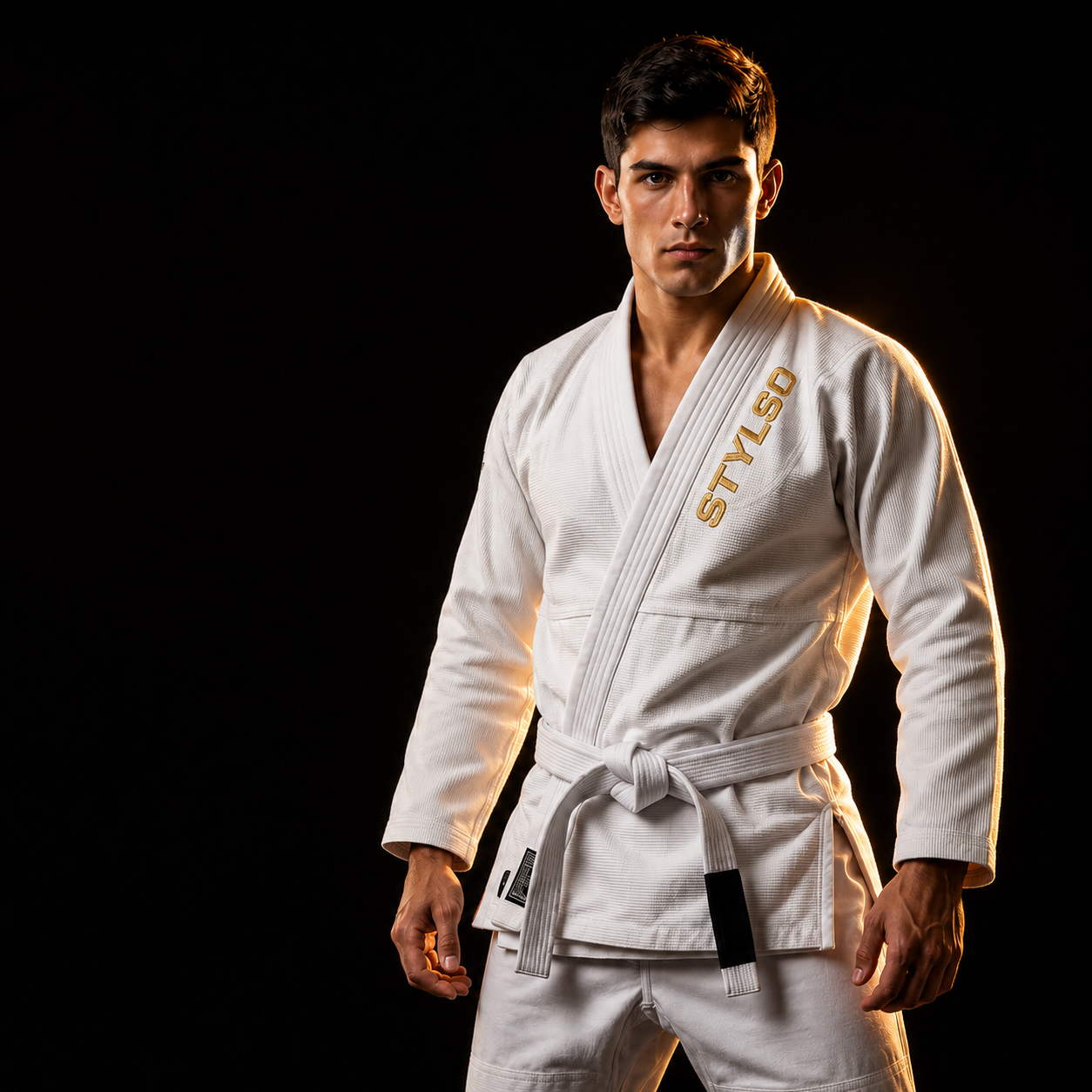
The Stylso men’s gi is pearl weave, pre-shrunk, and built to the specs that IBJJF inspectors check: firm collar, clean white colorway, correct sleeve and jacket lengths. It’s not the flashiest gi in the room. It’s the one that passes the check and doesn’t hand your opponent free grips.
Check the current price on Amazon and confirm your size against the chart above.
Free: Competition Gi Prep Checklist
A one-page printable — 7 things to check before your first tournament: gi check items, pre-wash rules, color confirmation, sizing tips, and a comp-day packing list. Instant download.
Frequently Asked Questions
Do I need a special gi for BJJ competition?
Not a “special” gi — just an IBJJF-compliant one. That means white, blue, or black; a firm collar; and correct sleeve and jacket lengths. Most quality pearl weave gis pass. Always check your tournament’s ruleset before buying.
Is pearl weave better than gold weave for competition?
Pearl weave is the more popular competition choice. It’s lighter than gold weave, tough enough for hard rolls, and common enough that most comp gis are made in it. Gold weave is stiffer and heavier — great for daily training, less ideal for tournament day.
What color gi can I wear at IBJJF tournaments?
White, blue, or black only. No mixed color panels, no patterned gis. Top and pants must match. For a full breakdown of what passes, see our IBJJF legal gi colors guide.
How tight should a competition gi be?
Closer than your regular training gi. The sleeves should fall at or just above the wrist. The jacket hem should hit at the hip. If you can pull the shoulder seam several inches away from your shoulder, size down. A snug gi is harder for opponents to grab.
Should I wash my gi before competition?
Yes — always. Wash it at least once before your event. Most cotton gis shrink on the first wash. Washing locks in the final fit so there are no surprises on comp day. It also softens the collar and makes the jacket more comfortable to move in.
Can kids use a gi for BJJ competition?
Yes. Youth competitors use kids’ gis that meet the same IBJJF color and fit requirements. Check the kids’ size chart carefully — these gis run small and should fit snug, not baggy.