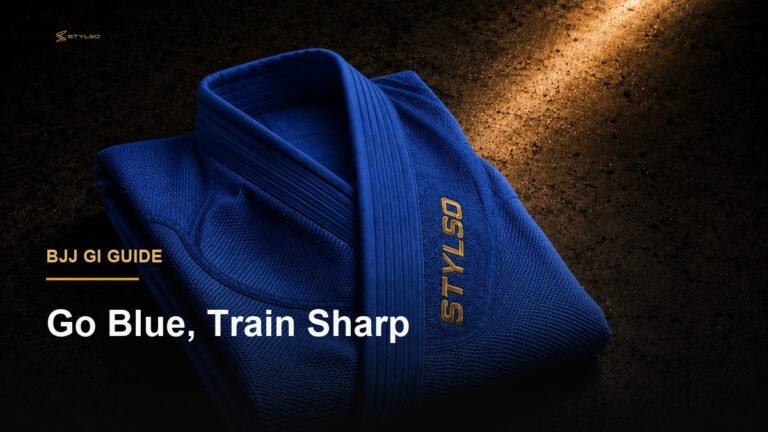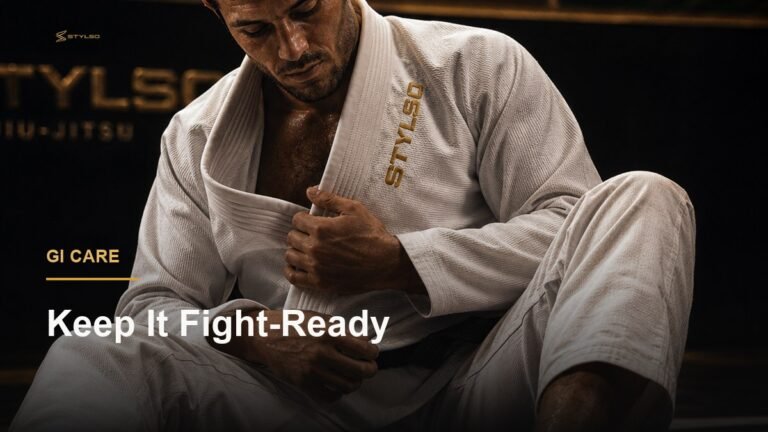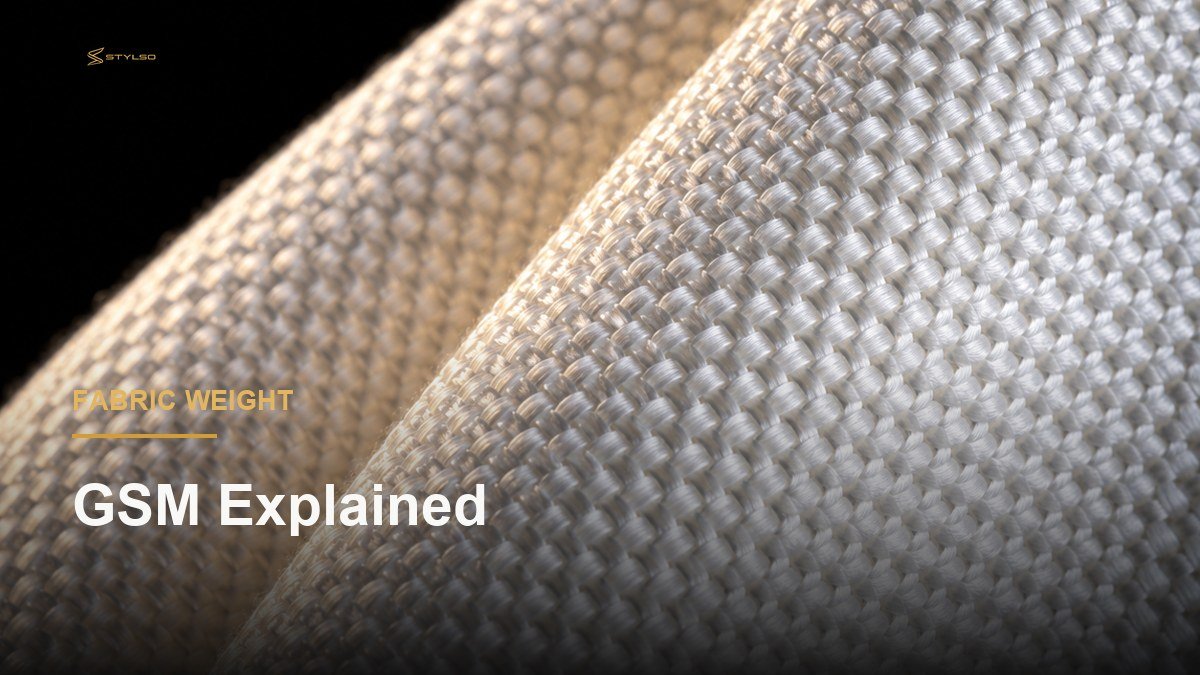
GSM stands for grams per square meter — it measures how dense a gi’s fabric is. Under 450 GSM is lightweight (cooler, competition-friendly). 450–550 GSM is middleweight (year-round use). 550+ GSM is heavyweight (durable, grip-resistant). IBJJF doesn’t regulate GSM — they do a physical check at events.
Key Takeaways
- GSM measures fabric density — lower = lighter and cooler; higher = heavier and more durable
- The 450–550 GSM middleweight range works for most training environments year-round
- Weave type changes how GSM feels — pearl weave at 450 GSM feels lighter than double weave at the same number
You’re six minutes into a hard round. The gym has no AC. Your gi is soaked through, your neck feels like a wet wool scarf is wrapped around it, and you tap — not to a choke. You tap because you’re being cooked alive.
Here’s what nobody tells you: a lot of that is the gi. Specifically, how heavy it is. Most people choose a gi without understanding what the numbers on the product page actually mean.
What GSM Actually Means
GSM stands for grams per square meter. It’s the same measurement used for T-shirts, towels, and denim — a standard way to describe how much fabric is packed into each unit of material.
In BJJ, GSM applies to the gi jacket fabric — the weave. The pants are almost always a different, lighter material. So when a product page says “550 GSM,” that’s the top.
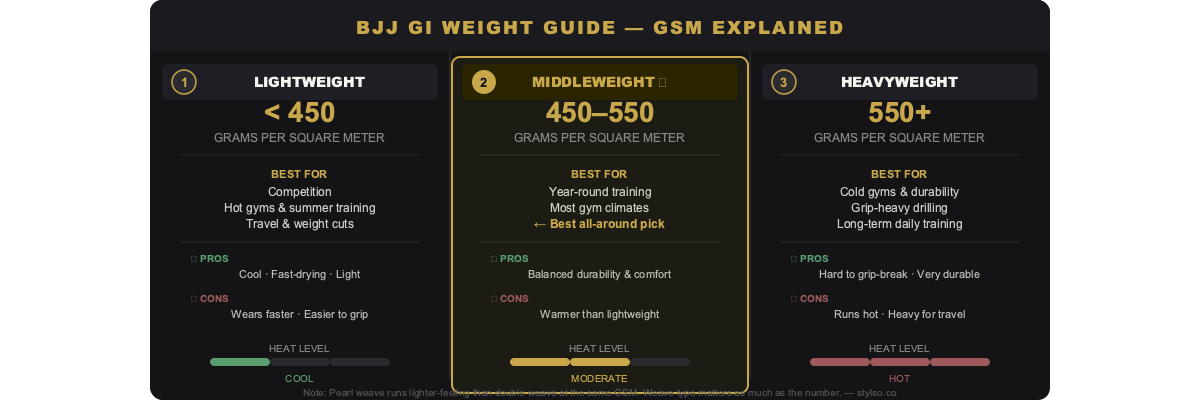
Three ranges matter:
- Under 450 GSM — Lightweight: Cooler, easier to make weight, competition-friendly. You move faster but give up some durability and grip resistance.
- 450–550 GSM — Middleweight: The year-round sweet spot. Works in most gym climates and holds up to regular training.
- 550+ GSM — Heavyweight: Tough to grip-break and tough to rip. Great for drilling and hard rounds when durability matters more than staying cool.
| Weight Class | GSM Range | Best For | Pros | Cons |
|---|---|---|---|---|
| Lightweight | Under 450 | Competition, hot gyms, travel | Cool, fast-drying, comp-friendly | Wears faster under heavy use |
| Middleweight ★ | 450–550 | Everyday training, all-around use | Balanced durability & comfort | Warmer than lightweight |
| Heavyweight | 550+ | Cold gyms, durability focus | Hard to grip-break, very durable | Runs hot, heavy for travel |
Heavier GSM Doesn’t Mean Better Quality
This one trips up beginners. You see a high GSM number and assume better quality — more fabric, more protection, longer life. It feels logical.
It’s not that simple.
Durability comes from stitch quality and reinforcement at stress points: the collar, armpits, knees. A well-stitched 400 GSM gi with double-needle seams will outlast a poorly built 600 GSM one. Heavy doesn’t equal quality. What you’re paying for is the build, not the weight.
And the cost of going heavy? You roast. A 600 GSM gi traps heat, your heart rate climbs faster, your cardio fades sooner. You gas in rounds that have nothing to do with fitness — it’s the gear working against you.
How Weave Type Changes How GSM Feels
Two gis can share the same GSM number and feel completely different. Weave type changes how that weight sits on your body.
Pearl weave runs lighter-feeling than double weave at the same GSM. The interlocking pearl pattern spreads weight more evenly, so the gi drapes instead of stiffening. Double weave packs the density tighter — heavier and stiffer, even at a lower number on the tag.
A 500 GSM pearl weave won’t feel the same as a 500 GSM double weave. One moves with you. One fights back.
For the full breakdown on weave patterns — single, double, ripstop, and pearl — read Stylso’s guide to BJJ gi weave types.
GSM and Competition Rules
IBJJF rules don’t regulate GSM directly. No minimum, no maximum. What they do is a physical check at the event — a referee inspects your gi for construction, color, patches, and fit. The number on the tag doesn’t come up.
The practical sweet spot for competition is under 450 GSM — light enough to help with weight cuts, structured enough to pass a table check. Our guide to the best BJJ gi for competition covers exactly what passes and what doesn’t.
How GSM Affects Grip-Fighting (A Wrestling Lesson)
Heavier GSM gis tend to be harder to grip-break. More fabric density means more material to grab — which cuts both ways. Your grips are also harder to break off sleeves and lapel.
Here’s the cross-training angle: wrestlers who train in gi BJJ often prefer lighter fabric on purpose. It forces faster hand-fighting. You can’t rely on friction or bulk — you have to be precise. Some BJJ players train in a lightweight gi specifically to sharpen reaction time when grips don’t stick the usual way.
Try it for a few rounds. Your hand speed adapts. Then go back to your regular gi — your grips will feel more deliberate and controlled.
Shrinkage: What to Expect After Washing
Pearl weave shrinks slightly less than single weave under a hot wash. The woven structure has less room to contract. Pre-shrunk gis take this further — the factory does the work before the gi ships, so the size you order is close to the size you’ll train in.
Between sizes on the A-series? Size up. The extra room helps with mobility and keeps the gi comfortable during hard rounds. Read our BJJ gi washing guide to protect the fabric and keep it true to size longer.
Which GSM Should You Buy?
Be honest about where and how you train.
- Hot gym or you run warm: Under 450 GSM. You’ll focus better when you’re not overheating by round three.
- Competing and need to make weight: Lightweight. Every gram counts on competition morning.
- Year-round training, one gi that does it all: 450–550 GSM middleweight — the right compromise for most people.
- Drilling heavy five days a week: Heavyweight. It’ll outlast lighter options under that volume.
- Buying for a kid who’s still growing: Lightweight or middleweight. Room to grow — not room to swim.
The Stylso mens gi is pearl weave, pre-shrunk, and IBJJF-approved — built for people who want the right fabric without reading a dissertation to choose one. Check the current price on Amazon.
Training with a younger athlete? The Stylso kids gi carries the same pearl weave construction, scaled for smaller frames.
Free: BJJ Gi GSM Cheat Sheet
Pick the right gi weight in 60 seconds — one page covering all three GSM ranges, pearl vs double weave, and a 5-point competition checklist. Get it instantly.
FAQ
What does GSM mean on a BJJ gi?
GSM stands for grams per square meter. It measures how dense the gi’s jacket fabric is. Higher GSM = heavier, denser fabric. Lower GSM = lighter and more breathable.
What GSM is best for BJJ competition?
Most competitors prefer under 450 GSM. Lighter fabric helps with weight cuts, moves more freely, and still passes IBJJF physical inspection — the rulebook doesn’t set a GSM minimum or maximum.
Is a heavier GSM gi harder to grip-break?
Yes. Denser fabric gives opponents more material to clamp onto. This cuts both ways — your grips are also harder to break off sleeves and lapel. Some coaches use lightweight gis in training specifically to develop faster, more precise hand-fighting.
Does pearl weave shrink less than single weave?
Yes, slightly. Pearl weave’s structure holds shape better under heat. Pre-shrunk gis — regardless of weave — shrink the least because the factory does most of the work before shipping.
Can I use a lightweight gi for everyday training?
Yes, but it’ll wear faster under five-day-a-week grinding. Lightweight gis are built for competition conditions. If longevity matters more than competition prep, a middleweight handles daily use better.
How do I pick a size if I’m between two on the Stylso A-series?
Size up. The extra room helps with mobility and keeps the gi comfortable during hard rounds without looking sloppy on the mat.