The fastest way to get better at BJJ is deliberate practice — not just more mat time. Pick one position each week, drill it with zero resistance until the movement is automatic, then add a live partner. Most grapplers skip step one entirely. That’s why they plateau for months while others seem to improve every week.
Six months in and you’re still getting tapped by the same people. You’re showing up. You’re putting in the rounds. So why isn’t it clicking? It’s not talent. It’s not your gym. Here’s what’s actually going on — and what to do about it.
Key takeaways:
- 10 perfect drilling reps outperform 60 minutes of unfocused rolling
- One position owned fully beats five techniques half-understood
- Wrestling and judo drills close the gaps BJJ class alone won’t
Why Most Grapplers Stop Improving
Here’s the honest truth: showing up isn’t a training plan. You can do three sessions a week for a year and barely improve if every session is just survival rolling with no deliberate focus. No specific goal, no feedback loop, no reflection — just hoping something sticks.
Top competitors train less than you think, but every session has a purpose. A focused 90 minutes beats a vague three hours every time. The difference isn’t talent. It’s what you do with the time.
A few habits change the trajectory fast. Here they are.
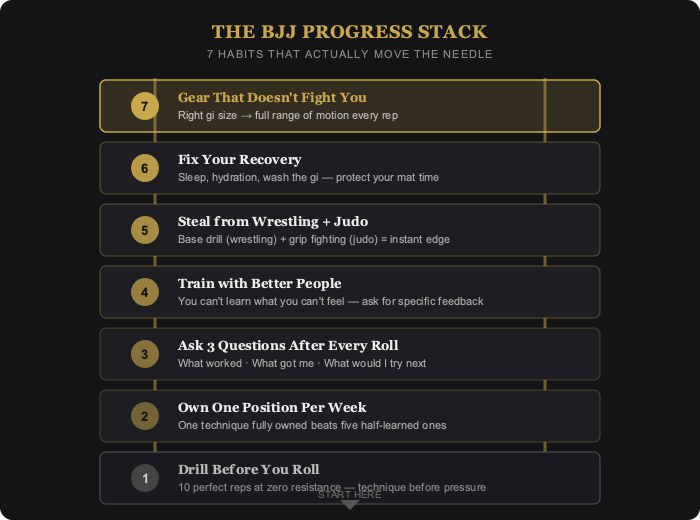
7 Habits That Actually Make You Better at BJJ
1. Drill Before You Roll
Start every session with 15 minutes of deliberate drilling. Pick the move you’re building that week. Do 10 clean reps at zero resistance — your partner doesn’t resist at all. Then 10 with light resistance. Then 10 live. Then roll.
This is how chess players learn openings and how boxers build combinations. Technique first, then pressure. Most white belts skip straight to rolling and wonder why the technique never shows up when they need it. It can’t show up — the body never learned it slowly enough.
2. Own One Position Per Week
Don’t bounce between five techniques every class. Pick one guard pass, one sweep, or one submission — and commit for the full week. During rolling, hunt for that technique even when a better option’s obvious. You’re building a reflex, not chasing wins this round.
After one week you’ll feel it click. After one month, it’s yours to use under pressure.
3. Ask Three Questions After Every Roll
Right after each round: What worked? What got me? What would I try differently? You don’t need to write it down, though it helps. Just pause for 30 seconds before the next round. That reflection is where the learning actually lodges — without it, you repeat the same mistakes every session.
4. Train with People Who Are Better Than You
Rolling with people at your level is comfortable. Rolling with a purple belt is uncomfortable, and that’s the whole point. You can’t learn what you can’t feel. A purple belt armbar is a real-time lesson in what you’re doing wrong with your arm position.
Ask the better grapplers in your gym for specific feedback. Be humble, be concrete: “What’s wrong with my guard retention?” Most are genuinely happy to help when you ask the right way. Listen without defending. It’s free coaching.
5. Steal from Wrestling and Judo
This one’s underrated, especially at white and blue belt. Wrestling teaches base — keeping your hips heavy and your weight forward so you’re nearly impossible to sweep or lift. Judo teaches grip fighting: controlling the collar and sleeve before any throw or takedown.
Both transfer directly to the mat. You don’t need a second gym membership. Try the wrestling base drill: sit on your knees, toes down, and have a partner push from every direction — front, back, both sides — while you stay planted. Adjust your hips and weight until nothing moves you. Run it for five minutes before every session for a month. Your guard retention will change, and it’ll surprise people who’ve rolled with you since day one.
6. Fix Your Recovery
Sleep seven hours. Drink water during training, not just after. Eat before you’re running on empty — a hungry white belt has no base and no ideas.
Wash your gi after every single session. Not every other one. Every one. Mat staph and ringworm are real, they’re common, and they’ll sideline you far longer than any muscle soreness. One lazy skip isn’t worth two weeks off the mat. Our BJJ gi washing guide covers the right method — five minutes to read, saves a lot of miserable downtime.
7. Get Gear That Doesn’t Get in Your Way
A gi that’s too big bunches at the sleeves mid-drill and kills your grip work. Too small and you can’t raise your arms for collar control. Wrong fit means wrong movement, every single rep — the technique looks right on the wall chart but won’t land on the mat.
If you’re not sure of your size, start with our BJJ gi size guide — it walks you through every measurement. If you’re still on your first gi, the best BJJ gi for beginners guide cuts through the options quickly. And if you want a full kit rundown, the white belt gear list covers everything you actually need.
How Your Gear Affects Your Progress
Most coaches won’t tell you this, but gear does matter — not for the brand, but for the fit. A gi that moves with you makes every drilling rep cleaner. Proper collar width means your grip-fighting drills translate to rolling. A lightweight weave means you won’t overheat in summer sessions and skip the extra round.
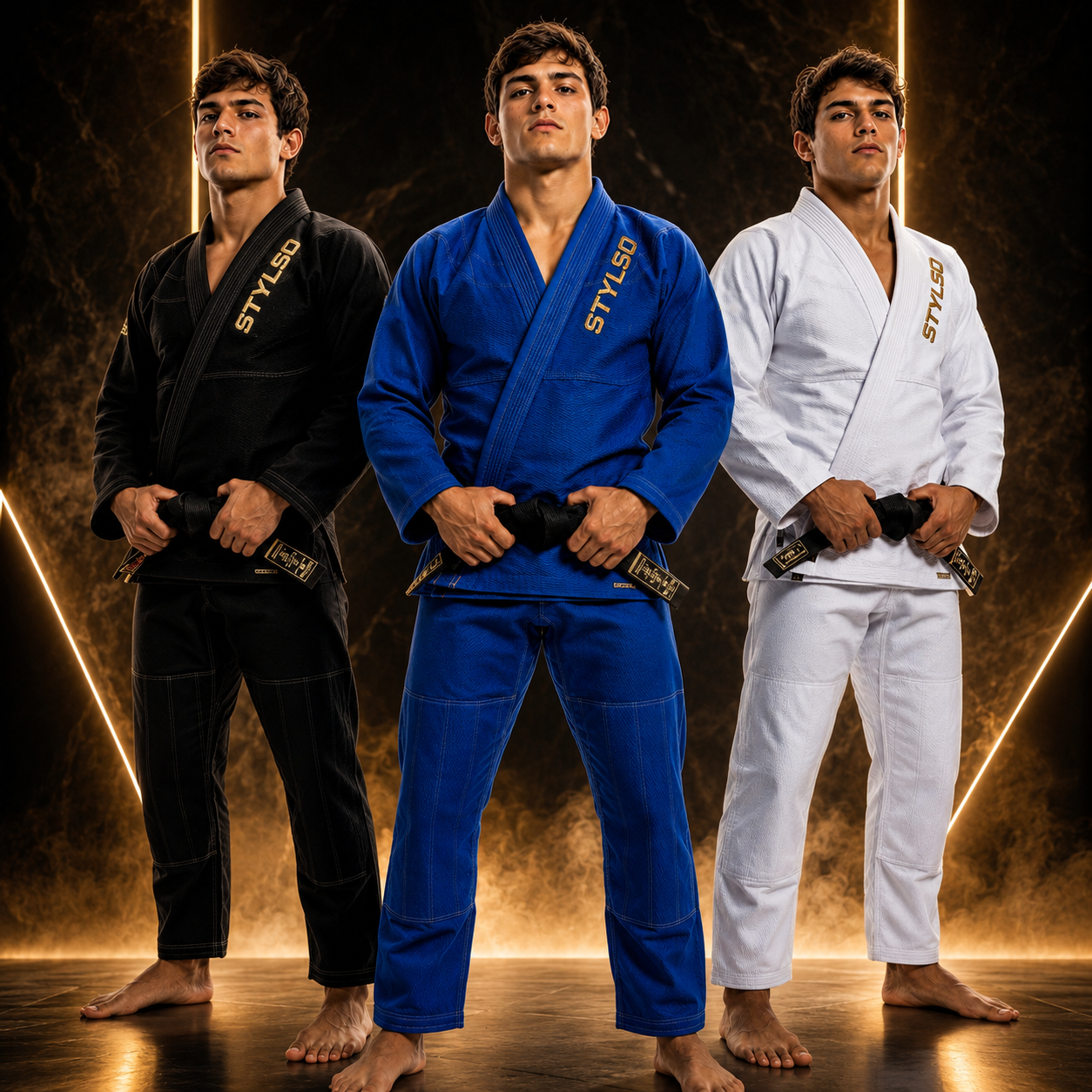
The Stylso men’s gi is a clean, pearl-weave option that’s IBJJF approved and built to hold up through the drilling phase and well beyond it. Check the current price and sizing on Amazon before you pick.
Common Training Mistakes That Kill Progress
| Mistake | Why It Stalls You | The Fix |
|---|---|---|
| Rolling ego-first | You protect your ego, not your technique — miss the lesson every time | Hunt hard positions; tap fast and learn why |
| Changing gyms at every plateau | The plateau is the lesson — new gym, same plateau next month | Commit to one gym, one instructor for 6 months minimum |
| Skipping the warm-up drill | Rolling without drilling = practicing survival, not technique | 15 min deliberate drilling before every session |
| Skipping rest days | Tired muscles won’t learn — they just survive | One or two rest days a week; sleep 7 hours |
| Wrong gi size | Bunching sleeves and restricted arms corrupt every drill rep | Measure and pick the right size before buying |
Free: BJJ Progress Tracker PDF
7-habit checklist + weekly drilling log — print it, fill it in at the gym, track what’s actually working.
Frequently Asked Questions
How long does it take to get better at BJJ?
Most grapplers see clear improvement in 3–6 months with consistent deliberate training — 2–3 sessions per week with focused drilling. Random mat time extends that timeline significantly. If you’re tracking positions week by week and drilling before rolling, you’ll feel the difference at three months.
How many times a week should I train BJJ to improve?
Three sessions a week is the sweet spot for most adults balancing work and life. More than five without proper recovery tends to slow progress — tired bodies reinforce bad habits. Quality beats quantity. One sharp session with deliberate drilling beats three casual rolls.
Does the type of BJJ gi matter for improvement?
Fit matters far more than brand or price. A gi that’s too big or stiff limits your range of motion during drilling. The right size, broken in properly, disappears on your body so you can focus on the move, not the uniform. Start with our size guide before you buy anything.
Is cross-training in wrestling or judo worth it for BJJ?
Yes — especially at white and blue belt. Wrestling builds base and pressure. Judo builds grip fighting and timing. Even one session a month or a few drills borrowed from each sport adds a layer most BJJ-only practitioners don’t have. The wrestling base drill in this guide is a free starting point that costs you five minutes per session.
What’s the biggest mistake white belts make in BJJ?
Rolling to win instead of rolling to learn. The fastest improvement happens when you hunt for positions that challenge you, not positions that feel safe. Tap early, tap often — every tap is data. The white belts who improve fast aren’t the strongest; they’re the most curious.
Byline: Stylso Editorial Team · About Stylso · Honest gear guides for grapplers