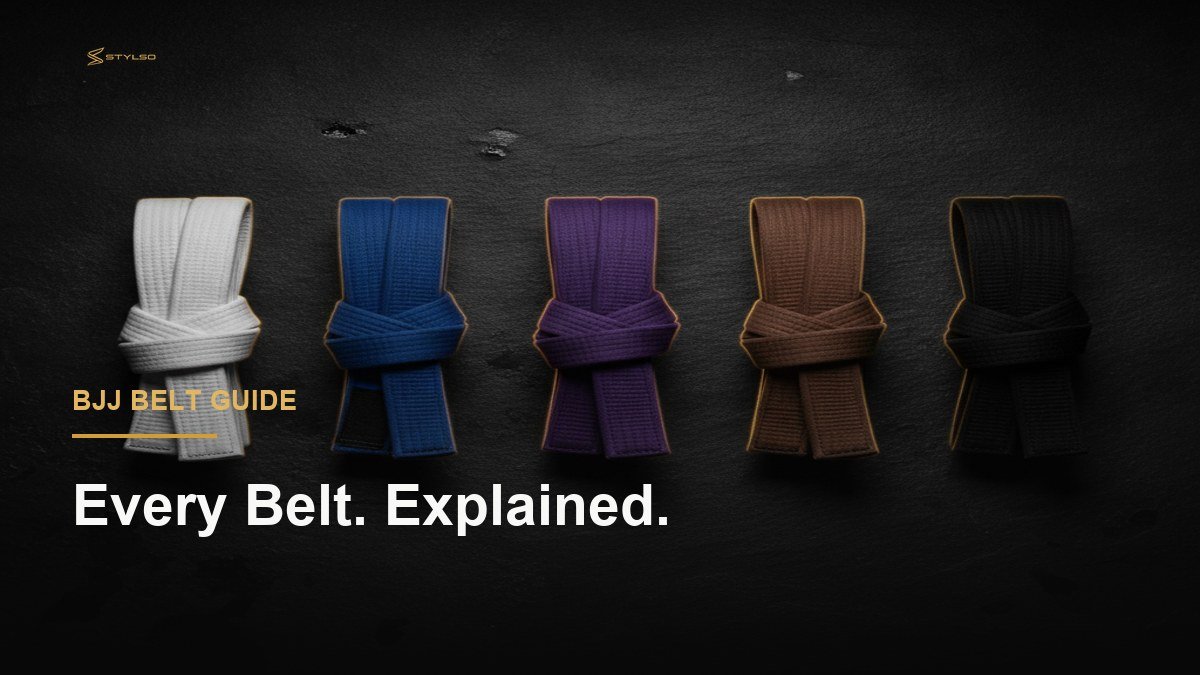
The BJJ belt ranking system has five main adult belts: white, blue, purple, brown, and black. Each belt marks a real shift in mat skills, body development, and training demands — not just time served. Most practitioners take 10–15 years of consistent training to reach black belt.
You tie on a white belt and feel completely lost. Two years later, you’re the one showing the new guy how to shrimp. Five years after that, you’re not even thinking about techniques anymore — your body just moves. That transformation is what the BJJ belt ranking system is really tracking.
The BJJ belt ranking system runs from white to black, with coral and red belts reserved for masters beyond that. Each belt represents a clear shift in what you know, how your body moves, and what your training demands. Here’s the honest breakdown — plus the gear that actually fits each stage.
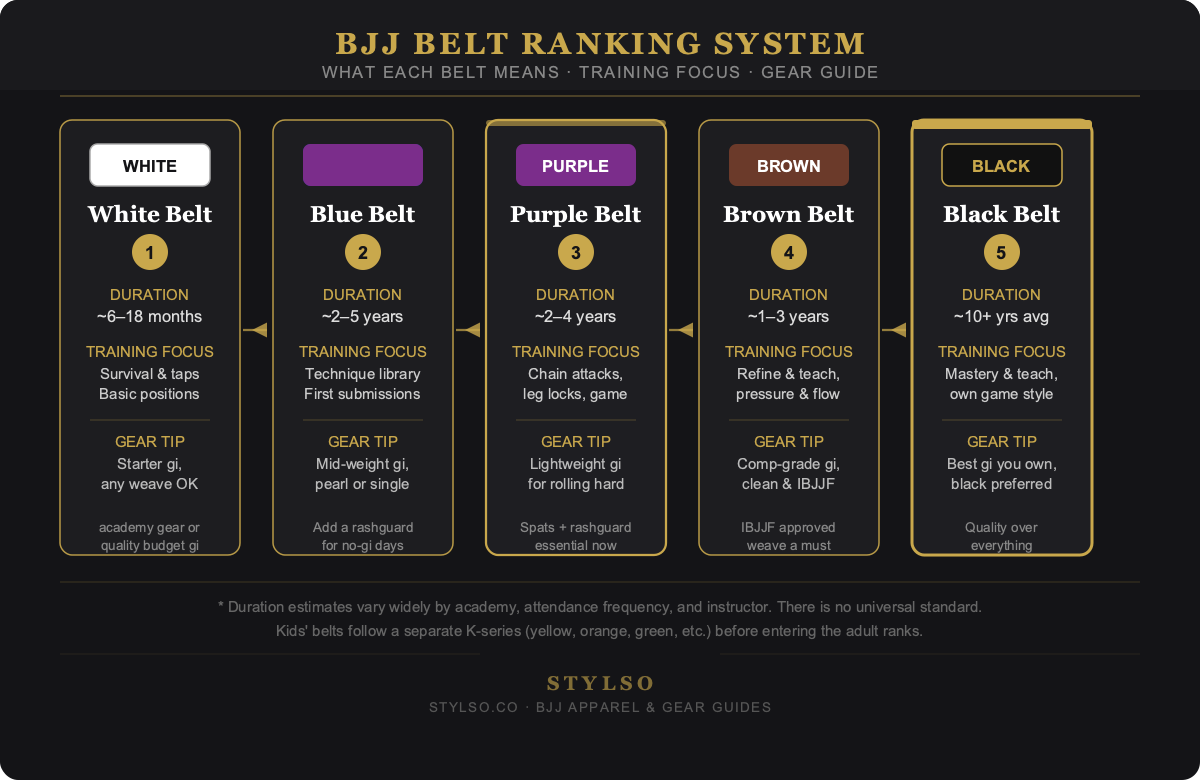
White Belt: You’re Learning to Survive
White belt is humbling. Your goal isn’t to win. It’s to not panic.
You’re building what coaches call “mat sense” — the ability to know where your limbs are, where your partner is, and how not to explode your energy in the first two minutes. You’re learning the fundamental positions: guard, mount, side control, back control. You’re drilling the hip escape (shrimping) until it feels automatic.
What your body is developing: base, balance, and the reflex to not freeze when someone is on top of you.
White belt typically lasts 1–2 years. You’ll earn up to four stripes before your instructor considers promoting you to blue. There is no IBJJF-mandated minimum time at white belt — promotion is entirely at your instructor’s discretion.
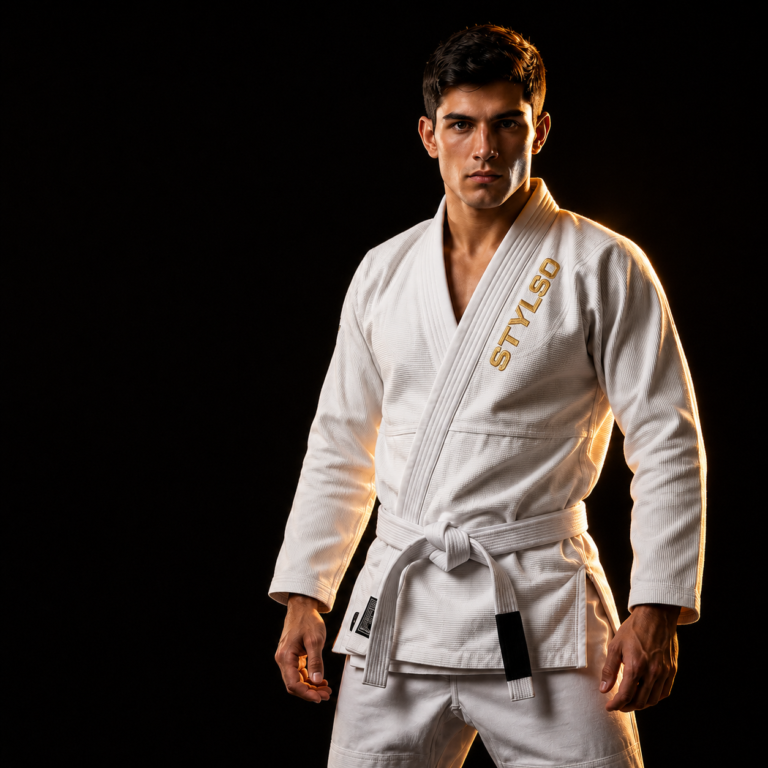
Gear that fits white belt: A mid-weight gi (around 450–550 GSM pearl weave) is the sweet spot. Heavy enough to feel substantial, light enough that you’re not baking alive during your first few months. Get an IBJJF-legal white gi, learn how to wash it right, and show up. Check our guide on the best BJJ gi for beginners before you buy anything.
Blue Belt: You’re Learning to Think
Blue belt is where most people quit. That’s the honest truth.
The initial excitement fades. The learning curve steepens. You’re expected to know the basics well enough to start connecting them — not just drilling guard passes in isolation, but actually chaining them together in live rolling.
What you’re learning: Guard retention. Guard passing. A few reliable submissions from dominant positions. How to read your opponent’s weight shifts before they commit to a move.
What your body is developing: sensitivity — the ability to feel pressure and base through contact, not just sight. Your hips start anticipating the scramble before your brain has processed it.
Blue belt typically lasts 2–3 years. You’ll earn stripes along the way. The IBJJF requires a minimum of two years at blue belt before you can be promoted to purple.
Gear upgrade: By now you know your body. If you run hot, a lightweight gi matters. Check our roundup of the best lightweight BJJ gis — it can make a real difference in late rounds.
Purple Belt: You’re Learning to Teach Yourself
Something shifts at purple. You stop waiting to be taught and start figuring things out on your own.
Purple belts are problem-solvers. They notice patterns. They know when a technique isn’t working and why. They’re starting to build a personal game — a style that fits their body type and attributes.
What you’re learning: Transitions. Leg locks (increasingly, especially no-gi). Systematic pressure. Concepts, not just techniques.
What your body is developing: timing over strength. A purple belt who’s smaller than you doesn’t muscle through — they find the moment, and you’re suddenly flat on your back before you understood what happened.
Purple belt usually lasts 1.5–2.5 years. The IBJJF requires a minimum of 1.5 years at purple before brown promotion.
Gear upgrade: Many purple belts train more frequently and compete more seriously. A competition-cut lightweight gi (350–450 GSM) is worth the move up at this stage. See our picks for the best lightweight BJJ gis — the right fit matters more than ever when you’re competing.
Brown Belt: You’re Refining, Not Adding
Brown belt isn’t about learning new moves. It’s about cutting the ones that don’t work for you.
You’ve got a game. Now you’re sharpening it. Picture this: a brown belt rolls with a newer purple and gives them nothing — not because they’re muscling, but because every time the purple thinks they’re about to pass, there’s already a frame in the way. They never had to scramble. They already knew. That’s efficiency — not strength, not athleticism. Just a decade of repetition compressed into instinct.
What you’re learning: Synthesis. How everything connects. How to set traps two moves ahead.
What your body is developing: efficiency. Less energy wasted. Less gassing out. More done with less.
Brown belt lasts about 1–2 years. The IBJJF requires a minimum of one year at brown before black belt promotion.
Gear at this stage: You know what you want. Competition-cut gis, durable training gis — your schedule dictates the split. Browse the Stylso shop for IBJJF-approved options across every size and color variant.
Black Belt: You’re Becoming the Art
It takes most people 10–15 years to reach black belt in BJJ. It is among the hardest black belts in any martial art to earn.
A black belt doesn’t have superpowers. Here’s what they actually have: they watch you set up a triangle for four moves before you get there, and they’ve already shifted their posture so there’s no angle when you finally shoot. They’re not reacting. They’re waiting. You feel like you’re playing checkers against someone reading a chessboard.
What your body has developed: the ability to make chaos feel slow. Position over submission. Control without force. Not a collection of techniques, but a deep understanding of principles that tie all the techniques together.
Black belt is not the end. There are six degree stripes (1st through 6th degree). Above that come two coral belt degrees: 7th degree (black-and-red pattern) and 8th degree (red-and-black pattern). Above those: red belt (9th and 10th degree) — reserved for the most senior masters who’ve given their lives to the art. For official belt and promotion standards, see the IBJJF graduation system.
The Real Drill Every Belt Should Do
No matter your rank, drill the hip escape (shrimp) every single session. Not as a warmup filler — as a real practice. White belts need it to survive. Blue belts need it for guard retention. Purple and brown belts use it to recover from bad positions. Black belts will tell you they’re still refining it.
It’s the foundational movement of BJJ. If your shrimp is sloppy, everything built on it is sloppy. The difference between a white belt’s shrimp and a black belt’s shrimp isn’t the movement — it’s how automatic it is, how little it costs, and how perfectly it times with the moment of pressure.
BJJ Belt Ranking System: Gear Progression Table
| Belt | Typical Duration | IBJJF Minimum | Mat Focus | Recommended Gi Weight | Shop |
|---|---|---|---|---|---|
| White | 1–2 years | Instructor discretion | Survival, basics, positions | 450–550 GSM pearl weave | Shop on Amazon |
| Blue | 2–3 years | Min. 2 years | Connecting techniques, guard | 350–450 GSM (if you run hot) | Shop on Amazon |
| Purple | 1.5–2.5 years | Min. 1.5 years | Personal game, transitions | 350–450 GSM competition cut | Shop on Amazon |
| Brown | 1–2 years | Min. 1 year | Refinement, efficiency | 350–450 GSM competition cut | Shop on Amazon |
| Black | Ongoing | 1 yr per degree | Principles, teaching, mastery | 350–550 GSM (competition or academy) | Shop on Amazon |
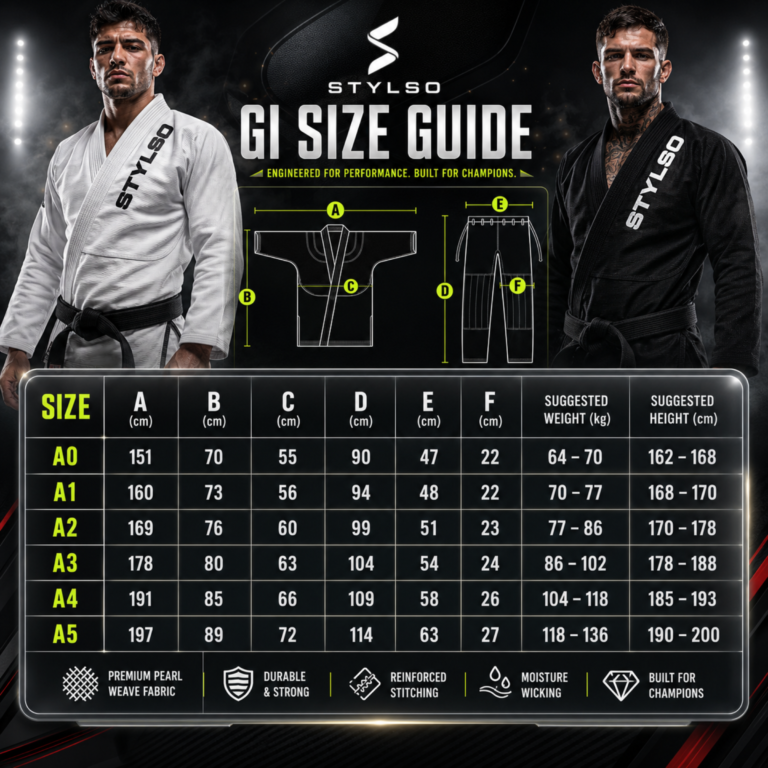
Not sure which size fits you? Use our BJJ gi size guide — it covers every A-series size with body measurements so you order right the first time.
Training alongside a young grappler? The kids’ belt system for juniors under 16 runs through a separate colour sequence (grey, yellow, orange, and green) before transitioning to the adult system. Stylso carries the K-series kids’ gi — IBJJF-approved and built to take the abuse of youth training.
- Each BJJ belt marks a real shift in what your body understands — not just how long you’ve trained. The IBJJF enforces minimum time-in-belt requirements from blue belt onward.
- Your gear should match your stage: a mid-weight gi suits beginners, while a lighter competition-cut gi pays dividends at blue belt and above.
- The hip escape is the one drill every belt level should keep doing — it never stops being relevant, and its quality is a direct reflection of your mat maturity.
Download the Free BJJ Belt Progression Cheat Sheet
Want a one-page reference for what to focus on at each belt level? We put it in a clean PDF — mat skills, gear checkpoints, the drill progression, and IBJJF promotion rules in one place. No fluff.
Free: BJJ Belt Progression & Gear Guide
A printable PDF with every belt explained, a gear checklist per rank, and a 4-week first-year training plan. Get it instantly.
Now think back to that white belt who couldn’t shrimp without falling over. That person and a black belt are doing the same movements. The difference is ten years of compression — of the body learning what the mind already forgot it had figured out. That’s the BJJ belt ranking system. Not a ladder. A transformation.
Frequently Asked Questions
How long does it take to get a black belt in BJJ?
Most practitioners take 10–15 years of consistent training to earn a BJJ black belt. There’s no fixed timeline — promotions depend on mat performance, mat time, and your instructor’s standards. The IBJJF sets minimum time requirements at blue belt and above (2 years at blue, 1.5 at purple, 1 at brown) but your instructor can require longer. It’s one of the hardest black belts to earn in any martial art.
How many belts are in the BJJ belt ranking system?
There are five main adult belts: white, blue, purple, brown, and black. Black belt has six degree stripes (1st through 6th). Above that are two coral belt degrees — 7th degree (black-and-red) and 8th degree (red-and-black) — followed by red belt (9th–10th degree) for the most senior masters. See the IBJJF graduation system for full official requirements.
What’s the difference between BJJ belt ranks and other martial arts?
BJJ promotions are earned strictly through demonstrated mat performance — not curriculum tests or time in grade. A BJJ blue belt typically represents 2–3 years of real, consistent training and live rolling. Most martial arts have guaranteed or semi-guaranteed timelines. BJJ doesn’t. Your instructor promotes you when your mat performance warrants it.
Do you need a different gi for each BJJ belt?
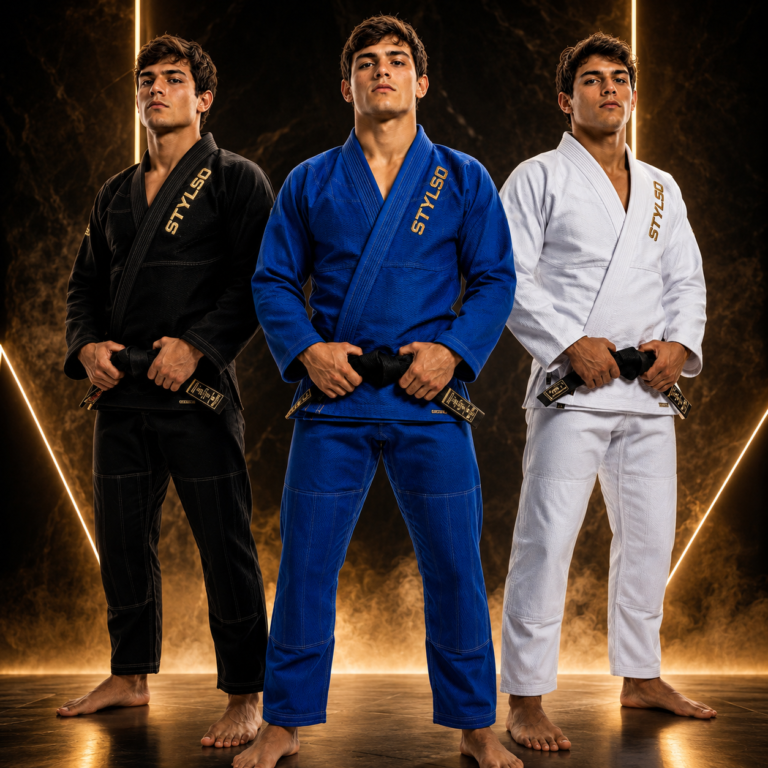
No. Per IBJJF rules, you wear a white, blue, or black gi at any rank — your belt color is what changes, not the gi color. That said, upgrading your gi as you advance makes practical sense. A lighter competition-cut gi (350–450 GSM) is more useful at purple belt and above than a heavy beginner gi. Use our BJJ gi size guide before ordering.
What gi weight is best for BJJ training?
For most beginners, a mid-weight pearl weave gi (around 450–550 GSM) is the best starting point. As you advance or if you compete, a lighter gi (350–450 GSM) helps with weight management and movement. Check our full breakdown on the best lightweight BJJ gis for specifics.
How do I wash my BJJ gi without shrinking it?
Cold water wash, hang dry — that’s the short answer. Don’t put a pearl weave gi in a hot dryer. We cover all the details in our guide on how to wash a BJJ gi, including how to handle a new gi that fits too snug right out of the bag.
Published by the Stylso Editorial Team — Stylso designs IBJJF-approved pearl-weave gis for adults and kids, sold on Amazon. We publish honest buyer’s guides so grapplers buy right the first time.