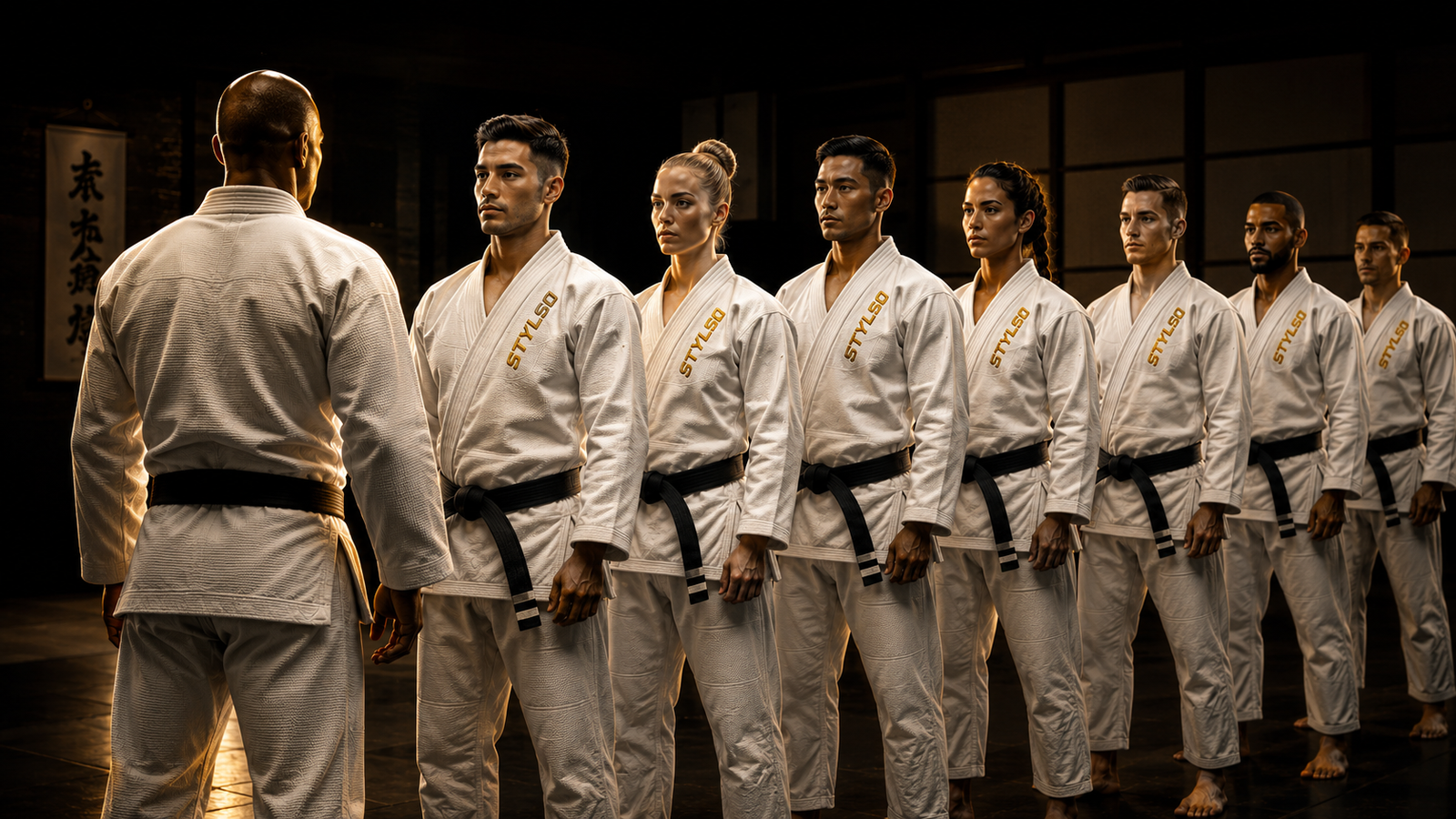
Your first roll felt like drowning. Everyone knew where to go. You didn’t. That’s not a sign you’re bad at this — that’s exactly what the first month feels like for everyone who sticks around long enough to figure it out.
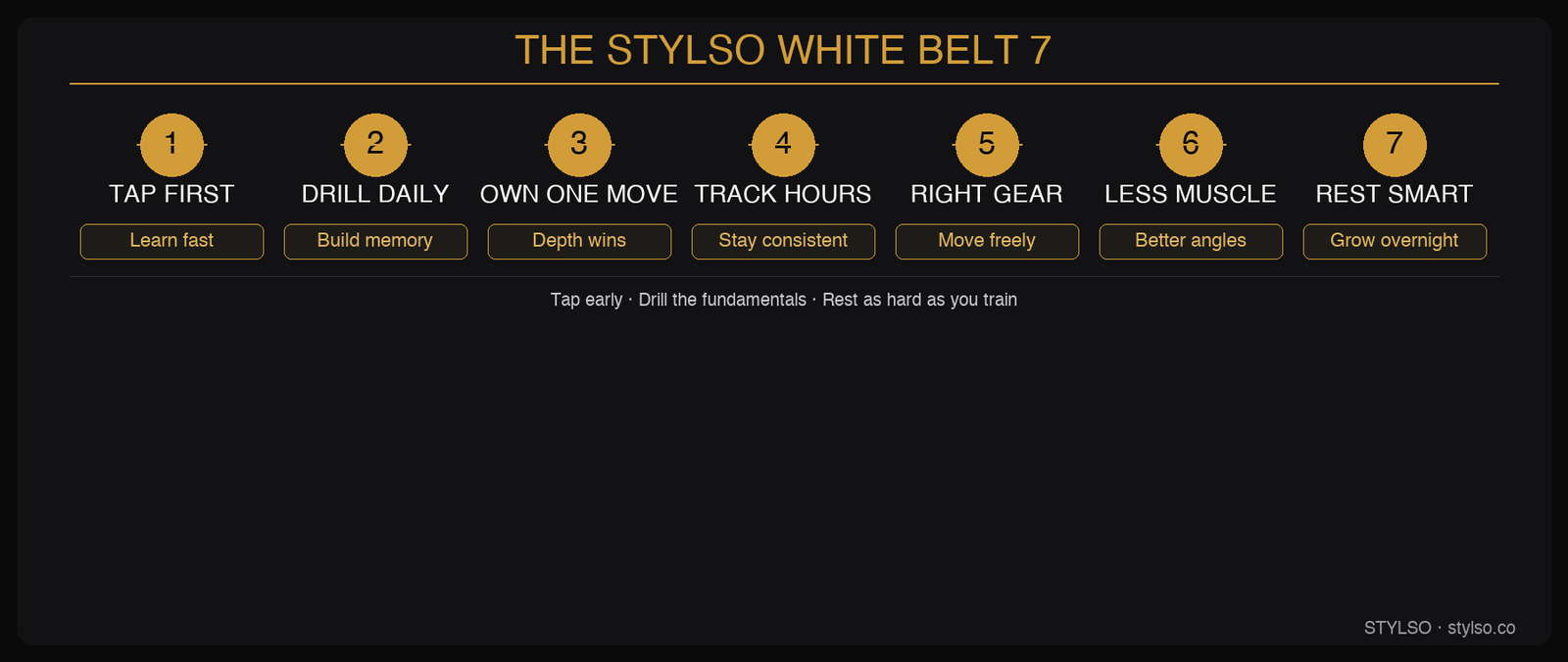
Here are 7 tips that actually help in your first year. Not gear lists or hype — just the things that move the needle when you’re trying to survive one class at a time.
- Tapping is a learning signal, not a defeat — use it early
- Drilling builds the movement memory that makes rolling click
- One technique mastered beats ten half-remembered, every time
1. Tap Early and Tap Often
This is the one rule that matters most — and the one white belts fight the hardest.
Here’s the reframe: tapping isn’t losing. It’s marking a spot on the map. “There’s a hole in my defense right here.” Then you close the hole. In judo, the entire culture of randori (free practice) is built around this idea — you don’t “lose” a round of randori, you discover what needs work. BJJ works exactly the same way.
Tap before it hurts. Tap before you’re forced to. Your joints don’t care how close you got to escaping.
2. Don’t Skip the Drilling
Rolling is the fun part. Drilling is the part that makes rolling better.
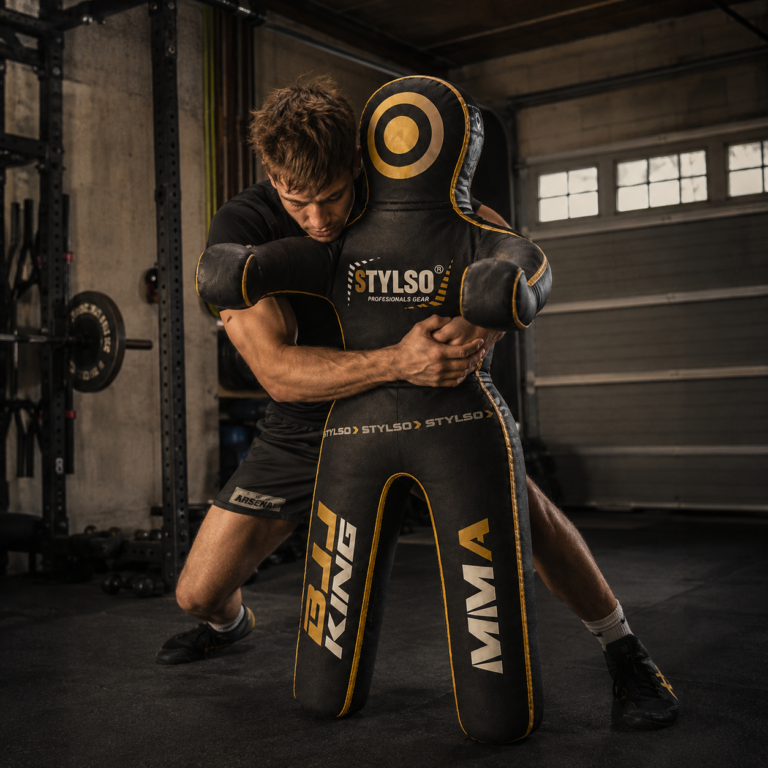
Wrestling coaches call it “owning a move.” You drill one single-leg so many times the mechanics become reflex — the setups, the head position, the level change — then you drill the next thing. BJJ works identically. A shrimp (hip escape) you’ve done 500 times shows up automatically when you need it under pressure. A shrimp you learned twice doesn’t.
The white belts who improve fastest are usually the ones staying 10 minutes after class to drill, not the ones who do extra rolling. Stay for the drilling.
3. Learn One Technique at a Time
Depth beats breadth. Every time.
Your head will fill fast in your first year — armbars, triangles, sweeps, guard retention, side control escapes. You can’t absorb all of it at once, so stop trying. Pick one sweep. One submission. Work it until it starts appearing naturally in live rounds. Then add the next thing.
Most white belts try to collect techniques. The ones who get promoted collect positions. Know where you want to go before you know how to get there.
4. Track Your Mat Hours
Progress in BJJ is invisible until it isn’t. You’ll feel stuck for weeks — then suddenly you’re surviving where you tapped in 10 seconds three months ago.
Consistent 3×/week training beats sporadic 5×/week every time. Your body and your retention need the off days to consolidate what you’re learning. As a rough benchmark: most blue belt promotions happen somewhere in the 200–400 mat-hour range, depending on the gym and the coach. The range is wide — but the hours are real. Track your sessions. When it feels like you’re not improving, look back at your first month. You’ll see it.
5. Get the Right Gear (Don’t Overthink It)
You don’t need much. But what you do need should actually work.
| Gear | Why it matters | Get it |
|---|---|---|
| BJJ gi (well-fitted) | Ill-fitting gi = bad guard, slower movement, more to grab | Shop on Amazon |
| Rashguard | Protects skin under the gi; reduces friction burns | See Rashguard Guide |
| Mouth guard | One knee to the mouth is a permanent reminder | See Mouth Guard Guide |
| Ear guards | Start early — cauliflower ear is preventable, not reversible | See Ear Guard Guide |
| Finger tape | Buy it before your fingers tell you to | Taping Guide |
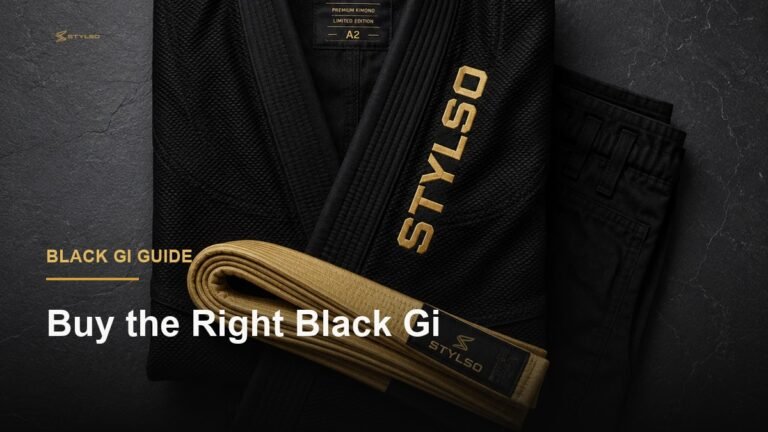
If you’re buying your first gi, fit matters more than brand. A jacket that bunches at the hips or hangs past the knee is harder to move in and gives partners more to control. The Stylso gi runs true to the A-series — A2 fits 170–178 cm, 77–86 kg. Check the current price on Amazon.
Shop Stylso Men’s Gi on Amazon
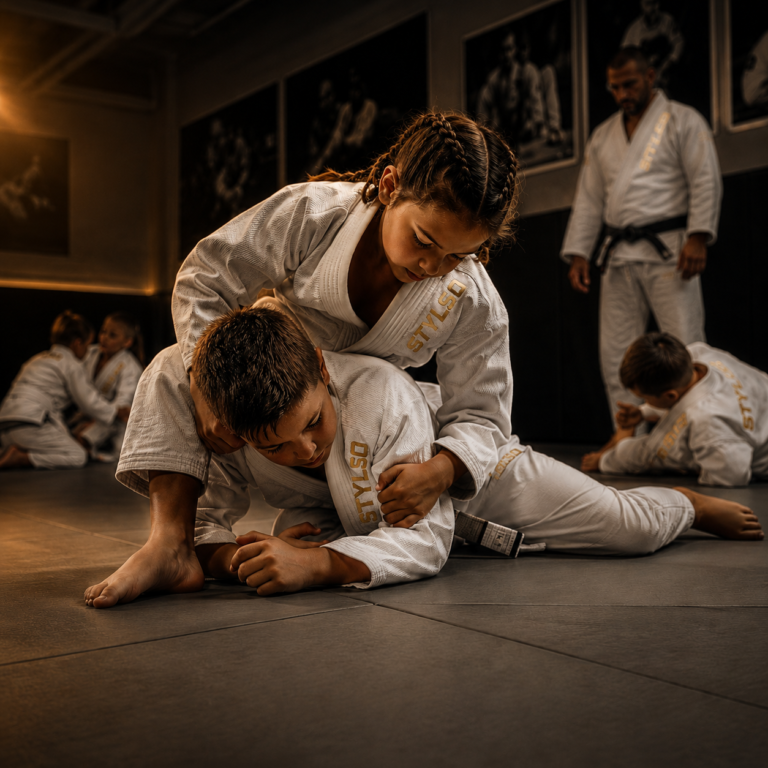
Training with your kid? The Stylso kids’ gi covers K000–K4 (114–160 cm). Same quality, right size for the mat.
Shop Stylso Kids’ Gi on Amazon
6. Stop Muscling Through Positions
Strength works — until it doesn’t. At white belt, brute force hides the gaps in your technique. Then you meet someone with better mechanics and suddenly you’re working twice as hard to hold on to half as much.
Karate calls it economy of motion: use the minimum force required for the task. The angle, the timing, the alignment do the work; the muscles are the engine behind it. A well-timed hip escape takes almost no strength. A poorly timed one takes everything you have and still doesn’t work.
When you notice yourself muscling, stop. Reset. Try the position at 50% effort and focus on the mechanics. You’ll learn more from the slow, controlled version than from the survival panic.
7. Treat Your Off Days Like Training Days
You don’t improve on the mat. You improve while you sleep.
Physical adaptation — coordination, movement memory, cardio capacity — happens during recovery. A white belt training 3 days and sleeping 7–8 hours outpaces one training 5 days and sleeping 5 hours. Every time. Rest isn’t optional. It’s the other half of the training.
Cold water rinse after hard sessions helps. Washing your gi after every class isn’t optional either — the bacteria on mat gear are real, and a skin infection is an injury just like a jammed finger. Keep the gear clean and keep showing up. That’s it. See our gi care guide for the quick routine.
Free: BJJ White Belt Survival Checklist
A 7-week printable log — one tip per week, gear checklist, common-mistake column, and space for notes. Print it, stick it in your bag.
Frequently Asked Questions
How long should I stay at white belt in BJJ?
Most white belts are promoted to blue belt after 1.5–3 years of consistent 2–3×/week training. The real factor is mat hours, not calendar time. Focus on the fundamentals — escapes, guard retention, one or two submissions — and let your coach determine the timeline. See our blue belt timeline guide for the full breakdown.
Should I roll with higher belts as a white belt?
Yes, when they invite you. Rolling with higher belts shows you what good BJJ feels like from the inside. Ask before approaching, respect their pace, and tap early. Most higher belts are happy to go controlled with a white belt who shows awareness and doesn’t spaz.
Is it normal to feel completely lost as a white belt?
It’s universal. The first 3 months are disorienting for almost everyone — too many moving parts, too much that doesn’t work. Focus on tapping safely, surviving a little longer each week, and drilling one thing. The chaos starts to clarify around months 4–6. See our 5 beginner mistakes guide if you want to know what to avoid.
How often should a white belt train per week?
2–3 times per week is the sweet spot for most beginners. More than that and your body can’t recover fast enough to retain what you’re learning. Less than twice a week and the skills don’t stick between sessions. See our beginner training schedule for a full week-by-week plan.
Do I need a specific gi as a white belt?
Any IBJJF-legal white, blue, or black gi works for most gyms. Fit matters more than brand — a gi that bunches at the hips or hangs past your knees is harder to move in and easier to grab. Check the current price on Amazon for a well-fitted beginner gi.
What should a white belt focus on first — guard or submissions?
Guard survival and escapes first. Being able to stay safe in bad positions is more valuable at white belt than one submission you can’t reliably set up. Once you can defend consistently, add one submission from a position you naturally reach while rolling. Build from survival → retention → attack.