Wrong ear guard and you spend the next round pinning a loose strap back to your head. Or you skip the guard entirely and wake up months later with ears that look like a boxing glove. Neither is a great outcome. Cauliflower ear is permanent, and it starts earlier than most grapplers expect.
Here’s the part most gear guides miss: BJJ puts your head in positions wrestling doesn’t. Guard passing, headlocks, collar grips. A guard built for a wrestling match doesn’t know what to do when someone’s lapel is riding across your ear. This guide picks three guards that actually survive rolling – and explains why each one fits a different type of grappler.
- Low-profile, adjustable-strap guards stay on best during BJJ scrambles and collar grip positions.
- The right guard depends on training intensity and ear condition, not price alone. Check the current price on Amazon before buying.
- Cauliflower ear starts from repeated impact. One guard worn consistently beats three expensive ones worn never.
Why BJJ Ear Guards Are Different
Wrestling guards are built for a sport where action stops regularly and your head stays upright. BJJ changes that fast. When someone passes your guard, your head gets pressed sideways into the mat. Side control means steady pressure across your ear for minutes at a time. A collar grip drags fabric right across the cup. A stiff, high-profile wrestling guard gets ripped sideways – or torques and digs in.
What works for BJJ: a low-profile cup, a flexible strap system that holds under pressure, and enough security to survive a scramble. That combination is rarer than it sounds. Most guards on Amazon are wrestling-first designs. A few have been adapted for grappling, and those are the ones worth buying.
Cross-discipline note: wrestlers figured out ear protection years before BJJ coaches did. The best grappling guards come from wrestling brands – the design language is already right. That history shows in the picks below.
The 3 Best BJJ Ear Guards
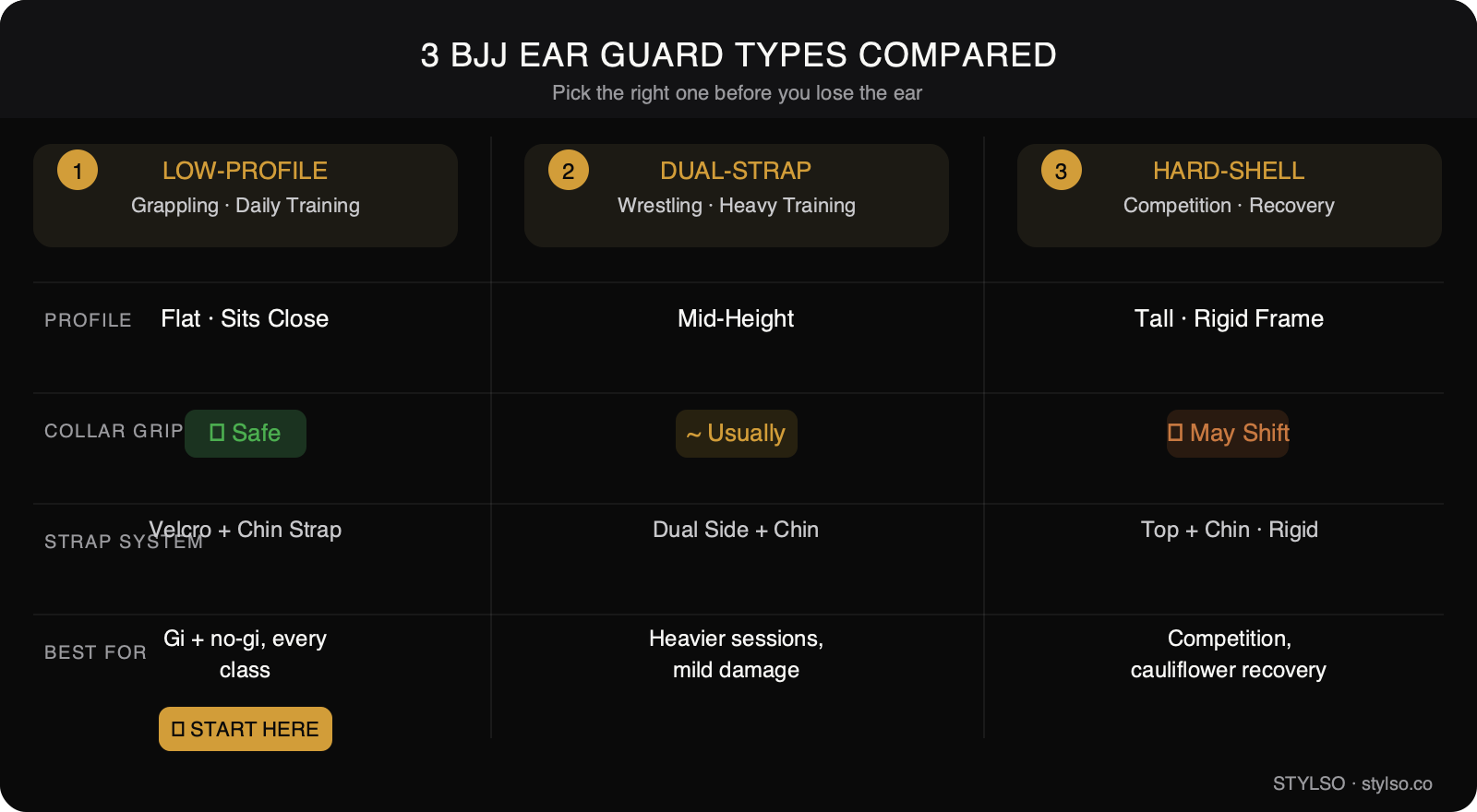
| Guard Type | Profile | Collar-Grip Safe | Best For | Shop |
|---|---|---|---|---|
| Low-Profile Adjustable e.g. Cliff Keen Tornado style |
Flat, sits close | Yes | Gi + no-gi, every class, beginners | Shop on Amazon |
| Dual-Strap Wrestling e.g. Matman style |
Mid-height | Usually | Heavier training, mild existing damage | Shop on Amazon |
| Hard-Shell Competition e.g. ASICS Gel style |
Tall, rigid frame | May shift | Competition, cauliflower recovery | Shop on Amazon |
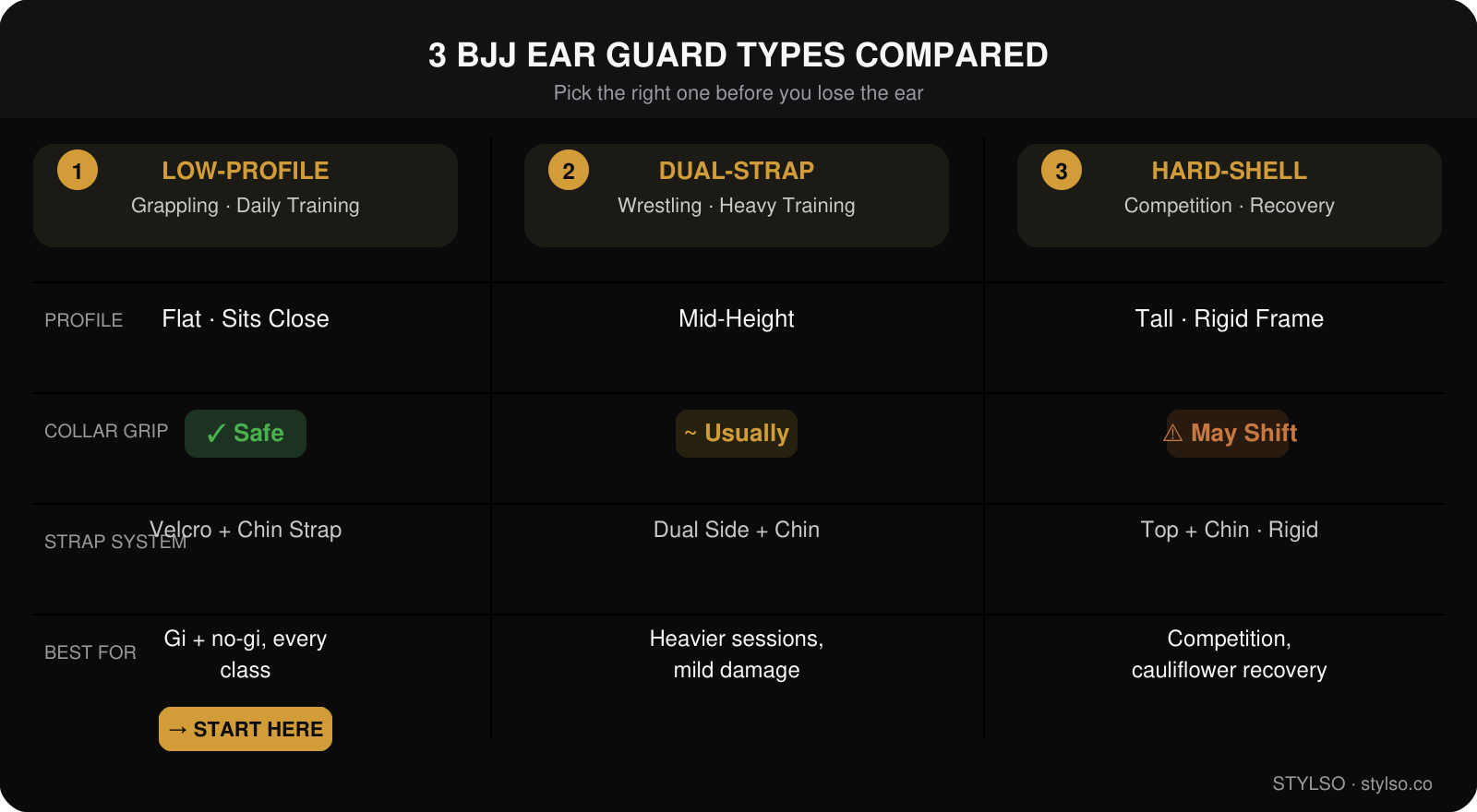
For most grapplers: start with the low-profile adjustable. It fits under collars, stays in scrambles, and doesn’t torque in headlock pressure. If you’ve got mild cauliflower damage you’re nursing, step up to the dual-strap for more cup coverage. Check the current price on Amazon before buying – the price gap between these tiers doesn’t always equal a protection gap.
How to Fit an Ear Guard for BJJ
Most ear guards ship with a one-size headband and velcro adjustment. That’s fine – but how you set the tension matters more than most people realize.
Too tight and the cup compresses against your head during extended side control, increasing friction damage. Too loose and it spins off in a scramble. The target: snug enough that tapping the cup with two fingers doesn’t make it rock, but loose enough that the headband leaves no indentation after 30 seconds.
Here’s a wrestling tip BJJ coaches rarely mention: adjust the guard before drilling, then tighten one half-click before live rolling. Body heat and sweat from drilling loosens velcro slightly – that pre-roll tighten compensates. Wrestlers have done this for decades. It works.
For gi training specifically: run the chin strap under your collar, not over it. If the strap sits on top of the lapel, a collar grip shifts it sideways in the first clinch. Under the collar, the fabric anchors it instead of fighting it. That one change stops most mid-roll guard losses.
What to Avoid
Skip any guard with only a top-strap and no chin strap. In wrestling your head stays relatively upright. In BJJ it’s sideways on the mat for long stretches – a top-strap-only design slides straight off. You’ll be fixing gear instead of rolling.
Skip hard foam cups that can’t flex. In guard passing and headlock pressure, a rigid cup that won’t compress creates a pressure point that can bruise the cartilage you’re trying to protect.
Skip anything that adds more than 8mm of profile. Measure against a coin if unsure. Thicker guards catch on collar fabric – especially in half-guard and turtle where your opponent’s hip presses against your head.
If you’re buying for a kid: check youth sizing. A guard that’s too big rotates on a smaller head and gives zero protection. Kids’ cartilage is softer than adults’ and more vulnerable to the repeated pressure that causes cauliflower ear. Get them fitted right from the start – the same way you’d size their gi. Our guide to the best BJJ gi for kids covers full gear for young grapplers, and the BJJ white belt gear list shows what to buy in what order.
Shop Youth Ear Guards on Amazon
Free: BJJ Protective Gear Priority Guide
A one-page printable showing what gear to buy first, a 3-tier ear guard comparison, and a fit checklist – get it instantly.
FAQ
Do I actually need an ear guard for BJJ?
If you train more than twice a week, yes. Cauliflower ear is cumulative – small impacts add up over months of rolling. A guard worn consistently prevents it. Not wearing one is a choice that feels fine until it isn’t.
Can I use a wrestling ear guard for BJJ?
Many work, especially low-profile flexible designs with a chin strap. The problem is guards built for stand-up wrestling that ride too high or have rigid cups that shift under BJJ’s ground pressure. If it has a chin strap and a flat profile, it’s worth trying.
Will an ear guard interfere with my collar grips?
A properly sized, low-profile guard shouldn’t. Thread the chin strap under your collar for gi training – that anchors it and keeps collar fabric from catching on the cup edge mid-roll.
How do I clean an ear guard?
Wipe the shell with a damp cloth and a small drop of dish soap after every session. Air dry the foam liner flat – heat shrinks most liners and distorts the cup. Don’t put it in a washing machine.
At what age should kids start wearing an ear guard?
From their first regular training session. Kids’ cartilage is softer and more vulnerable to the repeated pressure that causes cauliflower ear. Youth sizing exists – use it. Check the current price on Amazon for youth options.
What is the difference between cauliflower ear and a bruised ear?
A bruised ear heals in days. Cauliflower ear means the cartilage has been damaged and fluid has pooled between the layers – it hardens permanently within 24 to 48 hours if untreated. If your ear swells and feels warm after training, see a doctor that day, not next week.