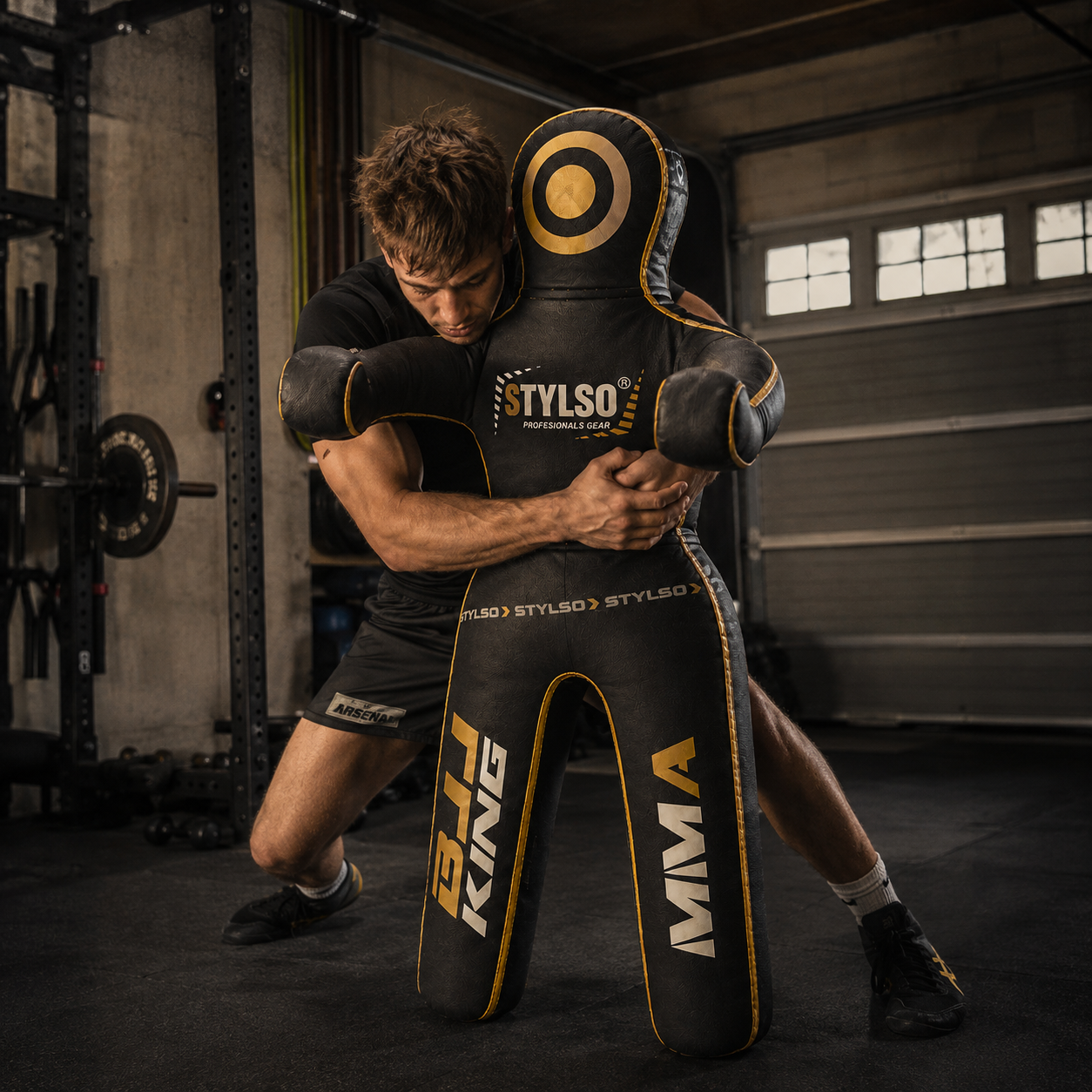
The best grappling dummy exercises for BJJ are hip escapes, single-leg shot entries, guard passing reps, submission finish mechanics, and ukemi breakfalls — run as a five-step circuit, three sets each. Do this three times a week and you’ll feel the difference in six weeks. No partner needed.
You ordered the dummy. It showed up in a big box. You dragged it to the garage, set it up, and then just… stared at it.
Sound familiar? Most people shoot a half-hearted single leg, feel dumb because nothing happened, and move on. Three weeks later the dummy’s wearing a jacket in the corner.
That’s because nobody tells you the most important thing: a dummy isn’t a sparring partner. It’s a rep machine. And rep machines only work when you have a plan.
The One Mistake That Makes Dummies Useless
Here’s what most people do: they drill submissions. Lock in an armbar. Extend. Reset. Repeat for twenty minutes. Then wonder why it didn’t transfer.
The problem is that you’re training the last 10% of a move — and skipping the 90% that gets you there. A real person creates frames, shrimps, rolls, and bucks. A dummy doesn’t. So finishing reps on a dummy trains a motion that doesn’t exist under pressure.
Wrestlers figured this out first. They use bag work to drill entries — the level change, the shot angle, the grip commitment — not the finish. BJJ dummies work the same way.
Use your dummy for entries, positions, and transitions. Save submission finishes for live rolling.
Before You Start
Don’t touch the dummy cold. Five minutes: hip circles, shrimping in place, a few neck rolls. Hips and shoulders take the most load in these drills.
If you need a warm-up you can do in your living room before every session, the Stylso BJJ warm-up routine runs about twelve minutes and sets you up right.
Not sure which dummy to buy — sitting, standing, or kids? Read the full grappling dummy buyer’s guide first. Choosing the wrong type limits which drills you can do. The Stylso line covers all three:
Shop Stylso Grappling Dummies on Amazon →
Check the current price on Amazon.
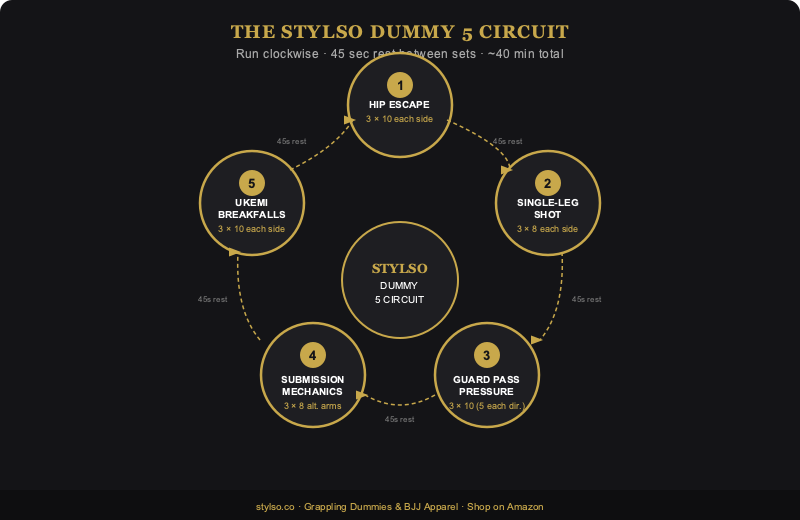
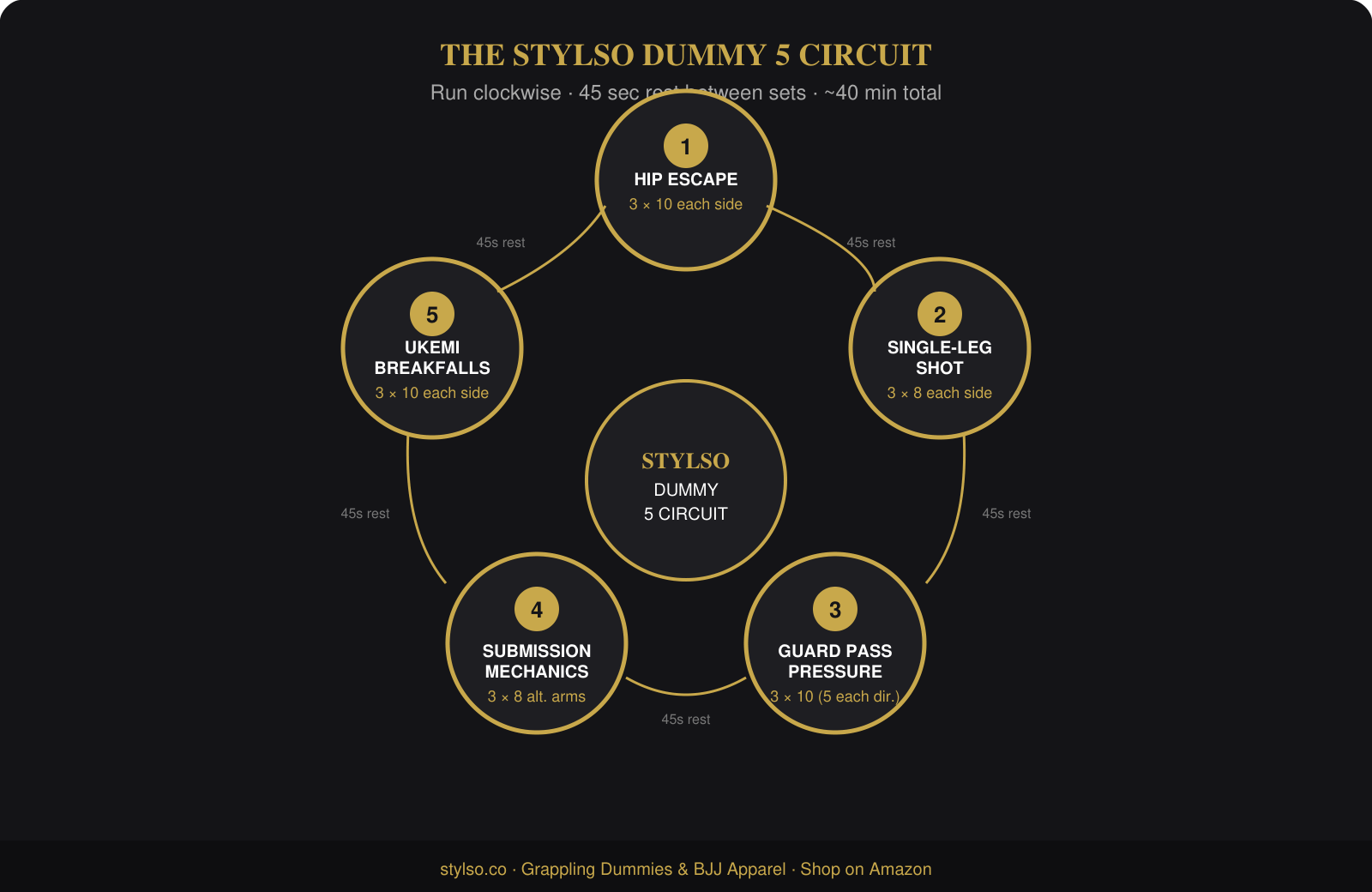
The Stylso Dummy 5 Circuit
Five drills. Three sets each. Rest 45 seconds between sets. Run it three times a week alongside your live training — not instead of it.
Step 1 — Hip Escape Series (3 × 10 each side)
Your hips are 80% of BJJ. If they don’t move, everything else breaks down. This is the drill your instructor showed you on day one — but most people stop doing it at white belt. Don’t.
Lay the dummy flat on top of you in a mounted position. Drive your feet into the mat, bridge hard — hips straight up — and the moment you create space, shoot your hips to one side. Frame against the dummy’s shoulder with your forearm. Slide your knee in. Reset.
Feel for: The bridge has to come before the shrimp. Skip it and there’s no space to move into. Bridge creates the gap. Then you shrimp into it.
Cross-discipline note: This hip pop is identical to a wrestler’s switch from bottom. Wrestlers drill it until it’s pure reflex. You should too.
Step 2 — Single-Leg Shot to Finish (3 × 8 each side)
Most BJJ players are weak on the feet. The dummy handles takedown entries better than you’d expect.
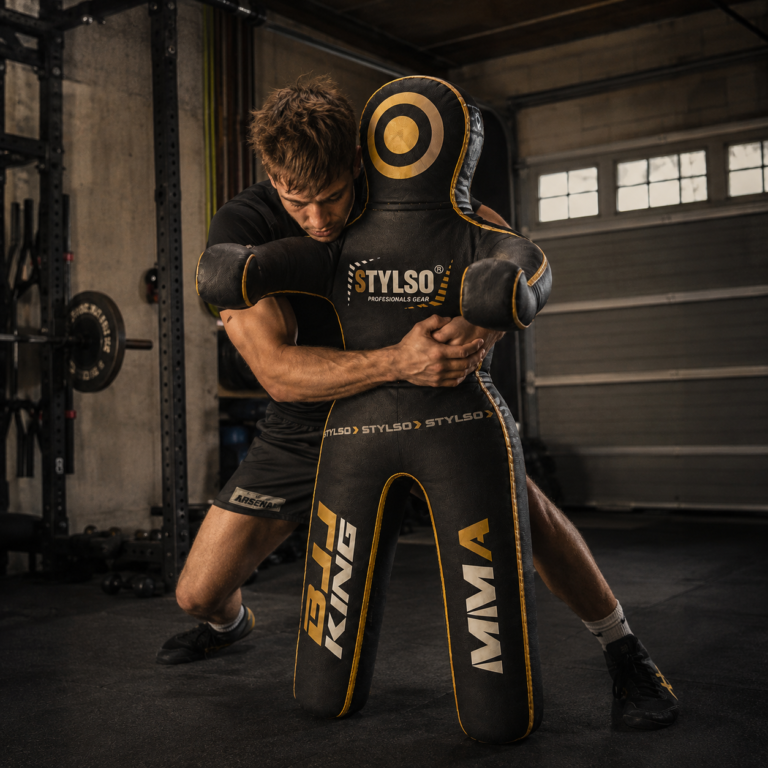
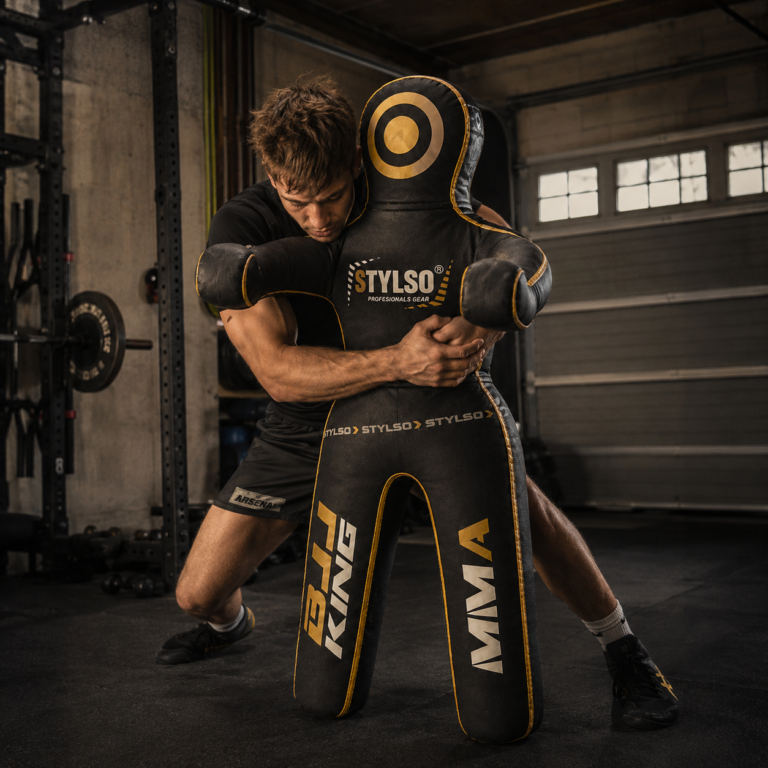
Stand the dummy up (best with a standing model). Step your lead foot between its legs, drop your level by bending your knees — chest stays up, back stays flat. Drive through. Step your back foot up. Execute the finish: trip the far leg or lift and dump.
Feel for: Power comes from your legs driving forward, not a rounded lower back. If your back rounds, you’re using the wrong muscles. Hips drive, chest stays up.
Step 3 — Guard Pass Pressure Circuit (3 × 10, 5 each direction)
Passing guard is the hardest skill in BJJ. Dummy work won’t give you live resistance — but it burns in the body mechanics so they’re automatic when pressure is real.
Sit the dummy up with legs extended. Get into your passing stance: hips low, weight on the dummy’s knee, hand on the far collar. Drive your body forward, flatten the dummy’s hips, step around to side control. Reset. Go again.
Alternate the torreando (grip both ankles, pop to one side, step around) and the knee slice. Count only reps where your hips commit. Half-passes don’t count.
For the finer details of guard mechanics, the guide to improving your BJJ guard covers the specific positions these drills are building toward.
Step 4 — Submission Finish Mechanics (3 × 8, alternating arms)
Yes — submission reps on a dummy can work, if you use them for mechanics not finishing pressure.
Armbar from mount: Get the dummy flat on its back. Mount. Isolate one arm — grip the wrist, pinch your knees against the shoulder, fall back and extend your hips into the elbow. Hold the finish position for two seconds. Feel for: No gap between your thigh and the dummy’s shoulder. A gap is an escape route.
Rear naked choke mechanics: Take the dummy’s back. Get your seatbelt grip. Blade of your forearm across the throat, bicep pressuring the other side. Squeeze your elbow toward your own chest — not backward. That’s where most chokes die: people pull back instead of squeezing in.
Step 5 — Ukemi Breakfalls (3 × 10 each side)
You’ll get thrown in BJJ. Knowing how to land safely protects your wrists, elbows, and neck. Judo players drill ukemi for years. Most BJJ players never practice it at all.
Hold the dummy close, then fall backward, slapping the mat with your full forearm — not your wrist — just before your back hits. The slap disperses impact. Head tucked, chin to chest, never touching the mat. Then side falls: fall left, slap with your left forearm at roughly 45 degrees from your body. Fall right, same thing.
Why end with this? Your body is tired and your coordination is taxed. Falls done tired teach your body to protect itself when it actually matters — which is exactly when you’d need them.
Which Dummy for Which Drill?
Not all dummies are built for every drill. The sitting model is the most versatile for ground BJJ. The standing model handles takedown entries. Here’s how it breaks down:
| Step | Drill | Sitting Dummy | Standing Dummy | Kids Dummy |
|---|---|---|---|---|
| 1 | Hip Escape Series | ✓ Best | Works | Good for youth |
| 2 | Single-Leg Shot | Difficult (tips over) | ✓ Best | Not recommended |
| 3 | Guard Pass Pressure | ✓ Best | Works with adjustment | Good for younger grapplers |
| 4 | Submission Mechanics | ✓ Best | Works for standing entries | Works for kids training |
| 5 | Ukemi Breakfalls | Works (throw prop) | ✓ Best (full throw sim) | Works for youth breakfalls |
Verdict: The sitting dummy covers four of five steps as the top option. It’s the most versatile for BJJ ground work. The standing dummy is better if takedowns are your primary focus.
Shop Stylso Grappling Dummies on Amazon →
Check the current price on Amazon.
A Note on Training Gear
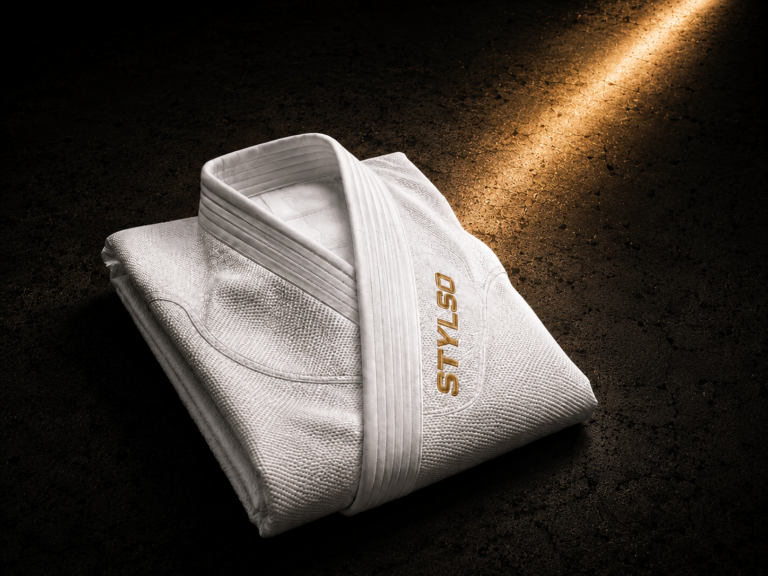
If you’re drilling collar grips or gi chokes on the dummy, your gi collar takes real stress. A well-built collar is the difference between useful reps and one that collapses mid-drill. The strength training work that builds grip strength also extends how long your gear holds up under that kind of drilling.
Shop Stylso Men’s Gi on Amazon →
Check the current price on Amazon.
Training with a younger grappler? Stylso also makes a kids gi built to move with them through every drill on this list:
Shop Stylso Kids Gi on Amazon →
Check the current price on Amazon.
Free: The Stylso Dummy 5 Circuit — 1-Page Training Card
A printable drill card with all 5 steps, rep counts, key coaching cues, and dummy-selector chart. Drop your email and it’s yours instantly.
Key Takeaways
- Use your dummy for entries and movement — not submission finishes. That’s where the real gains are.
- Run the Stylso Dummy 5 Circuit: Hip Escape → Single-Leg → Guard Pass → Submission Mechanics → Ukemi. Three sets each, 45 seconds rest.
- The sitting dummy covers four of five drills. The standing dummy is better for takedown entries.
- Add a judo ukemi practice at the end of every session. Most BJJ players skip it. It protects you when it counts.
- 15–25 focused minutes beats an hour of random drilling every time.
Frequently Asked Questions
Can a grappling dummy actually improve my BJJ?
Yes — with the right approach. It won’t teach you to react to a live partner, but it builds mechanical precision. Hip escapes, guard passing mechanics, and takedown entries all improve through quality repetition. Use it to supplement mat time, not replace it.
What’s the best grappling dummy exercise for a beginner?
Start with the hip escape (Step 1). You can do it on any dummy, it’s foundational, and the bridge-then-shrimp mechanic is one that most beginners rush. Slowing it down on a dummy and feeling it right — that’s the fastest way to fix it before bad habits set in. Build from there.
Do I need a standing dummy for takedown drills?
Yes, if you want realistic stand-up entries. A lying dummy can simulate some wrestling finishes, but hip throws and single-leg shots need the right body geometry. A standing dummy handles this much better.
How long should a grappling dummy session be?
20 to 40 minutes is enough. Pick two drill types and go deep. An unfocused hour of random drilling is less useful than 25 minutes of deliberate, structured reps with the circuit above.
Can kids use a grappling dummy for BJJ drills?
Yes. Kids dummies are sized and weighted for younger grapplers. They handle the same drill types — hip escapes, positional work, guard passing. Pair one with a properly fitted kids gi for collar and grip drilling.