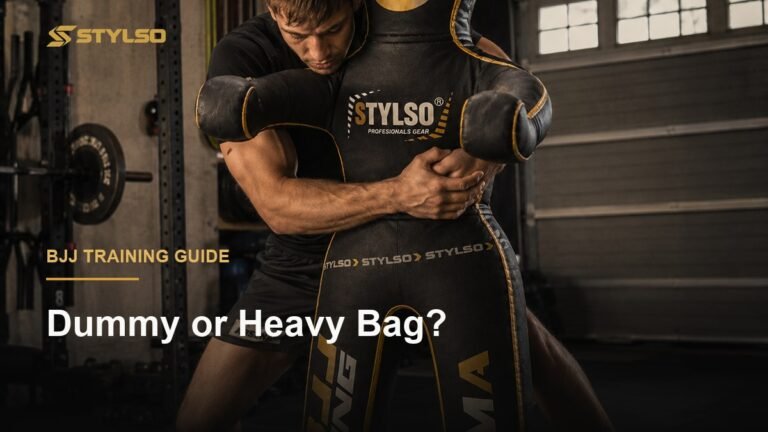
The best grappling dummy for BJJ depends on what you drill. Ground and sitting dummies handle submissions, guard passing, and mount escapes — the right pick for most BJJ players. Standing dummies are for takedown entries. Kids dummies are sized for youth athletes. Pick the type that matches your biggest gap in solo training.
Most grappling dummies end up in a corner collecting dust. That’s not because the dummy is broken — it’s because most people pick the wrong type for how they actually train. Here’s the honest breakdown so yours doesn’t become an expensive coat rack.
- A filled, arm-and-leg ground dummy is the right call for most BJJ players — it covers submissions, guard passing, and positional drilling.
- Standing dummies are for takedown entries and uchi-komi drill sets, not ground-based BJJ.
- Pack your dummy tight — a loose fill teaches bad mechanics and slides across the mat mid-rep.
The myth: grappling dummies are only for MMA fighters
Walk into any BJJ forum and someone will say it’s “only useful for MMA guys doing ground-and-pound.” That’s not true — and it’s kept a lot of grapplers from a tool that genuinely fills a gap.
Here’s the reality. You can’t practice a rear naked choke on a wall. You can’t drill guard passing on a foam roller. A good dummy gives you a body — something with limbs and weight that resists you just enough to build muscle memory. It won’t replace a live partner. Nothing does. But it handles the reps a partner can’t give you at 11pm when the gym is closed.
BJJ benefits from dummy drilling because so much of the game is positional. You’re moving around a body, tightening your frames, and burning in the path from step A to step B. That’s exactly what a dummy is built for.
3 types of BJJ grappling dummy — which one fits your training
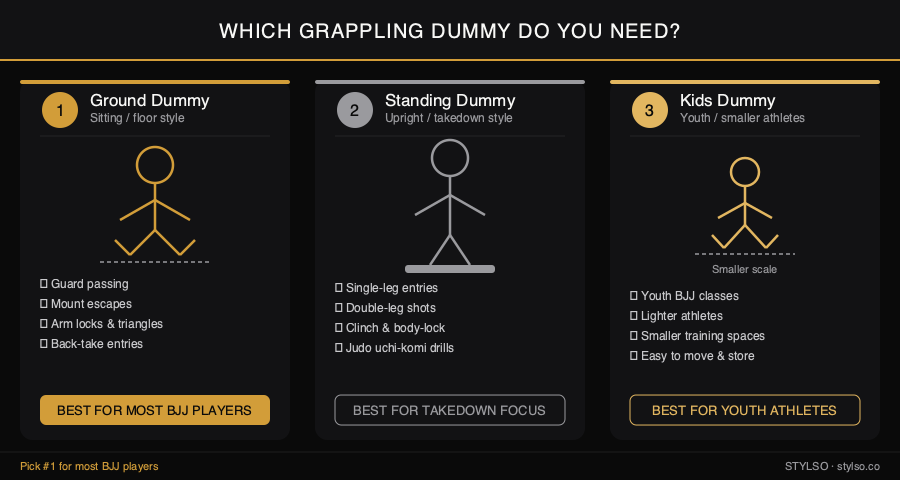
Not all dummies train the same things. Here’s a straight comparison, including the Stylso grappling dummy line — the brand’s own product, built in three styles for BJJ drilling.
| Type | Best for | Weak spot | Where to buy |
|---|---|---|---|
| Ground / sitting dummy | BJJ submissions, guard passing, mount escapes, positional drilling | Not useful for throw practice | Shop on Amazon |
| Standing dummy | Single-leg entries, double-legs, clinch work, judo uchi-komi drill sets | Less useful once the fight goes to the ground | Shop on Amazon |
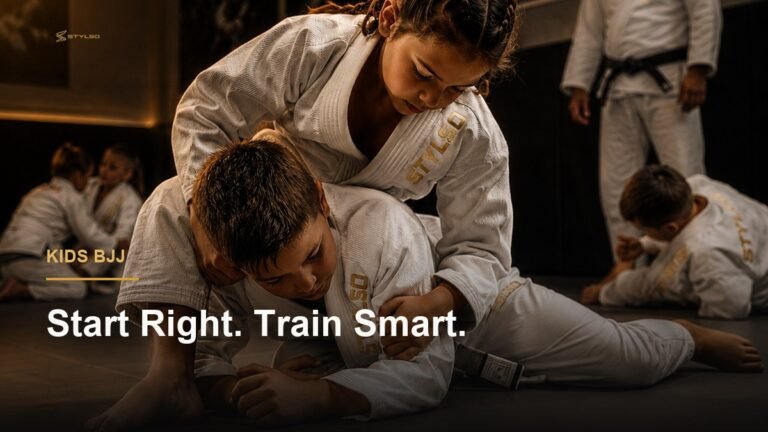
| Kids dummy | Youth BJJ programs, smaller athletes, lighter rep drilling | Adult-size techniques won’t feel right — buy adult if you’re full-grown | Shop on Amazon |
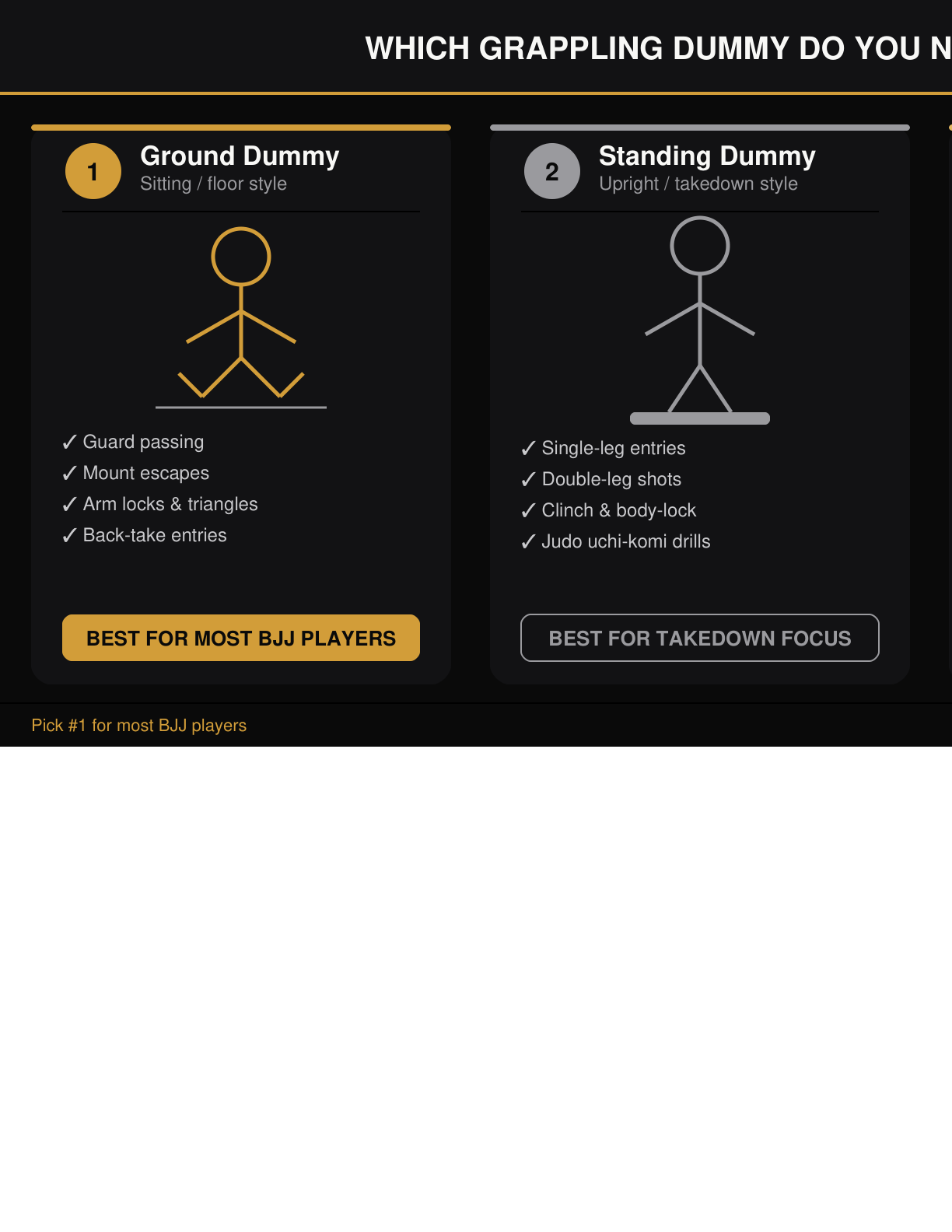
BJJ players: the ground dummy wins for most of you. If you’re drilling guard passes, mount escapes, or arm locks, a stuffed arm-and-leg dummy is what you need. It stays where you put it — unlike a loose dummy that slides across the mat and teaches sloppy technique. Stylso’s sitting and standing models come in four colors and are available on Amazon with verified reviews. Check the current price on Amazon.
What actually makes a grappling dummy worth the money
Most buyers focus on the wrong things. Here’s what actually matters.
Fill density
A loosely stuffed dummy folds and shifts when you apply a lock or sit in mount. You want a firm, even fill. Old clothes and fabric scraps work — pack them tight and layer them in. Target a filled weight of at least 40% of your own bodyweight. Looser than that and it teaches bad mechanics.
Limb placement
For BJJ, you need full arms and legs. Not all dummies have both — and the limbs need to be positioned so you can thread for an armbar or wrap for a heel hook entry. Check proportions before you buy, not just the shape in the product photo.
Outer fabric and seams
You’re grinding on this for months. Canvas and double-stitched nylon hold up. Cheap vinyl splits at the seams after hard use. Check the stitching — it’ll save you replacing a dummy you just broke in.
Size match
A dummy that’s too light slides on every rep. One that’s too heavy is hard to reposition. The sizing table below gives you a quick reference so you don’t have to guess.
The judo lesson that makes dummy drilling actually work
There’s a concept in judo called uchi-komi — entry repetition. Judo players drill hundreds of throw entries in a row without completing the throw. They step in, load the body, feel the entry position, then reset. Over and over. The goal isn’t to finish the technique — it’s to burn the entry into muscle memory until the body moves without thinking.
You can do the exact same thing in BJJ with a ground dummy. Pick one entry — say, stepping over for an arm lock from mount. Don’t finish it. Rep the approach: step, post, shift your weight, feel the angle. Reset. Do it 30 more times. You’re not trying to “do the move” — you’re making the move invisible.
High-level competitors use this before bed or first thing in the morning. No partner, no ego, just reps. The dummy doesn’t care if you mess up. It doesn’t tap you out when you lose your base. That’s the whole point.
Try this tonight: the 10-minute mount escape rep drill
This is one of the most useful solo drills in BJJ. Set your floor dummy in the mounted position — you’re on your back, dummy on your chest.
- Set up. Dummy hips over yours, arms over your shoulders or across your chest to simulate base pressure.
- Trap the arm. Shoot one hand to the dummy’s elbow and pin it tight to your side. Same-side foot steps flat on the mat, heel close to your hip.
- Bridge and roll. Drive your hips up hard — not your arms. Rotate toward the trapped side in one explosive push. Your shoulder follows your hip.
- Shrimp out. Land on your side, push off with your bottom foot, pull your hips back, get your knee in.
- Recover guard. Bring your bottom knee through. Regain closed or half guard on the dummy. Sit it back into mount. Reset.
- Repeat. 10 reps each side, 3 rounds. Rest 30 seconds between rounds.
The first few reps feel clunky. By rep 20, your hips know the pattern. Do this three times a week for a month and you’ll feel the difference in sparring. For this drill, pack the dummy firm enough to feel like real pressure — at least 35–40% of your bodyweight filled.
Size and weight guide
| Your weight | Recommended filled dummy weight | Notes |
|---|---|---|
| Under 130 lbs | 30–50 lbs | Good for most ground drilling; easy to reposition |
| 130–170 lbs | 50–80 lbs | Most common range; roughly matches an average training partner |
| 170–220 lbs | 80–120 lbs | Budget 30–60 minutes to pack it properly |
| 220 lbs+ | 120+ lbs | Floor models are easier to manage at heavy fills than standing ones |
| Kids (under 100 lbs) | 20–35 lbs | Use a kids dummy — adult dummies are too large for youth drilling |
If you’re setting up a home drilling space, a gi that holds up to repetitive movement is worth pairing with the dummy. The Stylso Men’s BJJ Gi is pre-shrunk and built for exactly this kind of daily drilling. For younger athletes, the Stylso Kids’ Gi holds up well alongside a youth-sized dummy.
Free: BJJ Solo Drilling Guide
12 solo drills you can run on any ground dummy — from armbar setups to mount escape sequences and guard recovery. Free PDF, straight to your inbox.
FAQ
Can a grappling dummy replace a training partner for BJJ?
No. A dummy doesn’t resist, counter, or adapt. It’s a rep machine — use it to groove entries and transitions until they’re automatic, then bring those reps into live sparring where they count. You still need a real partner for real progress.
What’s the difference between a sitting and standing grappling dummy?
A sitting dummy handles floor-based BJJ: guard passes, mount escapes, arm locks, triangle entries. A standing dummy is for takedown sequences: single-legs, double-legs, sprawls, and body-lock finishes. Most BJJ players spend more time on the ground, so the sitting dummy is the more popular pick.
How should I fill a grappling dummy?
Pack it tight with old clothes, fabric scraps, or foam. Loose fill is the most common mistake — it makes the dummy shift and fold, which trains bad mechanics. Layer the filler and compress as you go. Budget 30–60 minutes for a large adult dummy. The firmer the better for ground drilling.
Does Stylso make grappling dummies?
Yes. Stylso makes three styles — sitting, standing, and kids — available through the Stylso Store on Amazon with verified customer reviews. Check the current price on Amazon.
Is a grappling dummy worth it for a BJJ beginner?
Yes — if you actually use it. Beginners who rep their basics between classes improve faster. Mount escapes, guard retention, and arm locks are all drillable solo. Don’t buy one without a drilling plan. Without a plan, it collects dust. With a plan, it’s one of the most efficient pieces of training equipment you can own.
Ready to find the right dummy for how you train? Browse options and read real buyer feedback from other grapplers.