You’ve seen a UFC highlight. Or your kid wants to pick a martial art. You Google “bjj vs karate which is better” and get twelve tabs and zero clear answer. Here’s the straight take — no hype, no “just try both.”
BJJ wins for ground control, live sparring from day one, and practical self-defense. Karate builds striking fundamentals and discipline — it’s a strong first art, especially for kids. Neither is universally better: BJJ solves the ground problem; karate solves the striking problem. Your goal decides which one you start with.
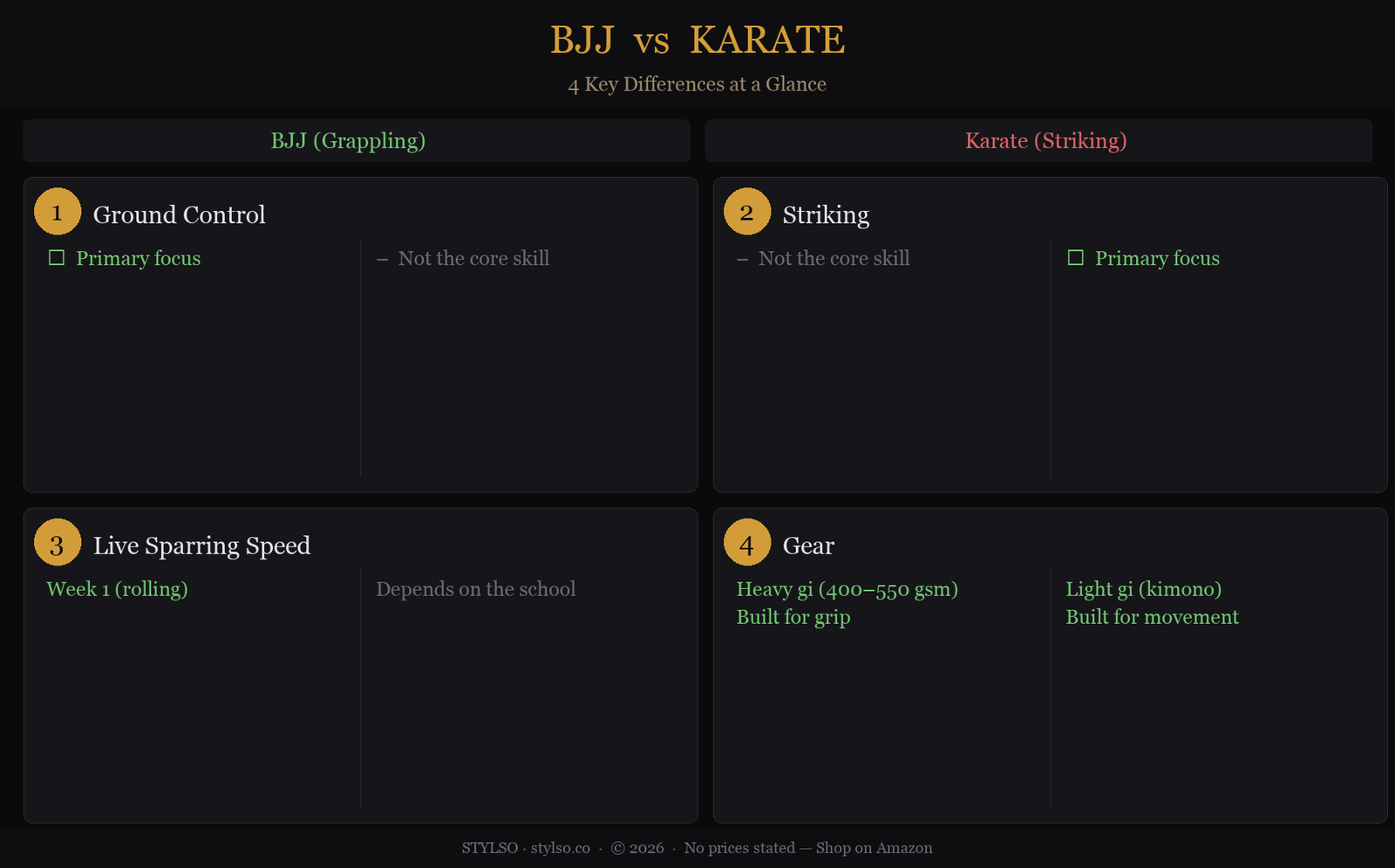
- BJJ puts you grappling in the first week. Karate takes longer before the techniques get pressure-tested against a resisting partner.
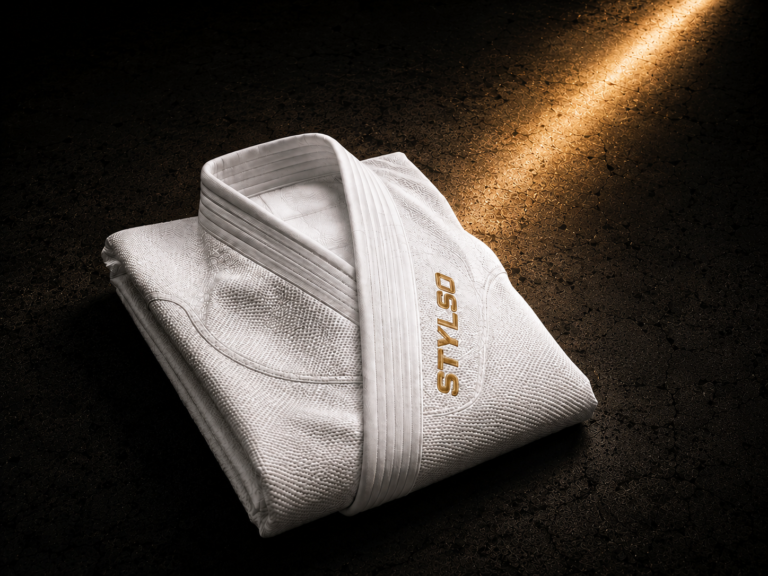
- Both arts use a gi — but they’re different garments. A BJJ gi is built to be grabbed; a karate gi is cut lighter for striking movement.
- If competition or MMA is your end goal, BJJ gives you a clearer road map from day one.
What You’re Actually Choosing Between
Skip the history lesson. Here’s what matters on the mat.
BJJ — Brazilian Jiu-Jitsu — is a grappling art. You learn to control opponents on the ground: positions, chokes, joint locks, escapes. Every class ends with live rolling — sparring against a partner who’s actively resisting. It’s uncomfortable at first. It’s also honest. You find out fast what works and what doesn’t.
Karate is a striking art. Punches, kicks, blocks, forms (kata). Some schools spar full-contact; others run controlled point sparring or focus purely on technique. The experience varies a lot by style — Kyokushin is brutal, some WKF-style schools are softer. Ask before you sign up. The school matters more than the style.
Here’s what most comparisons miss: these arts solve different problems. BJJ starts where most fights end — on the ground. Karate starts standing. Pick the problem you care most about solving first.
BJJ vs Karate: Head-to-Head
| BJJ | Karate | |
|---|---|---|
| Core skill | Ground control + submissions | Striking, kicks, blocks |
| Live sparring | From week 1 (rolling) | Depends on the school |
| Self-defense angle | Ground scenarios, clinch, takedowns | Standing attacks, distance control |
| Competition | Points + submissions (IBJJF, ADCC) | Points + kata (WKF, knockdown styles) |
| Good for kids? | Yes — safe contact, discipline, confidence | Yes — structure, forms, early belt rewards |
| Black belt timeline | 8–12 years on average | 3–6 years on average (varies by style) |
| Gear | BJJ gi (heavier, built for grip), belt | Karate gi (lighter kimono), belt |
What Karate Teaches You That BJJ Doesn’t
Here’s what BJJ coaches don’t always say out loud: karate has real advantages.
Distance management. If someone throws a punch, karate trained you to read the range and move. BJJ trained you to close the gap and clinch. Both answers are right — it just depends where the confrontation begins. Grapplers who’ve trained striking often defend takedowns better because they understand the pocket.
Kime. That’s the Japanese concept of focus — the idea that every technique has a single point of maximum tension, then release. It’s a body-mechanics principle that transfers to anything athletic: the snap of a hip escape, the torque of a collar choke, the finish of a double-leg. Karate practitioners often show cleaner mechanics when they start BJJ because of it.
Deliberate repetition. Kata gets mocked in MMA circles, but the practice of drilling a movement slowly and correctly before you drill it fast — that’s the same discipline BJJ uses in drilling. The form is different. The intent is the same.
If you’ve trained karate before BJJ, you’ll often have more upright posture, sharper distance sense, and cleaner hinge mechanics than the average white belt. That’s a real edge in the first six months of grappling. Cross-discipline knowledge isn’t wasted — it compounds.
Which One Should You Start With?
Start with BJJ if:
- You want live, resisted sparring from the very beginning
- Ground control, chokes, and joint locks are the skills you’re after
- You’re preparing for MMA, submission wrestling, or competition grappling
- You’re an adult who wants practical self-defense that gets pressure-tested in class
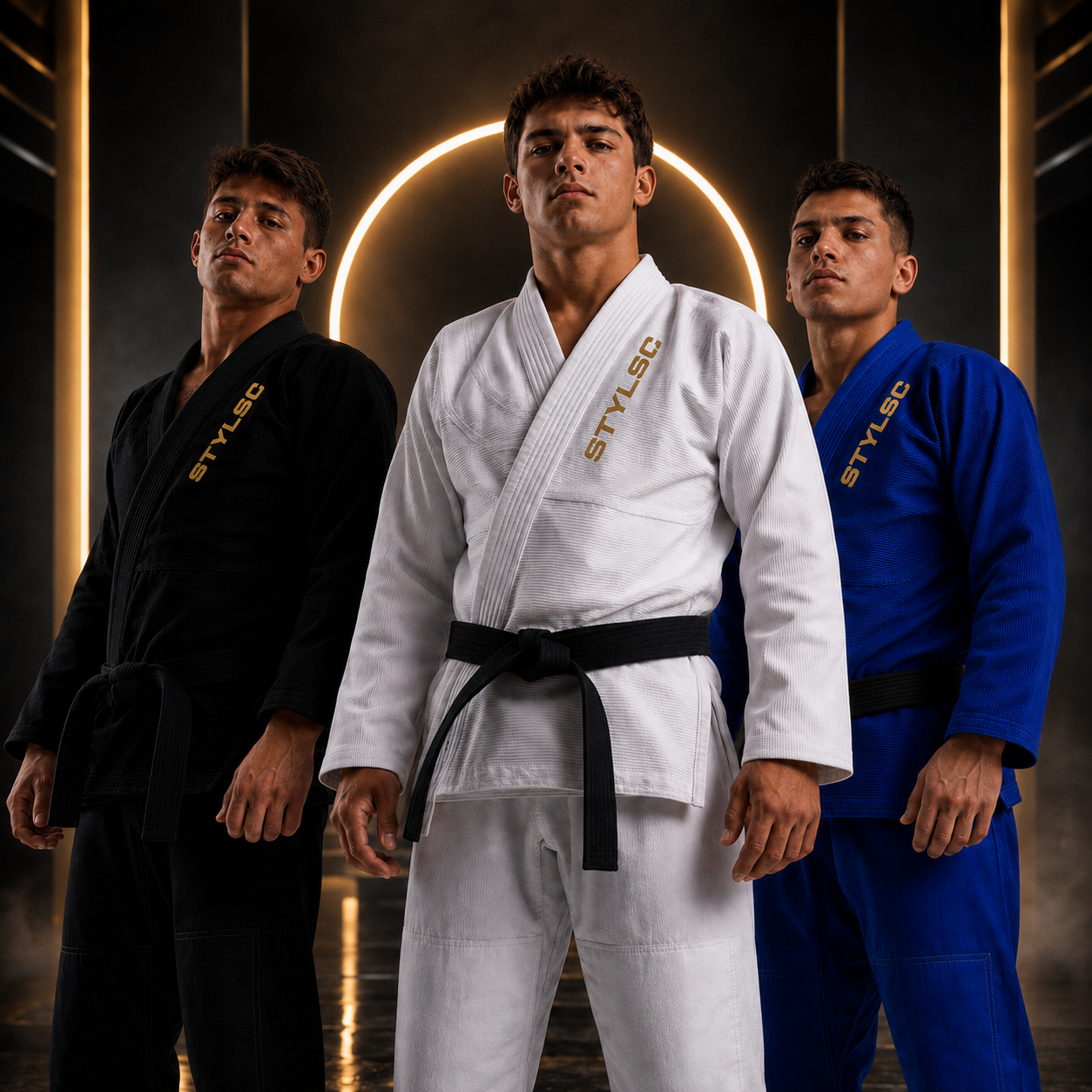
You’ll need a BJJ gi from day one. It doesn’t have to be expensive — one that lasts your first year, survives regular washing, and doesn’t fall apart in your first roll. Here’s what to look for in a first BJJ gi before you buy anything.
Shop on Amazon — Stylso Men’s BJJ Gi
Start with Karate if:
- You want striking fundamentals first — and you find a school with real sparring, not just forms
- Discipline, ceremony, and the belt milestones matter to your training culture
- You prefer less body-to-body contact in your first few months
For kids specifically: either works well. Karate tends to have more age-structured curricula and earlier belt rewards, which kids respond to. BJJ’s contact is safe and structured — and kids often love the puzzle of the ground game. Many parents run both: karate on Tuesday, BJJ on Thursday. If you choose BJJ for your child, note that the kids’ gi fits differently from the adult version.
Shop on Amazon — Stylso Kids BJJ Gi
A Word on Gear
Both arts use a gi — your training uniform. They’re not the same piece of clothing.
A BJJ gi is built to be grabbed. The collar, lapels, and sleeves are reinforced because that’s what training partners grab constantly during rolling. It’s heavier fabric — typically 400–550 gsm — designed to last hundreds of washes and sessions. A karate gi (called a karategi or kimono) is cut lighter. Shorter sleeves, thinner cotton, built for striking movement — not gripping.
Don’t buy a karate gi for BJJ class. The collar stretches within a month of rolling. Seams tear. Your training partners will notice, and not in a good way. Get a BJJ-specific gi from the start — it’ll outlast your white-belt phase and beyond.
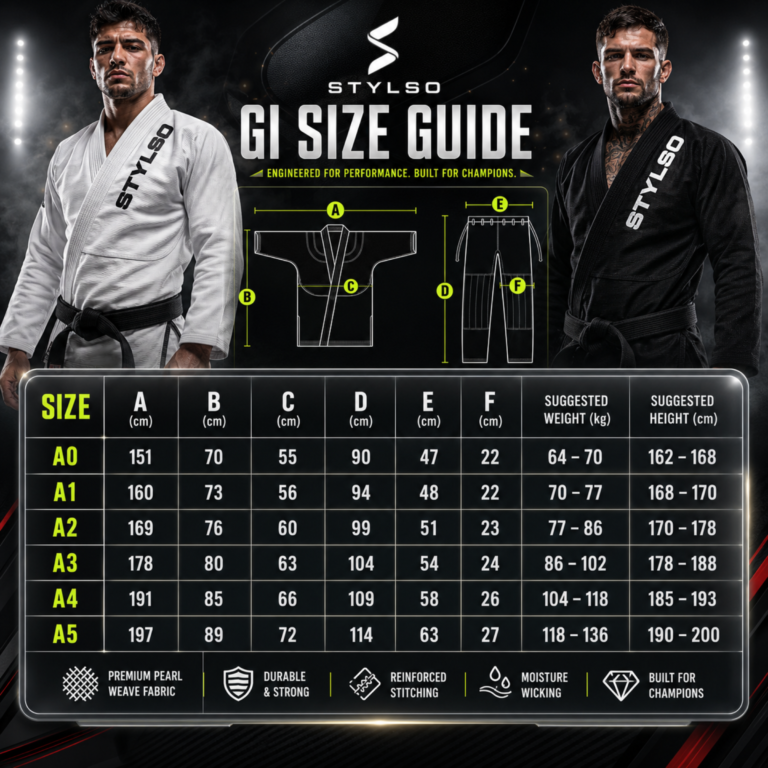
Sizing works the same way in both arts: height and weight → find your size → size up if you’re between sizes. If you’re new to BJJ sizing, the Stylso size guide walks through A0–A5 with real measurements. And if you’re wondering whether your BJJ gi could double for karate class, read this comparison — the short answer is no, and it explains exactly why the fabrics are different.
Free: BJJ vs Karate Quick-Decide Guide
Can’t decide which art to start? This one-page cheat sheet — 3 questions, a head-to-head comparison table, and a beginner gear checklist — gives you a clear answer in under two minutes. Get it free.
FAQ
Is BJJ more effective than karate for self-defense?
For ground scenarios and close-quarters grappling, BJJ has a stronger real-world track record — especially in one-on-one situations that go to the ground. Karate covers distance and striking well. The art that gets you sparring against a resisting partner tends to produce more reliable self-defense skills. Most confrontations have both standing and ground phases, so both arts are useful in the right situation.
Can I train BJJ and karate at the same time?
Yes, and plenty of athletes do. Aim for at least three BJJ sessions a week to build real grappling skills. Karate once or twice a week complements it well — you’ll sharpen your standing game while the ground work locks in. Don’t split too thin in your first three months though: pick a primary art, build the foundation, then layer in the second.
Is karate useful for MMA?
It depends on the style and school. High-level MMA has produced effective karate-based fighters — Lyoto Machida, Stephen Thompson, and others. The styles that transfer well have heavy live sparring and pressure-tested techniques. Pure kata-based schools don’t prepare you for live combat. If you want karate as part of an MMA game, find a school that spars regularly.
How long does a BJJ black belt take compared to karate?
BJJ takes considerably longer. The average is 8–12 years, and there are only five belt colors (white → blue → purple → brown → black). Karate typically runs 3–6 years to black belt depending on the style and how often you train. For a full breakdown of BJJ’s progression, check the BJJ belt ranking guide.
Do I need a different gi for BJJ and karate?
Yes — they’re built differently and not interchangeable. A BJJ gi is heavier (400+ gsm), reinforced at the collar and sleeves for gripping, and cut for rolling on the mat. A karate gi is lighter, shorter-sleeved, and built for striking movement. Using a karate gi for BJJ rolling will tear it quickly. Start with a BJJ-specific gi. If you’re unsure about training format, the gi vs no-gi guide covers what to expect in your first few months.