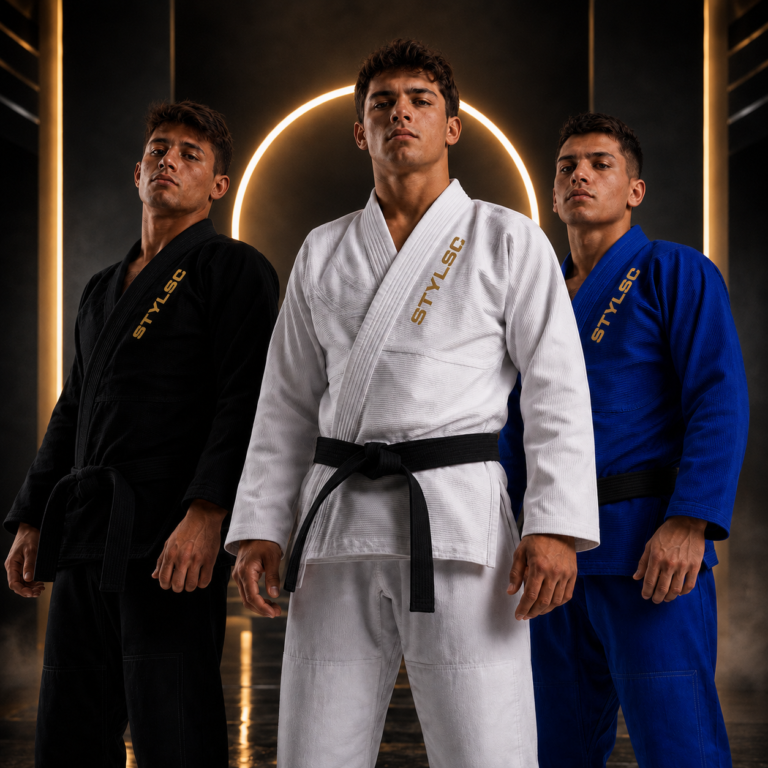
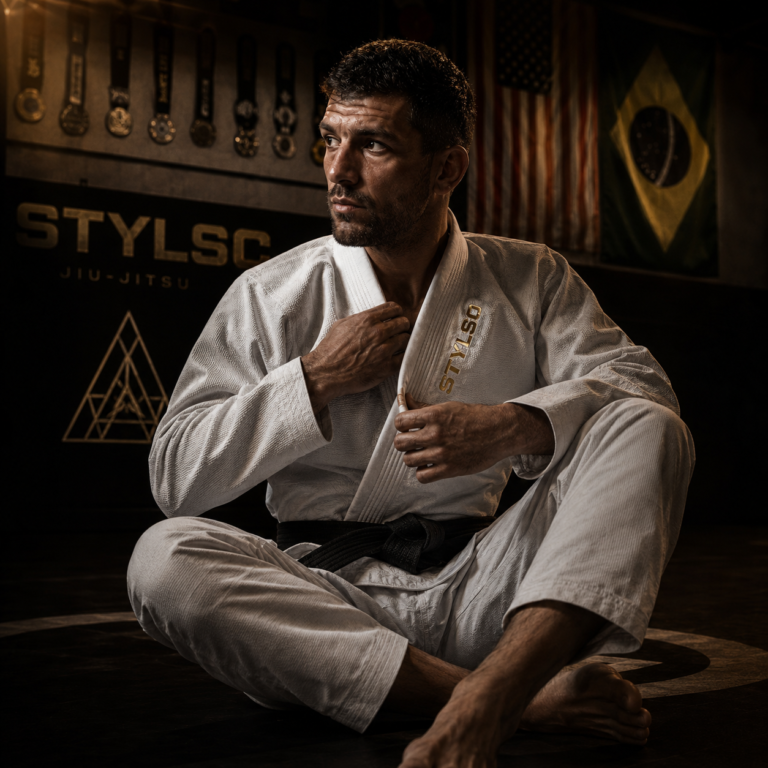
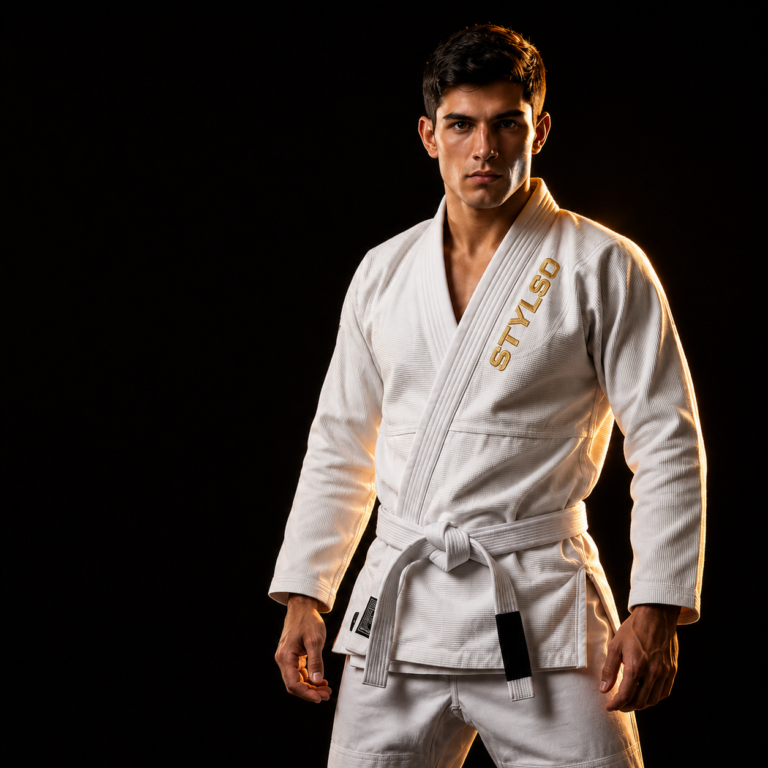
Stylso — BJJ gis and combat-sports apparel, built for athletes who train.
You grab the collar on your first roll and it feels completely different from the gi you tried at the sports store. Stiff in one place, almost silky in another. You’re wondering what this thing is actually made of — and whether it matters for your training.
It does. A lot. The base material is cotton, but the way that cotton is woven changes everything about how a gi feels, holds up, and fits over time. Most beginners buy the wrong weave for their training load without knowing it. Here’s what nobody says in the product description.
- BJJ gis are made from cotton or cotton-blend, woven in one of four main patterns
- Pearl weave is the training standard: tough, light, dries faster than the heavier options
- The collar and pants use different constructions — layered cotton, rubber cores, ripstop
- Weave type matters more than brand name for how a gi actually performs on the mat
It starts with cotton
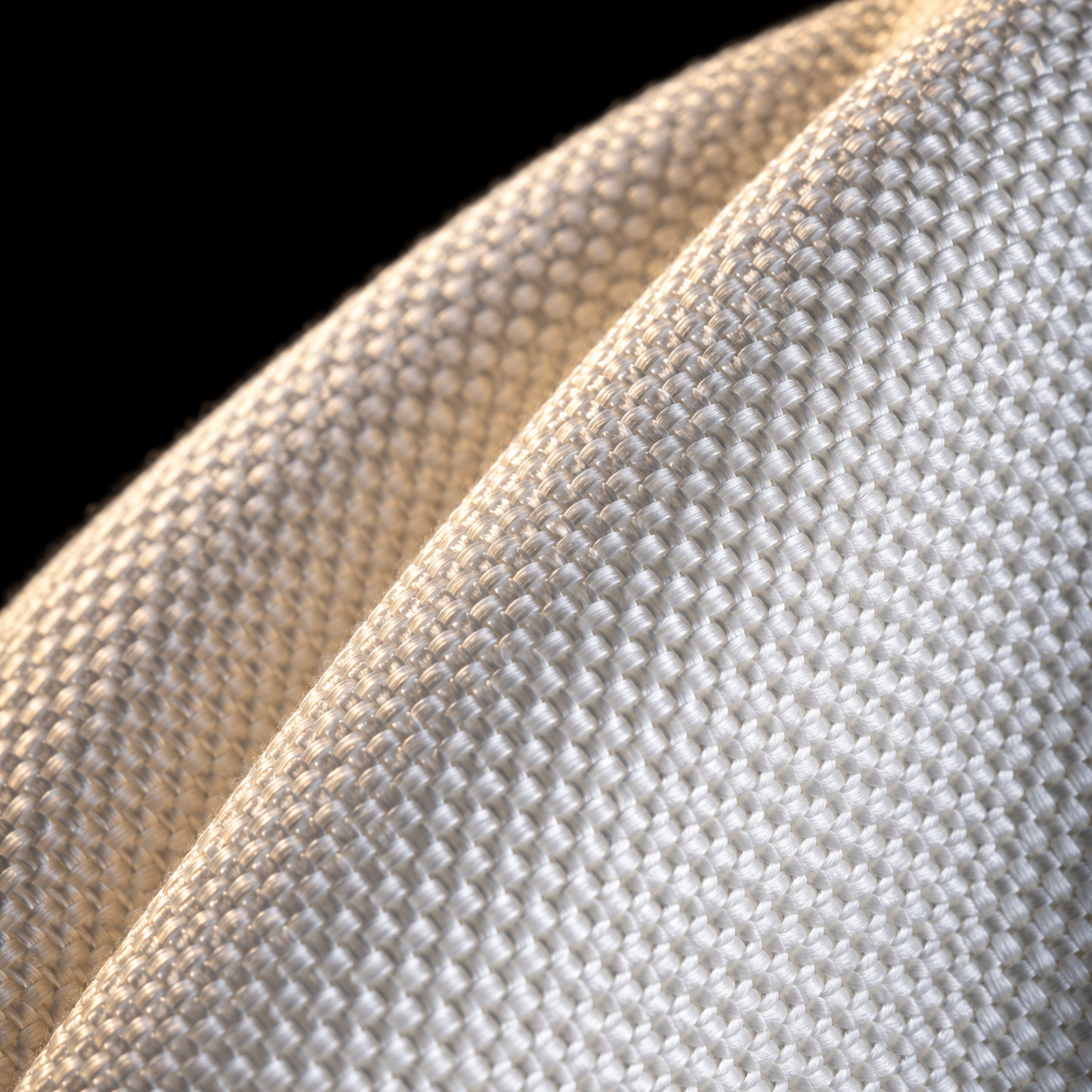
Every gi you’ll find at your gym — budget, boutique, or somewhere in between — starts with cotton. It breathes. It softens over dozens of washes. It handles the twisting, pulling, and grinding that grappling puts on fabric without falling apart after a month of training.
Some gis blend in a small percentage of polyester (usually 5–15%) to help with drying time. You’ll see “cotton blend” on the tag. It’s not a downgrade — it just dries faster after a sweaty session. But most quality BJJ gis are 100% cotton, and cotton is what you’ll want for competition and most hard training.
Here’s the thing: the cotton itself isn’t what makes one gi feel completely different from another. That’s the weave. The same cotton fibers, wound up differently, produce fabric that feels almost silky versus fabric that feels almost like denim. That’s where the real differences live — and where most beginners get confused.
The four main weave types (and what they mean for you)
Think of weave types like thread count in bedsheets — except instead of softness, the difference shows up in weight, breathability, grip texture, and how the fabric holds up over hundreds of rolls.
| Weave Type | Weight | Feel | Durability | Best For | Shop |
|---|---|---|---|---|---|
| Pearl Weave | Light–Medium | Smooth, slight texture | High | Training & competition | Stylso Men’s Gi ↗ |
| Gold Weave | Light–Medium | Softer, refined | Medium–High | Competition, hot gyms | Shop on Amazon ↗ |
| Single Weave | Light | Thin, flexible | Medium | Hot climates, beginners | Shop on Amazon ↗ |
| Double Weave | Heavy | Stiff, thick | Very High | Cold gyms, durability-first | Shop on Amazon ↗ |
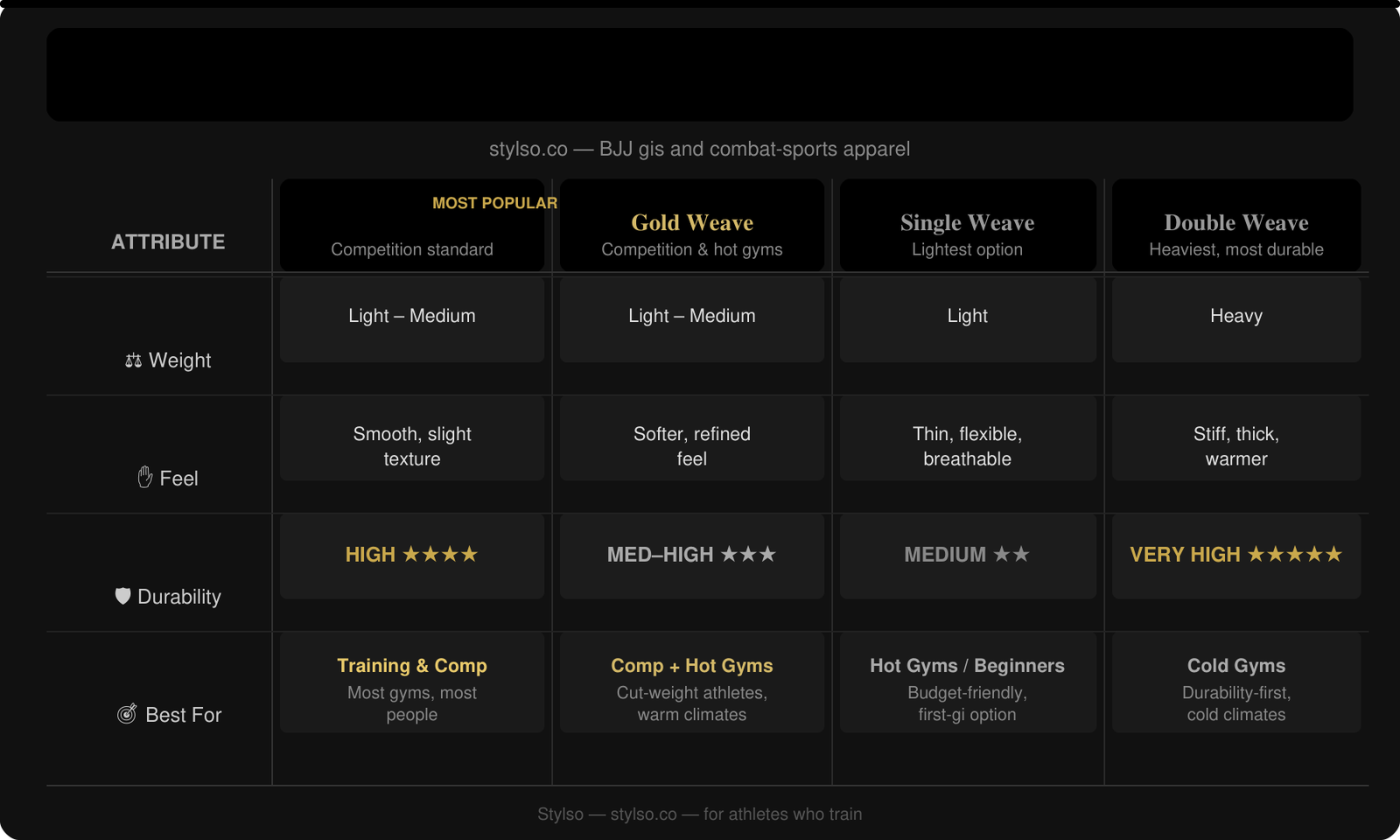
Pearl weave is the standard for a reason. It hits the sweet spot — light enough to wear at competition weigh-in, tough enough to survive daily rolling without fraying at the seams after six months. The Stylso gi uses premium pearl weave. It’s the same reason most competition gis default to it: the fabric holds its shape over months of hard use without adding unnecessary weight to your kit bag.
Shop the Stylso Pearl Weave Gi on Amazon
The collar, pants, and stitching
The jacket fabric gets all the attention. But the collar is what gets grabbed most — and it’s built completely differently from the rest of the gi.
A gi collar isn’t just woven cotton. It’s multiple layers of cotton wrapped around a rubber or foam core, then stitched tightly so it holds its shape under constant grip pressure. A soft, floppy collar means grips come on easy — not good when you’re already learning to defend them. A stiff collar fights back. That stiffness comes from the layered construction, not from using a heavier material.
Gi pants are usually ripstop fabric — a grid-stitched, lighter cotton weave designed to resist tearing. It feels stiffer than the jacket, but it handles the hip escapes, triangle setups, and knee-on-belly pressure that grappling puts on the lower half of a gi. Good pants have double or triple stitching on the knees and inner thighs. That’s what separates pants that last from pants that split mid-roll.
Stitching quality matters across the whole gi too. Double or triple stitch on armpits, collar edges, and major seams is what turns a gi from a six-month product into a two-year product. Check the seam count before you buy — it’s boring to look at until one pops at your first tournament.
Does the material change how you wash it?
Yes — and this is where most people get it wrong at least once.
Cotton shrinks when it meets high heat. A pearl weave gi in a hot dryer can come out half a size smaller. That’s an expensive mistake. The rule is simple: cold wash (30°C / 86°F or cooler), then hang dry. That’s it. No special detergents, no special cycles.
Here’s the thing worth actually learning: wash your gi after every single session. Cotton absorbs sweat, skin cells, and bacteria fast. Dirty gis are one of the main ways staph infections and ringworm spread through a gym. Cold wash after every class, hang dry in the shade. Your gi lasts longer, your training partners don’t hate you, and the pearl weave holds its structure far better than if you machine dry it repeatedly.
If you train twice a day, a cotton-polyester blend gi dries faster between sessions — a real advantage when you don’t have eight hours between classes. But for most people training once a day, pure cotton washed cold and hung to dry is the durability standard. See the full guide on how to stop a gi from shrinking.
Which weave should you actually pick?
Here’s the quick version, without overthinking it:
- Training 2–4x per week in a normal gym: pearl weave. It’s the right answer for most people, most of the time.
- Your gym runs hot or you cut weight for comp: single or gold weave — lighter feel, faster dry.
- Want one gi that survives years of hard use: pearl weave. Double weave if maximum durability matters more than weight.
- First gi for a kid: pearl weave in the K-series, sized for their current height with a little room to grow — but not so much room it’s falling off them in the first class.
Not sure on sizing? The Stylso A-series runs true to the chart below. Measure height and weight both — if they point to different sizes, go with the one matching your weight. If you’re right at the border, size up. Stylso gis are pre-shrunk pearl weave, so the size you order is the size you’ll wear.
| Size | Height (cm) | Height (in) | Weight (kg) | Weight (lbs) |
|---|---|---|---|---|
| A0 | 162–168 cm | 64–66 in | 64–70 kg | 141–154 lbs |
| A1 | 168–170 cm | 66–67 in | 70–77 kg | 154–170 lbs |
| A2 | 170–178 cm | 67–70 in | 77–86 kg | 170–190 lbs |
| A3 | 178–188 cm | 70–74 in | 86–102 kg | 190–225 lbs |
| A4 | 185–193 cm | 73–76 in | 104–118 kg | 229–260 lbs |
| A5 | 190–200 cm | 75–79 in | 118–136 kg | 260–300 lbs |
Between A2 and A3? See our A2 vs A3 gi sizing guide — it covers measurement, fit differences, and which to choose if your numbers split across both.
Getting a gi for a kid? The K-series starts at K000. Check the best BJJ gi for kids for K-series sizing and a full breakdown.
Shop the Stylso Men’s Gi on Amazon
Shop the Stylso Kids’ Gi on Amazon
Free: BJJ Gi Materials Cheat Sheet
A one-page printable — all four weave types at a glance, the Stylso A-series size chart, and the 3-step care rule that keeps your gi lasting for years. Get it instantly.
Frequently asked questions
- Is a BJJ gi made of 100% cotton?
- Most are. Some gis blend in 5–15% polyester to help with drying speed. Both work well for training — pure cotton tends to soften more over time, while cotton-poly blends dry faster after hard sessions. Either way, cotton is the base material of every quality BJJ gi.
- What’s the lightest BJJ gi material?
- Single weave cotton is typically the lightest. Gold weave comes close. Pearl weave sits in the light-to-medium range — light enough for competition, tough enough for daily training. Most competitors choose pearl weave because it’s that balance.
- Is pearl weave or gold weave better for BJJ?
- Pearl weave is more durable and by far the most common. Gold weave is slightly softer and a touch lighter. For most training, pearl weave wins. If you train in a hot gym or cut weight for competition, gold weave is worth trying. See the full pearl weave vs gold weave comparison.
- Do cotton BJJ gis shrink?
- Yes — if you use heat. Cold wash and hang dry prevents it. A hot dryer can shrink a gi half a size or more. Stylso gis are pre-shrunk, so the first wash won’t cause a big drop — but heat damage after that is permanent. See the full guide on preventing gi shrinkage.
- What’s a gi collar made of?
- Multiple layers of cotton wrapped around a rubber or foam core, stitched tightly so it holds its shape under grip pressure. A soft, floppy collar means grips come on easy — not what you want when you’re learning to defend them. Quality collars stay stiff under pressure.
- What material are gi pants made of?
- Ripstop fabric — a grid-stitched cotton weave that’s lighter but tear-resistant. It handles the hip pressure, knee work, and scramble stress of grappling. Good pants have double or triple stitching at the knees and inner thighs. That’s what keeps them together after a year of hard training.
Stylso Editorial Team | About Stylso