The fastest way to improve BJJ flexibility is to work the movements your game actually uses. Five targeted drills — hip circles, spinal bridges, shoulder rotations, active hamstring extensions, and ankle rocks — done consistently after training build functional range in four to six weeks. Here’s the exact sequence.
- Stretch after training, not before — static stretching before class can reduce power output for up to 30 minutes
- The three biggest BJJ flexibility gaps are hips, shoulder internal rotation, and spinal segmental extension
- Ten minutes daily beats one long session weekly — consistency matters more than duration
What Tight Hips Are Actually Doing to Your BJJ
You’ve felt it. You go for open guard and your hip just doesn’t open. You try to bridge from under mount and your spine won’t extend. Your partner slips collar grips and your shoulder catches before you can post.
That’s not a technique problem. That’s a range-of-motion problem. And here’s what nobody says out loud: most recreational grapplers never fix it because they stretch the wrong muscles, at the wrong time, with the wrong method.
Good news? BJJ only needs mobility in a few specific planes. You don’t need the splits. You need hip external rotation, shoulder internal reach, and spinal segmental control. That’s it. The moves below target exactly those three things.
The 5 Flexibility Gaps That Hurt BJJ Grapplers Most
| Flexibility Gap | Why It Limits Your BJJ | The Fix |
|---|---|---|
| Hip external rotation | Limits open guard, butterfly, De La Riva entries | Hip Hinge + Circle |
| Spinal segmental extension | Limits bridging and back escapes | Spinal Bridge |
| Shoulder internal rotation | Limits collar grips and defensive arm posture | Lying Shoulder Rotation |
| Hamstring active range | Limits guard retention and single-leg entries | Active Hamstring Extension |
| Ankle dorsiflexion | Limits base stability and knee-cut passing | Ankle Dorsiflexion Rock |
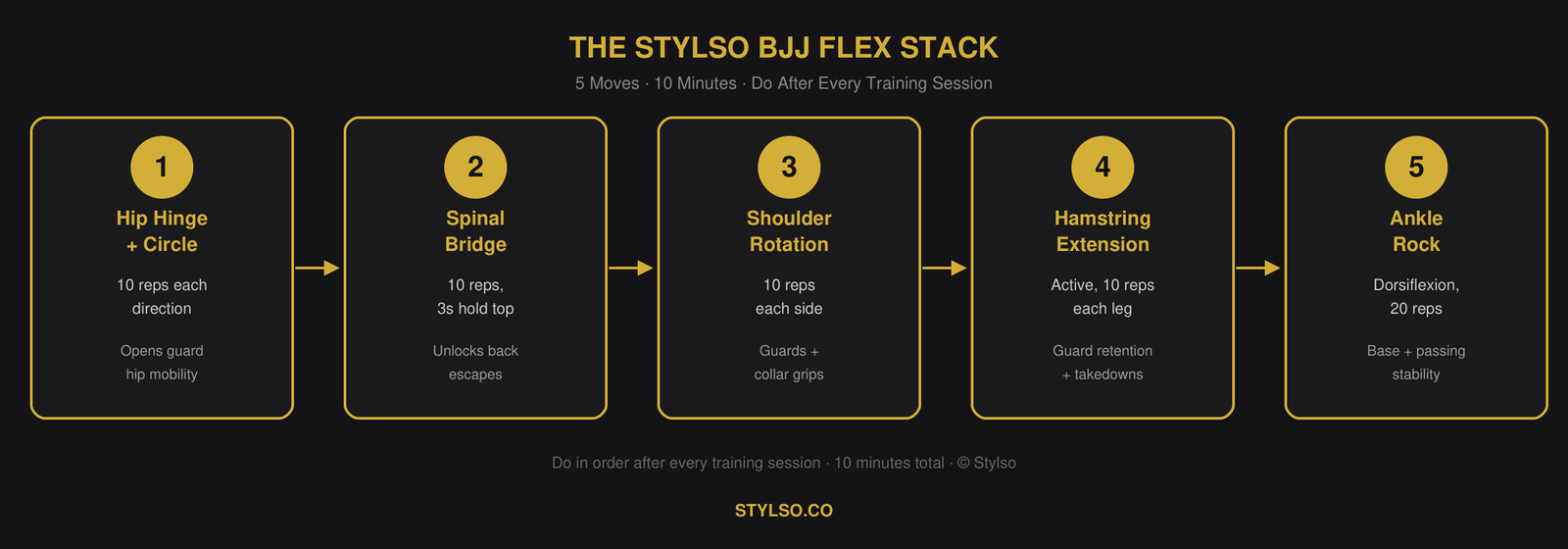
The Stylso BJJ Flex Stack: 5 Moves, 10 Minutes
Do these in order after every training session. Not before. The body is warm, the nervous system has loaded the movement patterns — that’s when range gains actually stick.
Move 1: Hip Hinge + Circle
Stand feet hip-width. Push your hips back until you feel the glutes load. Then draw a slow circle with your hip — forward, out, back, in. Ten reps each direction. This targets hip external rotation, the movement most desk-job grapplers are missing entirely. No equipment, no warmup needed.
Move 2: Spinal Bridge
Lie on your back, knees bent, feet flat. Push hips up slowly, one vertebra at a time, until your spine is extended. Hold three seconds at the top. Lower slowly. Ten reps. You’re not going for height — you’re training each segment of the spine to move independently. That’s the skill your bridge-and-roll escapes need every single class.
Move 3: Lying Shoulder Rotation
Lie on your side, knees stacked, top arm forward on the mat. Slowly sweep that top arm up and over — let your shoulder blade open, let your chest rotate. Don’t force it. Follow the rotation until it stops, then breathe out and see if it’ll go another inch. Ten reps per side. This is the move that stops the “my shoulder locked up in guard” problem before it starts.
Move 4: Active Hamstring Extension
Lie on your back. Bring one knee to your chest, then actively extend that leg toward the ceiling — don’t pull it with your hands, push it up with your quad. Lower and repeat. Ten reps each leg. Active extension beats passive stretching here because your guard needs hamstring control, not just length. If you can’t push the leg up under your own power, you can’t hold guard under resistance either.
Move 5: Ankle Dorsiflexion Rock
Stand near a wall, toes a few inches out. Rock your knee forward to touch the wall without letting your heel lift. Twenty reps per side. Tight ankles kill your base in standing guard passes and wrestling entries. This is the fix most grapplers never use — because nobody tells them ankle mobility even matters in BJJ.
The Cross-Discipline Lesson: What Yoga and Judo Actually Teach
Yoga has one rule worth stealing: breathe out on the stretch. Exhaling activates the parasympathetic nervous system, which tells your muscles to stop bracing. That’s why you can always go a little further on the breath out. Use it in every move above — you’ll feel it on Move 3 (shoulder rotation) immediately.
Judo adds something different. Ukemi — breakfall practice — trains your spine to absorb impact without locking up. That’s why experienced judokas have unusually mobile spines. Ten minutes of basic front and back ukemi patterns a week builds the same segmental spinal control, and it transfers directly to your BJJ bridge-and-roll escapes. You don’t need to throw anyone. Just learn the fall patterns.
Before vs. After: When to Stretch
Here’s the rule, and it’s backed by decades of sports science: static stretching before training reduces force output for up to 30 minutes. You don’t want to go into live rolling with weaker grips and slower hips.
Before class, move. Hip circles, shrimping, pummeling. Dynamic movement warms the joints without cutting power.
After class, stretch. The muscle fibres have been loaded and primed. Range gains stick. Save the Flex Stack for post-roll — every time, without exception.
The Gear That Helps You Move Right
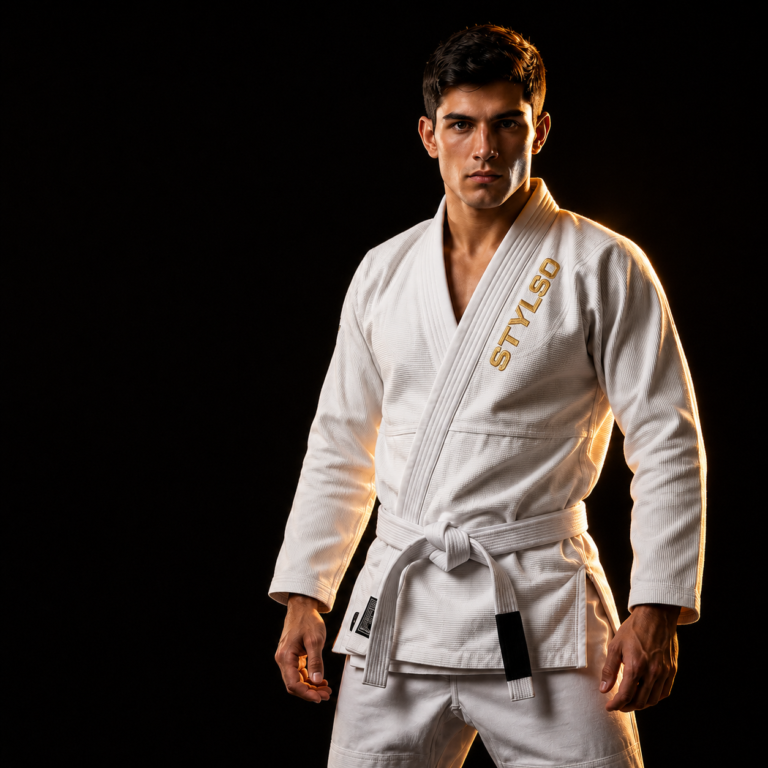
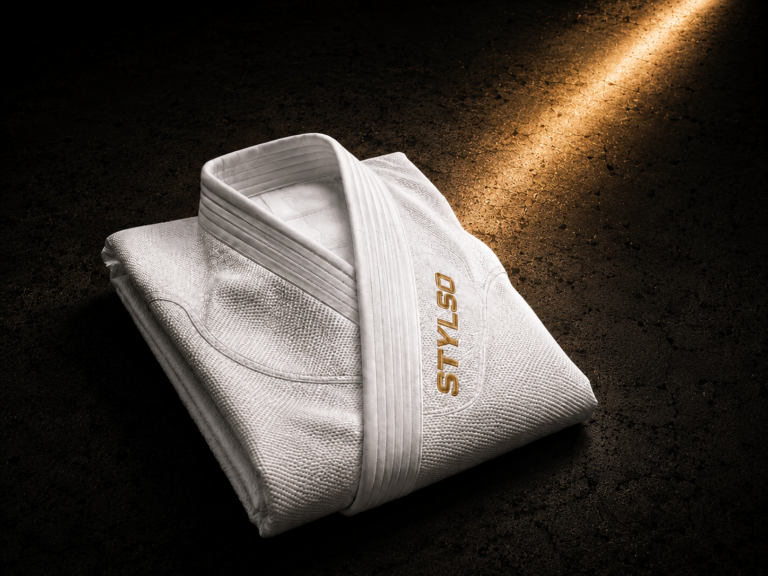
A gi that pulls across the shoulders or binds at the hip is fighting your range of motion on every rep. The Stylso men’s gi is cut for a full athletic range — you’ll notice it when you’re drilling open guard entries and the jacket doesn’t pinch your shoulders back.
For flexibility work before or after class, a well-fitted rashguard keeps the joints warm without restricting movement.
Related gear guides: Best Rashguard for BJJ · BJJ Warm-Up Routine
Free: The Stylso BJJ Flex Stack Printable
The 10-minute daily checklist + full 5-move routine in one printable page. Get it instantly.
More BJJ Training Guides
Keep building your game: BJJ Injury Prevention · BJJ Solo Drills at Home · How to Improve Your BJJ Guard · BJJ Breathing Techniques
Frequently Asked Questions
How long does it take to see flexibility improvement in BJJ?
Most grapplers notice functional range gains in four to six weeks of consistent daily work. The first gains show up as less resistance in positions you already know — not new flexibility, just less friction. Full mobility shifts take three to six months.
Is stretching before BJJ class a bad idea?
Static stretching before rolling can reduce power output for up to 30 minutes. Use dynamic warm-ups before class — hip circles, shrimping, pummeling. Save static and active stretching for after training.
Does yoga actually help BJJ flexibility?
Yes — specifically the breathing mechanics and the poses that open hip external rotation. Yoga’s exhale-on-the-stretch method relaxes muscle bracing better than forcing range. Pigeon pose and figure-four hip openers transfer directly to BJJ guard positions.
Why do my hips feel tight even though I stretch?
You might be stretching passively instead of actively. BJJ needs active range — your guard retention and hip escapes require the hip to move under load. Switch to active extensions and hip circles instead of just sitting in a stretch.
Can I improve BJJ flexibility without a gym?
The Stylso BJJ Flex Stack requires no equipment and about three square metres of floor space. All five moves are bodyweight. You can do the full routine at home after every training session.
How does better flexibility reduce BJJ injuries?
Most BJJ injuries happen at the end of range — shoulder locks, knee sprains, hip flexor tears. More functional range means joints reach those end positions less often. Better hip external rotation specifically reduces the knee torque that causes meniscus injuries in guard positions.