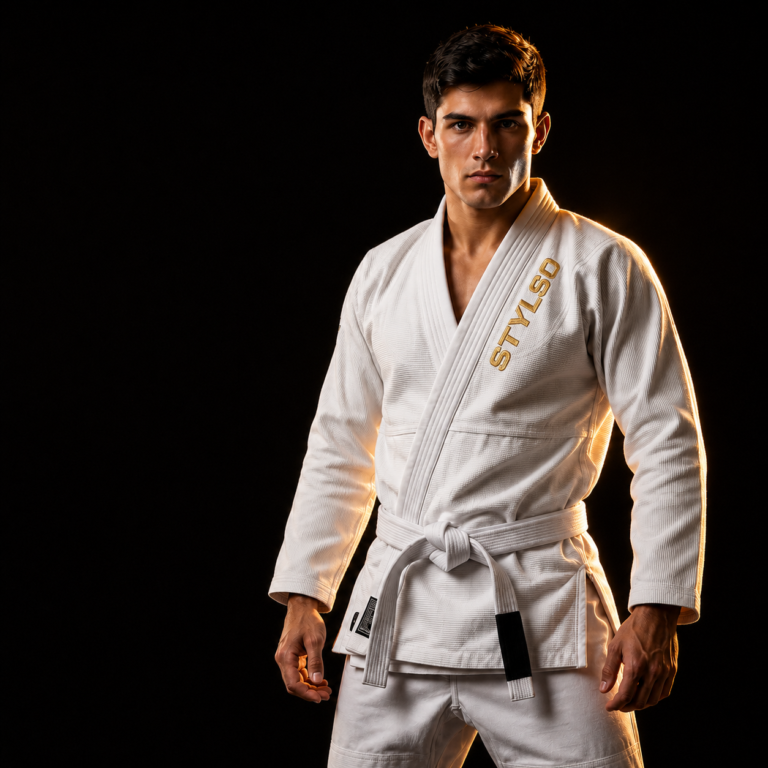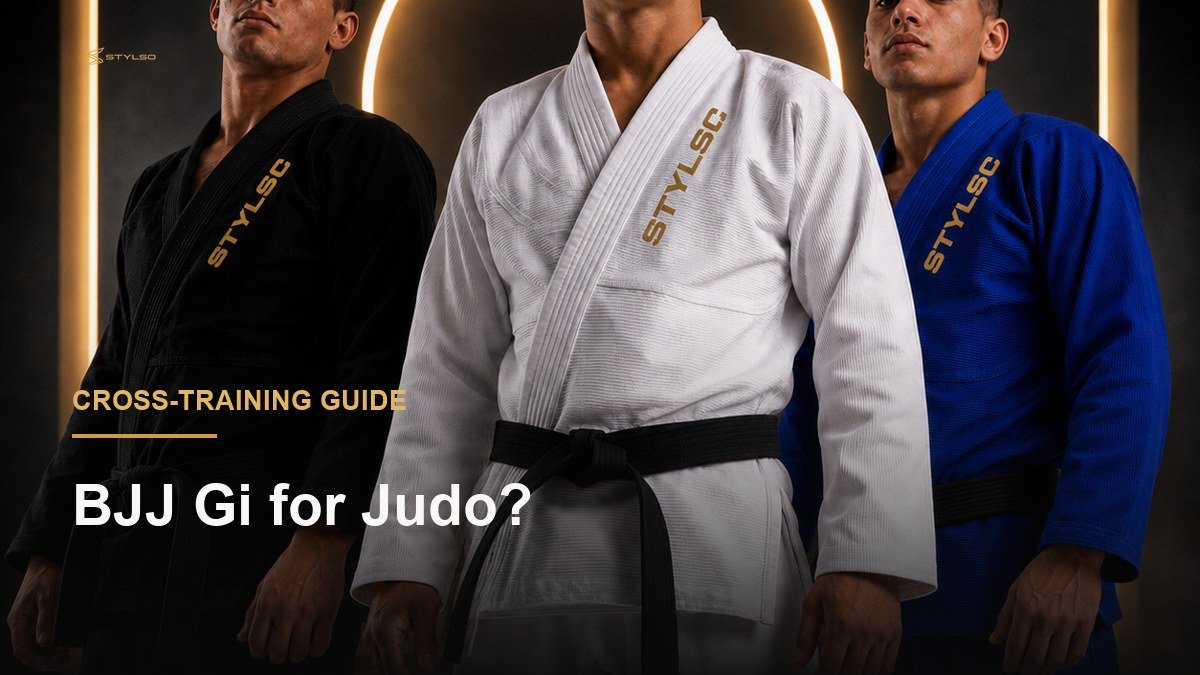
You’ve got a BJJ gi in your bag. Judo practice starts Monday. Do you really need to buy a whole second uniform — or can you show up in what you have?
Short answer: yes, you can use a BJJ gi for casual judo. Most coaches won’t turn you away, especially if you’re just cross-training or starting out. For official IJF (International Judo Federation) tournaments or gradings, though, you’ll need a proper judo gi — the rules are specific, and your BJJ cut won’t pass the sleeve check.
- A BJJ gi works fine for casual judo practice and beginner clubs
- For IJF competition and official gradings, you’ll need an approved judo gi
- The two gis look similar but differ in sleeve length, lapel thickness, and jacket length
What Makes a Judo Gi Different?
They look alike at first glance. Both are a heavy cotton jacket, drawstring pants, and a belt. But pick them up side by side and you’ll see it immediately.
Judo gis are built for grip fighting. The IJF standardized sleeve and lapel dimensions decades ago because judo throws depend on gripping the collar and sleeve — the dimensions have to be exact. A BJJ gi is cut to prevent easy grips: shorter sleeves, tighter fit, slimmer lapel.
| Feature | BJJ Gi | Judo Gi |
|---|---|---|
| Sleeve length | Short — 7–8 cm from wrist | Long — within 5 cm of wrist (IJF rule) |
| Lapel | Thin and tight — hard to grip | Thick and wide — built for gripping |
| Jacket length | Shorter, athletic cut | Hip-length, looser |
| Fabric weight | 350–550 gsm | 650–750 gsm (heavier) |
| Fit | Slim, athletic | Loose, more material to grab |
| Competition use | IBJJF / BJJ orgs | IJF-sanctioned judo events |
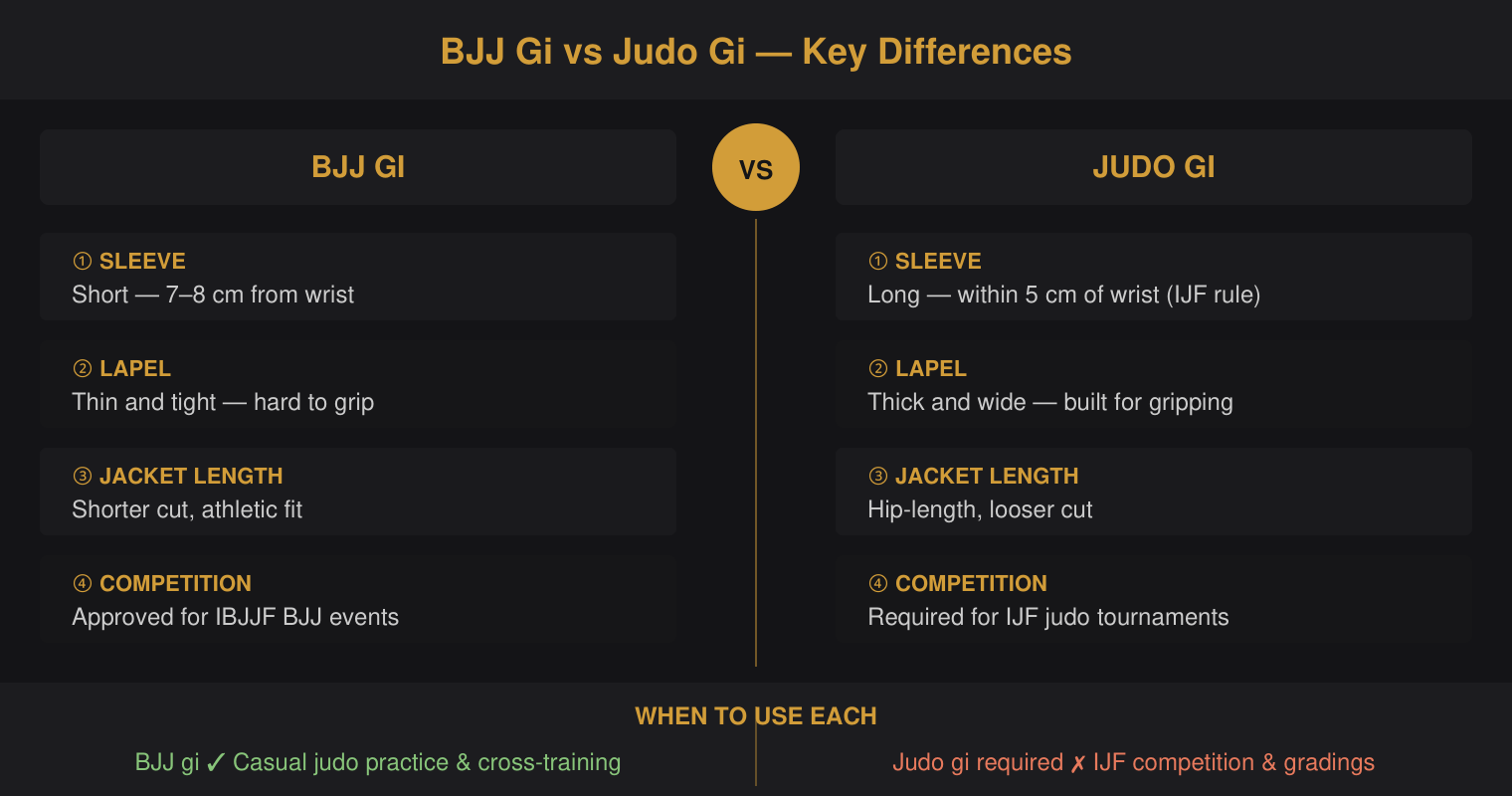
A judo coach can tell the difference in ten seconds. The sleeve’s too short, the lapel’s too narrow, and the jacket doesn’t hang right.
When Your BJJ Gi Works Fine
For a lot of judo situations, it’s completely fine:
Casual club practice. Showing up to a new judo gym to try it? Your BJJ gi will work. Most coaches welcome cross-trainers. Just ask — some gyms have a strict uniform rule, most don’t.
Beginner classes. If you’re new and learning ukemi (breakfalls) and basic throws, nobody cares what gi you’re wearing. The technique is the lesson; the uniform is secondary.
Cross-training sessions. BJJ players train judo all the time to sharpen takedowns. Your BJJ gi is fine for these. The techniques transfer; the uniform doesn’t need to be perfect.
Kids trying it out. If your child is giving judo a go before committing, they don’t need a second gi. Their BJJ gi will do. If they stick with it, upgrade then.
When You Need a Real Judo Gi
There are situations where a BJJ gi won’t cut it:
IJF-sanctioned tournaments. The IJF has strict sleeve, lapel, and jacket specs. A sleeve that’s too short means you’ll be asked to change before you can compete. No backup gi = no match.
Official belt gradings. Many traditional judo clubs require a proper judogi for grading ceremonies. It’s a respect thing — check with your dojo before showing up.
Strict dojos. Some gyms — especially traditional Japanese judo schools — require a proper uniform from day one. A quick message before your first session saves the awkwardness.
One Judo Trick That’ll Upgrade Your BJJ
Here’s the part most people skip when they cross-train: the real gift judo gives BJJ players isn’t the throws. It’s grip fighting — kumi kata in Japanese.
Before a judo throw can happen, both athletes are fighting for jacket control. Your grip position, your collar control, who has sleeve dominance — it’s the whole game before the game starts.
Most BJJ players don’t think about grips until they’re already in a bad spot. Spend a few judo sessions learning the basics: cross-collar grip, high-collar grip, how to break grips without giving up position. You’ll feel it carry over immediately. You’ll be harder to take down. Your bottom-half guard setups will tighten up. Wrestling ties from the gi will make more sense.
Judo also teaches you to fall. Ukemi — proper breakfalls — is something a lot of grappling sports don’t teach explicitly. A judo-trained BJJ player lands better, protects their wrists and neck, and isn’t rattled by a surprise takedown. One gi. Two sports. Real returns.
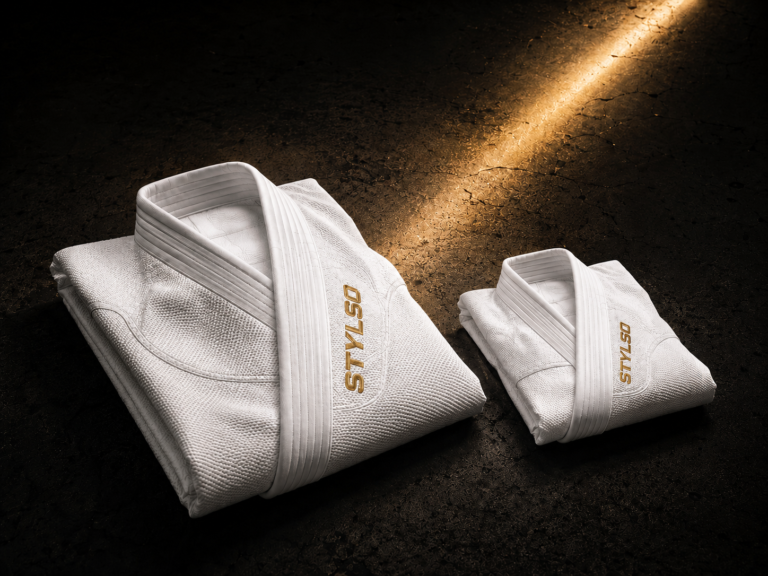
If you want a gi that holds up for both casual judo and serious BJJ training, the Stylso A-series pearl-weave is built for mat time. Check the current price on Amazon — no price listed here, prices change.
If you’re gearing up a kid who’s cross-training both sports:
For a full breakdown of which gi to use for judo competition specifically, see our guide: Best BJJ Gi for Judo — Cross-Training Picks. And if you’re still deciding between a BJJ gi and a judo gi for your first uniform, read BJJ Gi vs Judo Gi: Which One Should You Buy?
Free: BJJ vs Judo Gi Quick-Reference Card
One page — key differences, when each gi works, and a simple decision checklist. Free instant download.
FAQ
Can a BJJ gi be used in judo competition?
Not in IJF-sanctioned events. The sleeve length, lapel thickness, and jacket dimensions don’t meet IJF specifications. For casual judo practice, it works fine.
What’s the main difference between a BJJ gi and a judo gi?
Judo gis have longer, wider sleeves and a thicker lapel — built for grip fighting. BJJ gis are slimmer and cut shorter to prevent easy grips. Both use heavy cotton, but they’re cut for different sports.
Can I use a judo gi for BJJ?
Yes, mostly. It’ll feel bulkier and you might be slower on the mat, but there’s no IBJJF rule against it. Many beginners start in whatever gi they have.
Do I need to buy two separate gis to train both sports?
Not if you’re just cross-training casually. One BJJ gi handles both. If you commit seriously to judo competition, you’ll need an IJF-approved judogi.
How long is a BJJ gi sleeve vs a judo gi sleeve?
A judo gi sleeve must come within 5 cm of the wrist (IJF rule). BJJ gis are typically cut 7–8 cm shorter from the wrist. That gap is what makes a BJJ gi non-compliant in judo competition — not quality, just spec.
Will a judo coach let me train in a BJJ gi?
Usually yes, especially if you’re visiting or cross-training. Traditional dojos may be stricter. A quick message before your first session clears it up.