You’re not too old. BJJ is probably the best martial art for older beginners — ground-based, technique-over-strength, and built around patience. You’ll learn real self-defence and get genuinely fit doing it. Most academies have active members well into their 50s and 60s.
But here’s what the YouTube videos about “I got my black belt at 52” don’t show you: the first month is humbling in ways you didn’t expect. Not because your body gives out. Because your ego does.
Picture your first class. You’re 45. The person across the mat is 23, has two years of training, and weighs 30 pounds less than you. In three seconds they pass your guard and sit heavy on your chest. You can’t breathe right. You have no idea what happened.
Then they ask if you want to go again.
That moment — that confusion — is the entry fee. And it’s exactly where seniors have an edge: you don’t need to prove anything. You can laugh it off, tap, and show up Thursday.
- The right gear for your body and your budget
- How often to train so you actually improve (and don’t break down)
- The one habit that separates seniors who stick with BJJ from those who quit
Is BJJ Actually Good for Seniors?
Yes — and the reasons are solid. BJJ is low-impact compared to striking arts (no punches thrown in gi class), the positions are seated and ground-level (easier on hips and knees than standing grappling), and technique beats strength every time on the ground. A well-placed sweep will always outlast raw muscle — and that matters more as you age.
What does change after 40:
- Recovery takes longer. Two days between hard sessions matters. Don’t train through fatigue — that’s when injuries happen.
- Joint health becomes a priority. Tape your fingers before they hurt, not after. Your tendons will lag behind your cardio improvement by months.
- You’ll tap more — and that’s actually good. Tapping early protects the joints that keep you on the mat for years.
The gi is the great equaliser. A 50-year-old with good technique will consistently move better than a 25-year-old with raw strength. That gap closes for seniors as experience builds — and it’s one of the things that makes BJJ uniquely rewarding later in life. See our full BJJ injury prevention guide for the complete breakdown.
What to Expect Your First Month
Weeks 1–2: Mostly confusion. You’ll drill the same moves repeatedly without understanding why. Do them anyway — your body learns before your brain catches up. It’s supposed to feel this hard.
Weeks 3–4: The lights start to come on. You’ll recognise positions, know when to move, and maybe land your first actual escape. That moment hits different.
A few honest notes:
- You’ll get sore in muscles you didn’t know you had (forearms especially — grip work is constant in gi BJJ).
- You’ll get tapped. A lot. That’s not losing; it’s a repetition. Every tap is data.
- You’ll feel weirdly proud after each session. BJJ does that to people.
The Gear You Actually Need
Don’t overthink the gear list. Three things to start, full stop.
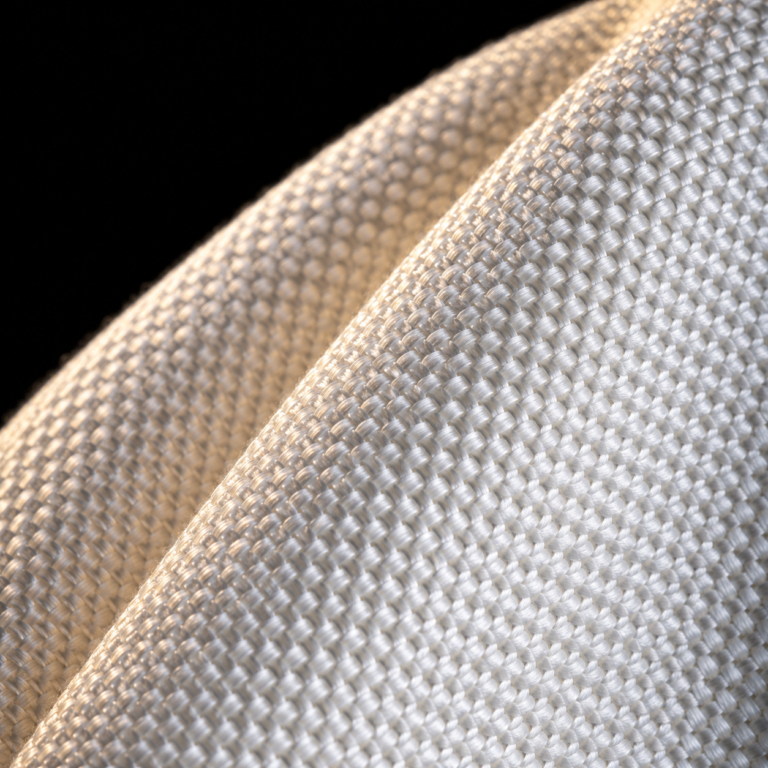
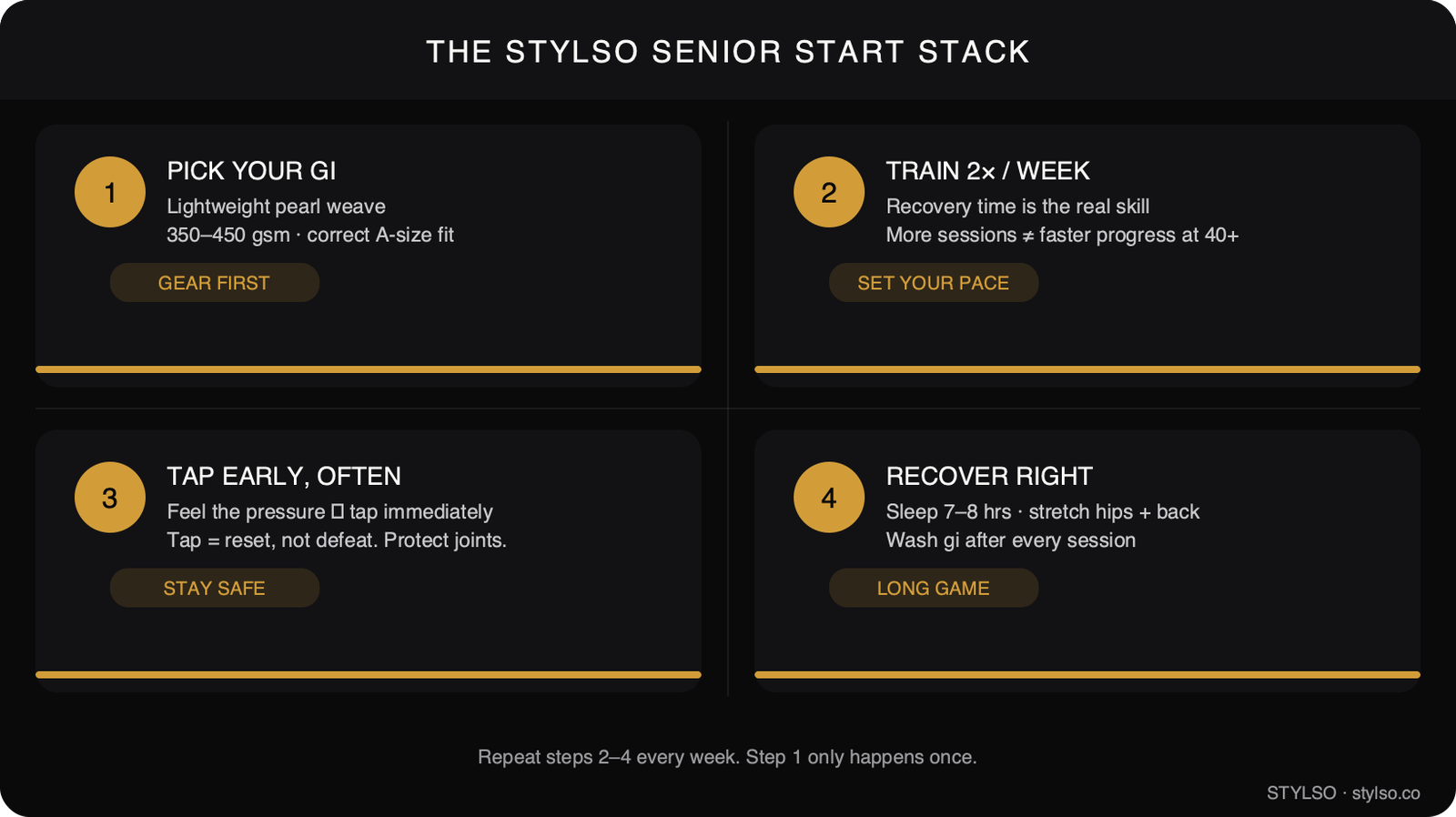
- A gi — the uniform. Get a lightweight pearl weave (350–450 gsm) — easier to move in, breathes better. See our full guide to adult beginner gear or our white belt gi guide.
- A mouthguard — essential from day one. Accidents happen even in light sparring.
- Flip-flops — for off the mat. Mats stay clean; shoes don’t. Every academy enforces this.
That’s it for the first month. Don’t buy rashguards, compression shorts, or ear guards yet. Get the basics right first.
| Training Frequency | Gear Needed | Recovery Required | Best For |
|---|---|---|---|
| 1× per week | Gi only | Minimal | Total beginners 50+, easing in gently |
| 2× per week ✓ | Gi + mouthguard | Manageable | Most seniors — this is the sweet spot |
| 3× per week | Gi + guard + tape | Needs a real plan | Active athletes with recovery dialled in |
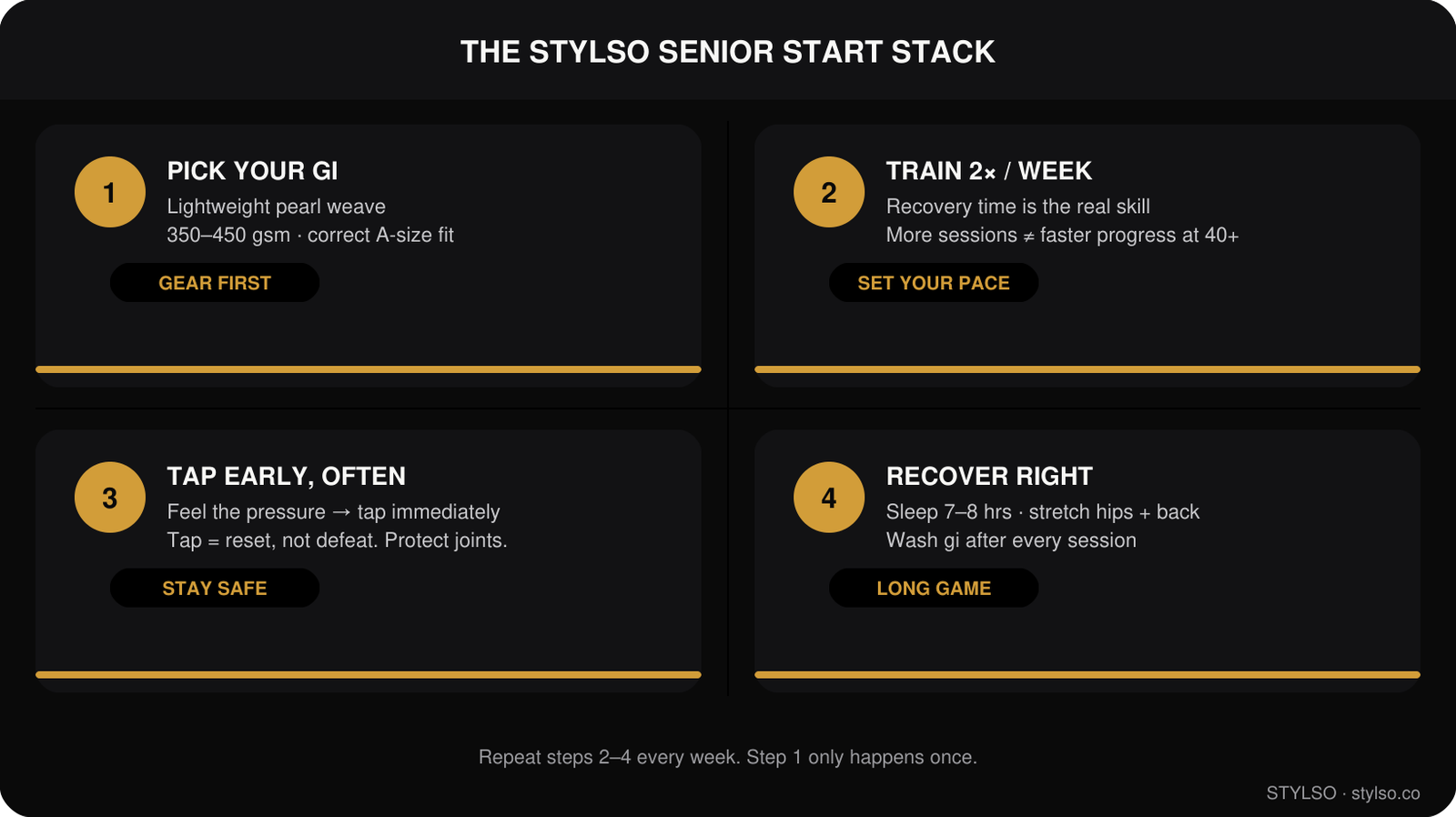
For most people starting over 40, 2× per week is the sweet spot. Enough reps to build muscle memory; enough rest to keep your joints happy. Need help with sizing? Our gi measurement guide shows you exactly how.
Free: Your Senior BJJ Starter Checklist
Gear list, training schedule, sizing chart, and safety rules — one page, print it or save it.
How to Stay Safe (The Tap-Early Rule)
This is the most important thing in this guide, and it’s the one habit that separates seniors who train for decades from those who quit after an injury.
Tap early. Tap often.
When you feel a submission — a choke, an armlock, a leg lock — tap immediately when you feel the pressure. Not when it hurts. Not when it’s uncomfortable. When you feel it.
Tapping isn’t losing. It’s the reset button. It’s how BJJ lets you drill dangerous techniques safely, hundreds of times, without anyone getting hurt.
A cross-discipline note that actually matters: the single best thing you can add alongside BJJ is hip-mobility work. The two most common injuries for older grapplers are lower back tweaks and hip flexor strains — both preventable with 10 minutes of yoga-style hip openers after each session. Try pigeon pose, a low lunge, and a supine twist. Hold each 30 seconds. Your guard will improve, your recovery will speed up, and your lower back will thank you by month three.
Recovery Is the Skill Nobody Talks About
A 25-year-old can train hard Monday, Wednesday, Friday and feel fine Saturday. You might need an extra day. That’s not a weakness — that’s information. Use it.
The seniors who stay on the mat for 5, 10, 20 years share one habit: they treat recovery as training. Not as optional downtime.
- Sleep 7–8 hours the night after a session. Your body repairs connective tissue during sleep — and connective tissue is what BJJ stress-loads most.
- Hydrate before and after class. Your gi will weigh noticeably more at the end of a session — most of that’s water you sweated out.
- Wash your gi after every single session. Bacteria thrive on damp fabric, and mat infections aren’t just unpleasant — they’ll keep you off the mat. See our gi care guide for the washing routine that protects the fabric too.
Progress in BJJ isn’t linear. You’ll plateau for weeks, then something clicks and suddenly you’re catching escapes you’d been missing for months. The pattern repeats forever. Be consistent, be patient, don’t skip the recovery.
Frequently Asked Questions
What age is too old to start BJJ?
There isn’t one. Most academies have active members in their 60s. The technique-over-strength model rewards experience and patience — both things that get better with age, not worse. You won’t be as explosive as a 22-year-old; you don’t need to be.
Will BJJ hurt my joints?
Not if you tap early. Most joint injuries in BJJ come from people holding on too long — pride overriding common sense. Tap the moment you feel a submission, warm up properly before rolling, and add hip-mobility work after class. Most joint problems never materialise with these habits in place.
Do I need to be fit before I start?
No. BJJ will get you fit. Show up in whatever shape you’re in and let the training do the work. It’ll feel harder than you expect for the first month — then your body adapts. Most beginners are surprised how quickly their cardio improves once they start.
What’s the best gi for seniors starting BJJ?
A lightweight pearl weave gi in your correct A-size. Look for 350–450 gsm fabric — light enough to move freely, durable enough to last. Our adult beginner gi guide has the full breakdown. Check current prices on Amazon before buying.
How long until I stop feeling completely lost?
Most beginners stop feeling completely lost around the 3–4 month mark with consistent training. Your first successful escape — where you actually knew what you were doing — usually happens sooner than that. The confusion shrinks faster than you think if you show up twice a week.