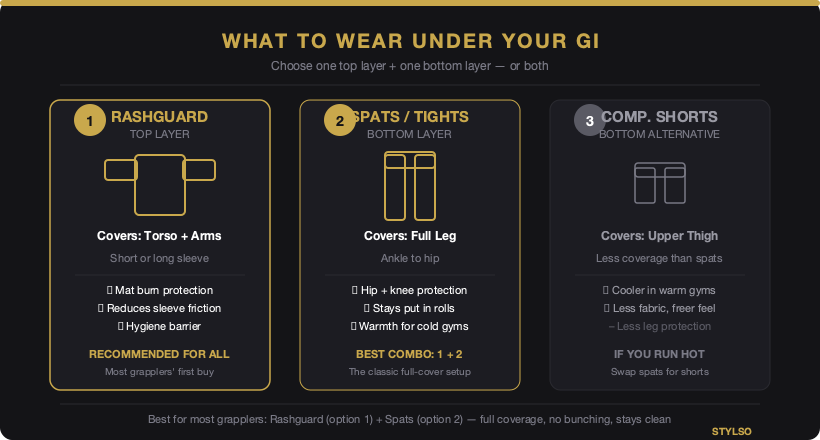
Under a BJJ gi, wear a short or long-sleeve rashguard on top and spats or compression shorts underneath. Both protect your skin from mat burns, cut friction under the jacket, and help with hygiene. Neither is mandatory — but most grapplers wouldn’t train without them once they’ve had one raw session.
- A rashguard stops mat burns and reduces sleeve friction under the gi jacket
- Spats or compression shorts keep you covered through every sweep, guard pass, and scramble
- The right combo depends on your gym’s temperature — there’s no one-size answer
Stylso designs its own BJJ gis and combat-sports gear — built for grapplers who want honest picks, not hype. Every recommendation here links to Amazon; we never post a price.
Why What You Wear Underneath Actually Matters
Your first day on the mat, you’ve already got enough to think about. Someone grabs your collar. Another person sweeps you. Somewhere in round two, you realize your T-shirt has bunched up under your belt, your knees feel like sandpaper, and nobody warned you about any of this.
Nobody tells beginners. That ends here.
The gi jacket is built to survive grabs, knee-on-belly pressure, and a hundred collar chokes. What it doesn’t do is protect the skin underneath. Mats are rough — woven foam with a texture designed to grip feet, not forearms. After forty minutes of drilling, bare skin on that surface gets chewed up. A compression layer under the gi fixes it completely.
Hygiene is the second reason. You’re sharing a mat with twenty people, skin-to-mat-to-skin for an hour. Ringworm, staph, and other mat infections spread through direct skin contact. A rashguard and spats don’t make you immune, but they create a real barrier. Pair that with washing gear after every session and you’ve done your part.
The Four Options — What Actually Goes Under a BJJ Gi
Here’s what experienced grapplers use, and the honest case for each.
| Gear | Best for | Notes | Shop |
|---|---|---|---|
| Short-sleeve rashguard | Most gyms, warm climates | Maximum arm mobility; best for guard-heavy styles | Shop → |
| Long-sleeve rashguard | Cooler gyms, mat-burn prone grapplers | Full arm coverage; slight warmth in winter; great for sensitive skin | Shop → |
| BJJ spats (tights) | Full leg coverage, competition, general gi training | Most common bottom layer; protects hips, knees, and thighs; pairs with rashguard | Shop → |
| Compression shorts | Warm gyms, grapplers who run hot | Less coverage than spats; freer feel; fine if you don’t need full leg protection | Shop → |
| Bare skin | Low-traffic private gyms only | Not recommended for shared mats — direct skin-to-surface exposure all session | — |
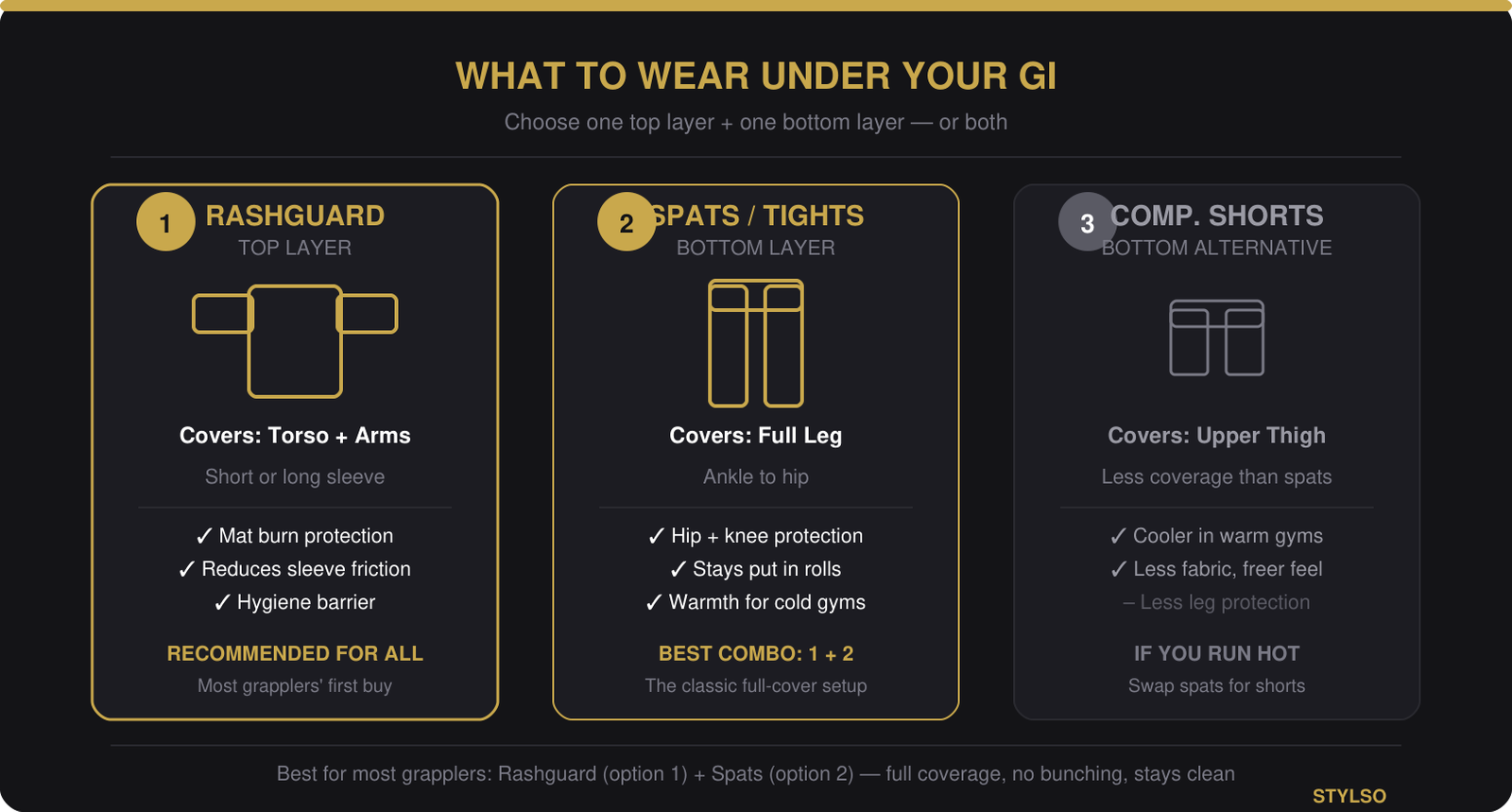
The Classic Combo — What Most Grapplers Land On
Most people settle here: rashguard on top, spats underneath. That’s the setup you’ll see on eighty percent of the mats at any open mat or competition warm-up.
The rashguard handles your torso, forearms, and elbows — the parts that drag across the mat when you’re getting passed or scrambling. The spats cover your legs from hip to ankle. Together, nothing bunches under the gi pants, nothing rides up when you get double-underhooks, and you’ve got a full hygiene barrier from collar to ankle.
If your gym runs warm, swap the spats for compression shorts and go short-sleeve on top. If you’re somewhere cold or you’re prone to elbow rash from passing guard, go long-sleeve. The variables are temperature and personal sensitivity — not style.
Check the current picks in our best rashguard for BJJ guide — tested options at different price points, no guesswork.
Sizing — It Should Feel Like a Second Skin
This is where beginners go wrong. Rashguards and spats should fit snug. Not painfully tight, but no loose fabric anywhere. If there’s slack, it’ll catch on sleeves, fingers, and gi pants during rolls.
Between sizes? Size down. Compression fabric stretches during training. After your first warm round, you won’t feel the tightness — just the even pressure that stays in place through every position.
Seams matter more than most people think. Flat-lock stitching means the seam lies flat against your skin. Raised seams create friction points, and a one-hour drilling session turns a minor hotspot into a genuine rub. Check the seam type before buying — it’s on the product listing.
If you’re also figuring out your gi size, use our BJJ gi measuring guide — the Stylso A-series runs A0 through A5 for adults. Most A2 gi grapplers wear a medium rashguard, but brands vary, so try it against the sizing chart.
What Not to Wear Under a Gi
A few things cause real problems during training:
- Cotton T-shirts: they soak up sweat fast and triple in weight by round three. The fabric bunches under the belt, and they offer zero mat-burn protection. Skip them entirely.
- Loose basketball shorts: they bunch through the gi pants on every guard pass. You’ll notice within five minutes. Snug-fitting compression only.
- Anything with raised seams: check the stitching before you buy. Raised seams that seem minor in the store become real friction problems after sixty minutes of drilling.
- Underwear designed for street wear: cotton briefs or boxers under spats add unwanted bulk and don’t hold their position. Athletic underwear or just the spats directly works better.
A Lesson from Wrestling That Changed How I Warm Up
Wrestlers have worn compression gear non-stop for decades — and it’s not just about protection. Compression keeps the working muscles warm and slightly engaged from the first drill to the last round. That sustained muscle warmth matters most in the first few minutes of any session, before you’ve generated real heat from training. That’s when soft-tissue injuries — tweaked hamstrings, pulled hip flexors, unexpected elbow pops — happen most often.
That principle carries straight into BJJ. A well-fitted rashguard keeps your torso and arms warm through the early rounds of guard passing drill when your body isn’t fully fired up yet. Think of it as a five-minute head start on your warm-up, built into your gear. It won’t replace actual warming up — but it closes the gap.
One hard rule on top of this: wash after every single session. Not every other time. Every time. Warm, damp compression gear left in a bag for twenty-four hours is exactly the environment staph bacteria prefer. Cold or warm water both work fine — air dry to protect the spandex. If you want the full gi and gear care routine, our BJJ gi washing guide covers everything in detail.
Free: BJJ Gear Checklist — What to Wear Under Your Gi
A one-page printable: every layer explained, fit rules, what to avoid, and wash-and-care tips so your gear lasts. Get it instantly.
Frequently Asked Questions
Do you have to wear a rashguard under a BJJ gi?
No — most academies don’t require it. But most grapplers wear one after their first mat burn. It’s optional for casual training; some competitions have specific underlayer rules worth checking before you register.
Can you wear a regular T-shirt under a BJJ gi?
A compression shirt yes — a loose cotton T-shirt, no. Cotton soaks up sweat, gets heavy fast, and bunches under the belt within the first round. A fitted rashguard stays put and protects your skin. That’s the swap worth making.
Do you wear anything under BJJ spats?
Some grapplers wear compression shorts under spats; others don’t. At minimum, snug-fitting underwear works. Avoid loose boxers or briefs — they bunch under the spats during guard work and get uncomfortable fast.
What do women typically wear under a BJJ gi?
The same basics: rashguard and spats. Many women prefer longer spats for fuller coverage during rolls. A high-impact sports bra under the rashguard works well for the constant movement and grip of gi training.
Can you wear a cup under a BJJ gi?
You can, but most BJJ academies don’t require one for gi training — it’s more standard in MMA. If you prefer one, make sure it sits flat under your spats without creating bulk during ground work. Bulky cups create pressure points in bottom-guard positions.
Does rashguard color matter for competition?
Not for gi competition — it’s hidden under the gi jacket. IBJJF has no color rule for underlayers in gi divisions. For no-gi, color rules apply; check the specific ruleset for your event.