Your kid asked to try BJJ. You said yes. Now you're staring at a size chart that makes no sense, wondering if it's even safe, and whether you need to buy anything before the first class.
Here's what most guides skip over: you don't need much. And the gear that matters most is sized completely differently from everything else in your child's sports bag.
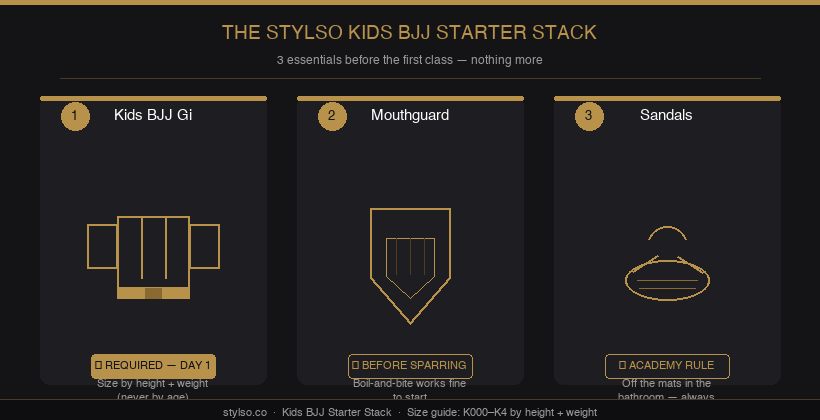
BJJ is a great fit for kids 5 and up. They'll learn to move, fall without hurting themselves, and stay calm when someone bigger pushes them around. For gear, you need three things: a properly sized kids gi, a mouthguard, and sandals for the bathroom. That's the whole starter kit. This guide tells you what to buy, what size to pick, and what to actually expect on mat day.
- Kids BJJ gis use the K-series (K000–K4) — sized by height and weight, never by age
- A good first class is mostly about movement: falling safely, basic hip escapes, rolling around
- Don't buy expensive gear until your child's been training for three months
What Actually Happens in the First Class
Picture this: your child walks onto the mat, bows in, and immediately gets asked to do a forward roll. They freeze. Everyone else rolls. They're in their head.
That's the first class. It's not a fight. It's a movement puzzle.
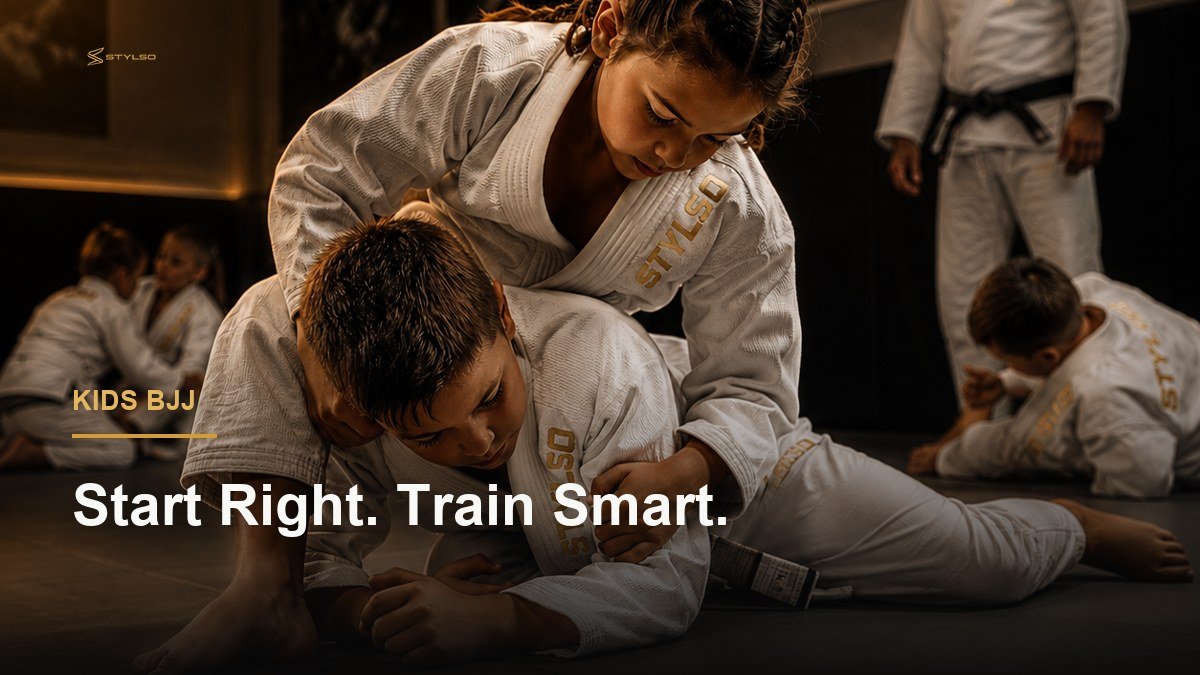
Good kids BJJ classes spend most of the hour on games and drills that teach the body to move in unfamiliar ways — falling without bracing, rolling without tensing up, crawling over a partner without weight. The goal isn't submissions. It's body control and confidence.
By week three, most kids are laughing on the mat. By week six, they've got a hip escape (shrimping) that's starting to click. That's when it gets addictive.
Here's the real truth about the first few months: your child won't remember the moves. They'll remember how the mat felt, whether the other kids were welcoming, and whether they got back up when they fell. Find a gym where the instructor is patient with white belts, keeps the energy playful, and teaches falling as the very first skill. Everything else follows.
What Age Can Kids Start BJJ?
Most gyms accept kids from around 5 years old. A few start at 4 for especially coordinated kids. Here's a rough feel for different ages:
| Age | What They Can Learn | What to Expect |
|---|---|---|
| 4–5 | Falling, rolling, basic movement games | Short attention spans — a 30-min class is plenty |
| 6–8 | Hip escapes, bridging, basic guard | Drilling starts to stick; they love the competition games |
| 9–12 | Submissions, sweeps, positional awareness | Ready for real sparring in a structured environment |
| 13+ | Full technique library, competition prep | Teen classes or adult classes depending on the gym |
The best age to start? Whenever your child asks. Forcing it at 5 because it looks good on paper backfires fast. Letting a 9-year-old who's been asking for two years wait another year is the bigger mistake. Interest is the multiplier — skills follow.
The 3 Things Your Kid Actually Needs
Don't overbuy before the first month. Here's the honest list:
| Item | Do They Need It? | Notes |
|---|---|---|
| Kids BJJ Gi | Yes — from day one | Most gyms require a gi for kids classes. Size by height + weight. Shop on Amazon |
| Mouthguard | Yes — from first sparring session | Cheap boil-and-bite from a pharmacy works fine to start |
| Sandals / Flip Flops | Yes — for bathrooms | Keep the mats clean; bare feet off the mats outside the gym is an academy rule everywhere |
| Rashguard | Optional at first | Useful under the gi once they're training regularly |
| Ear Guards | Only if competing | Not needed for casual training at the beginner level |
That's it. The gi is the one purchase that actually matters at the start — and getting the size right is the thing most parents mess up. Read the next section before you buy anything.
How to Size a Kids BJJ Gi — The K-Series
Kids BJJ gis don't run in toddler sizes or age ranges. They run in the K-series — K000 through K4 — sized by height and weight. Age means nothing here. A big 7-year-old and a small 10-year-old might wear the same size.
Measure your child's height barefoot and their current weight. Find both in the chart. When in doubt, size up — gis settle a little after washing, and kids need room to shrimp (that hip-escape drill where they wiggle their hips sideways; it's the first move every BJJ athlete learns and it takes a relaxed gi to do it properly).
| Size | Height | Weight | Jacket Span | Jacket Length | Pant Length |
|---|---|---|---|---|---|
| K000 | 114–120 cm (45–47 in) | 18–23 kg (40–51 lb) | 114 cm | 55 cm | 72 cm |
| K00 | 120–127 cm (47–50 in) | 23–27 kg (51–60 lb) | 120 cm | 56 cm | 76 cm |
| K0 | 127–135 cm (50–53 in) | 27–32 kg (60–71 lb) | 126 cm | 61 cm | 79 cm |
| K1 | 135–142 cm (53–56 in) | 32–36 kg (71–79 lb) | 132 cm | 62 cm | 81 cm |
| K2 | 142–147 cm (56–58 in) | 36–41 kg (79–90 lb) | 138 cm | 65 cm | 85 cm |
| K3 | 147–155 cm (58–61 in) | 41–45 kg (90–99 lb) | 144 cm | 68 cm | 86 cm |
| K4 | 155–160 cm (61–63 in) | 45–50 kg (99–110 lb) | 159 cm | 71 cm | 91 cm |
Height and weight disagree? Go with height — jacket length is what coaches check. Between K00 and K0? Take the K0. Room to move beats a gi that pulls every time they reach up for a grip.
The Stylso 3-Month Kids BJJ Path
Every kid's first three months follow a similar arc. Knowing it upfront takes the pressure off — for them and for you.
Month 1 — Move safely. The whole goal is learning to fall without bracing, roll without tensing, and shrimp across the mat. Shrimping — that hip-escape wiggle — is the foundational movement in all of BJJ. If your child is practicing shrimping down the hallway at home by week four, they're exactly on track. This month, the gi mostly just needs to fit and close. That's it.
Month 2 — Find the positions. Guard. Mount. Side control. Your child will start to recognise these names even if they can't execute much yet. The goal is basic positional awareness — knowing when they're on top or underneath and what that means. Cross-discipline note: wrestlers learn this instinctively because takedowns put them in these exact spots. BJJ kids learn it from the ground up, which takes a few more weeks.
Month 3 — First submissions. Armbar from mount. Triangle from guard. Basic chokes. These are introduced in most kids programs around month three — gently, with tapping drilled as a reflex before the technique. When your kid comes home and asks you to let them practice an armbar on you, you've arrived. Say yes. Tap early. They love that.
After three months, if they still want to go, buy the second gi. That's the sign to invest.
Free Download: Kids BJJ Starter Checklist
Gear checklist, K-series sizing table, and the 3-month training path — printable and shareable with coaches.
Common Mistakes Parents Make in the First 3 Months
A few things that look like smart moves but actually slow kids down:
Buying adult-sized gear “so they can grow into it.” A gi that doesn't fit is the fastest way to ruin a first class. The jacket drags, grips slip, and the child feels clumsy. Size for now. Buy the next size in six months.
Asking “did you win?” after every class. Kids BJJ at the white belt level isn't about winning. It's about getting comfortable being uncomfortable. A child who learns to stay calm when someone puts weight on them is already winning. Ask “what did you learn today?” instead.
Pulling them out after one bad session. Week three is often the hardest. The novelty wore off, the drilling feels repetitive, and they got tapped by a smaller kid. This is the exact moment to stay. One more week almost always fixes it.
Buying competition gear before they've competed. Ear guards and competition gis can wait. They need reps first.
Frequently Asked Questions
- Is BJJ safe for kids?
- Yes, when taught well. Good kids BJJ programs teach falling and tapping as the very first skills — the reflex to give up a position safely before getting hurt. Injuries happen in any sport; BJJ's injury rate compares favorably to football, rugby, and even recreational soccer. The key is a qualified instructor who drills tapping early and consistently.
- What age can kids start BJJ?
- Most gyms accept kids from 4–5 years old for a dedicated little-ones program. Technical drilling sticks better around 6–8. Kids who start before they're ready often burn out faster. The best indicator is whether your child is asking to go — not whether they're the “right” age.
- What size kids gi does my child need?
- Use the K-series chart above. Measure height barefoot and note their current weight. When both numbers point to the same size, you're done. When they split across two sizes, take the larger one — gis settle after washing and kids need room to move.
- Do kids need a mouthguard for BJJ?
- Not for drilling, but yes once they're sparring. A basic boil-and-bite mouthguard from any pharmacy works for the first year. Save the custom-fitted ones for when they're competing.
- How often should kids train BJJ?
- Two classes a week is the sweet spot for beginners. Enough to build the movement patterns, not so much that it burns them out before the fun starts. After 3–6 months, some kids naturally want a third day. Follow their lead.
- Can kids use a regular adult gi?
- No — adult gis start at A0, which is sized for adults 162 cm and above. A kids gi (K-series) is cut shorter and narrower to match a child's proportions. An adult A0 on a child is huge — they'll trip, struggle to grip, and look uncomfortable. Use the K-series chart above.
Ready to start? Measure your kid's height and weight, find their K-series size above, and grab the right gi before the first class.
Shop Stylso Kids BJJ Gi on Amazon
For more on sizing, see our full kids BJJ gi size guide. And if you're picking up a gi for yourself at the same time, the best BJJ gi for beginners covers the adult side of the same buying decision.