The best BJJ knee pads are low-profile sleeve pads for guard work and drilling, hinged pads for injured or unstable knees, and wraparound straps for mat burn and mild compression. Sleeve pads are the default — they sit flush under a gi without catching fabric. Check the current options on Amazon; don’t go by size alone, fit matters more.
- Sleeve pads are the BJJ default — low-profile, stay put under a gi, good for guard and daily drilling.
- Hinged pads are for injured or unstable knees; they bulk out and can snag in gi collar grips.
- Wraparound straps are compression only — not structural support.
- The 2-finger fit test: if you can slide two fingers in easily, the pad is too loose to stay on during rolling.
Why BJJ Specifically Wrecks Knees
Your first 6 months of BJJ, your knees feel fine. Somewhere around the blue belt stage — more mat time, more guard work, more scrambles — they start talking to you. Not broken. Just present. A dull ache at the end of class. Stiffness the next morning.
The load profile is different from other sports. In basketball, it’s running and jumping — vertical stress. In BJJ, it’s lateral torque: guard retention, knee-on-belly, half guard recovery, scrambling to your feet from the mat. The MCL and patellar tendon take the brunt. Over enough sessions, that accumulates.
Most BJJ practitioners wait until something hurts before adding knee pads. The smarter play is preventive — especially during heavy guard drilling and competition training. Knee pads don’t make you invincible. They reduce the repetitive stress load and keep the joint feeling normal through the training week.
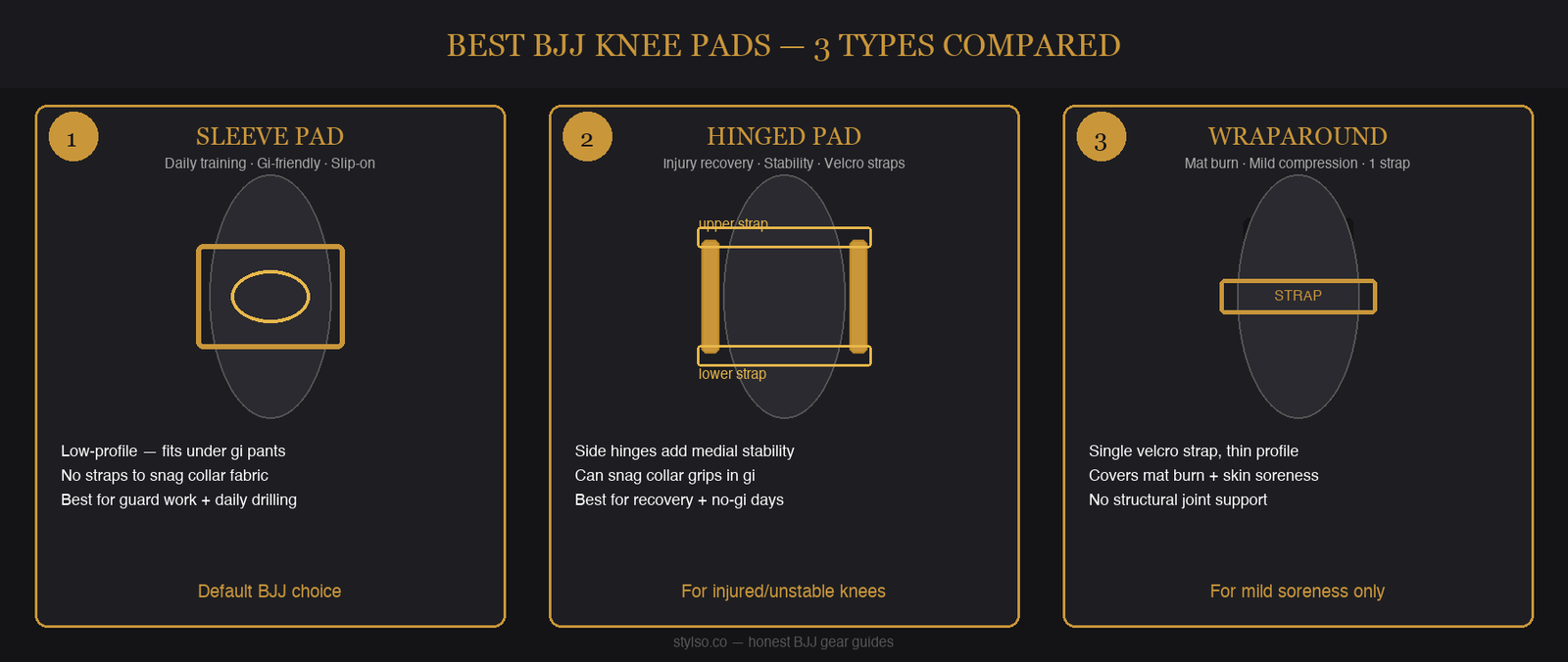
The 3 Types — Which One Fits Your Training
| Type | Best For | Gi-Friendly? | Strips Needed |
|---|---|---|---|
| Sleeve Pad | Daily drilling, guard work, gi training | ✓ Yes — low-profile, sits flush | Slip on, no straps |
| Hinged / Articulated Pad | Recovering knee, instability, competition training | ⚠ Bulky — can snag gi fabric in collar clinches | Velcro straps x2 |
| Wraparound Strap | Mat burn, mild patellar compression | ✓ Yes — thin profile | Velcro strap x1 |
Not listing specific brands or prices here — what’s best depends on your knee anatomy and training style, and prices shift constantly. Look for gel or foam padding at the kneecap, breathable neoprene or compression fabric, and a no-slip inner lining. Grapplers and wrestlers use the same pads — check reviews from both communities.
The Stylso 2-Finger Fit Test
Most people size up on knee pads and then wonder why they slide down during takedowns. Here’s the quick check:
- Put the pad on in your training position — standing with knees slightly bent, not fully extended. Pads that fit standing often slide during guard work because the knee circumference changes as you flex.
- Try the 2-finger test. Slide two fingers under the inner lining near the kneecap. If they go in easily, the pad is too loose — it’ll migrate south mid-roll. If you can barely get one finger in, that’s the right fit.
- Move through guard positions before buying. If you can, mimic closed guard and de la Riva before committing. A pad that stays put during those two positions will stay put during almost anything.
For hinged pads with straps: tighten the lower strap slightly more than the upper. The patellar area needs to be fixed, not the thigh. Most people do it backwards and the hinged support ends up sitting an inch too high.
A Wrestling Lesson: The Knee Pad Isn’t Optional
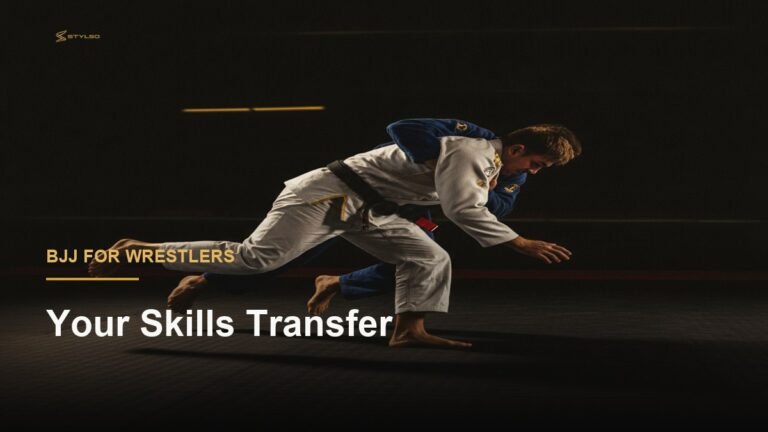
Freestyle wrestlers wear knee pads in every session and every match. Not as an injury-recovery tool — as standard preventive equipment. The mat surface, the knee-on-hip scrambles, the single-leg shots — all of it creates repetitive stress at the same joint points as BJJ guard work.
The discipline that wrestling teaches is simple: put the pad on before you’re hurt, not after. In BJJ, grapplers tend to only reach for protective gear when something’s already wrong. Wrestlers don’t. They treat knee pads the way you treat a mouthguard — something you wear every session without thinking about it.
One practical detail that transfers: wrestlers tape their knee pads in place before sparring. A thin strip of athletic tape over the top and bottom edge keeps a sleeve pad from migrating during explosive movements. Worth trying if your pad won’t stay put during guard retention drills.
When to Wear Pads — and When Not To
Not every session needs knee pads. Here’s the honest breakdown:
- Guard drilling, technique rounds, competition training → sleeve pad. Reduces cumulative stress without restricting movement.
- Recovering from an MCL strain or patellar tendinopathy → hinged pad + physio advice. The pad manages the session; the physio manages the injury.
- Light mat burn or skin soreness → wraparound strap or neoprene sleeve. Compression and coverage, nothing structural.
- Healthy knee, light drilling → your call. No pad is fine. Pad is preventive. Neither is wrong.
One thing to watch in gi training: hinged pads bulk out enough that a partner’s cross-collar grip can snag on the strap hardware. If you’re drilling clinch or collar grip sequences, go sleeve. Keep the hinged pad for no-gi days or pure technique drilling where grip exchanges are minimal.
Key Takeaways
- Sleeve pads are the BJJ default — gi-friendly, low-profile, effective for daily training.
- The 2-finger fit test: if two fingers slide under the inner lining easily, go smaller.
- Hinged pads protect recovering knees but can snag in gi collar positions — use for no-gi or drilling days.
- Wrestlers wear knee pads every session as standard prevention — BJJ grapplers should too.
- Tape the pad’s top and bottom edge if it migrates during guard work.
Free: BJJ Protective Gear Priority Guide
What to buy first, what to wait on, and the fit tests for mouthguard, ear guard, knee pads, and finger tape — one printable page for new grapplers.
Frequently Asked Questions
Do I need knee pads for BJJ?
Not immediately, but they’re worth adding once you’re training 3+ times a week. Knees take repetitive stress in BJJ guard work that adds up over months. Sleeve pads reduce that load without restricting movement or adding bulk. Most grapplers wish they’d started sooner. Check current options on Amazon.
What type of knee pad is best for BJJ in a gi?
Sleeve pads. They sit low-profile under the gi pants, don’t catch collar fabric, and stay put during guard transitions. Hinged pads with exposed velcro straps can snag when training in a gi — save those for no-gi days or injury recovery.
How tight should BJJ knee pads be?
Tight enough that the 2-finger test fails — you shouldn’t easily slide two fingers under the inner lining near the kneecap. If you can, the pad will slide down during guard work. Tight enough to stay put; loose enough to flex without cutting circulation.
Can I wear knee pads during BJJ competition?
Yes, in most rulesets. IBJJF allows knee braces and pads that are “soft” — no hard shells or rigid metal hinges. Always check the current ruleset at ibjjf.com for the specific event, since rules can change. Sleeve pads are safe in almost every ruleset.
Should I wear knee pads for no-gi BJJ?
Yes — if anything, no-gi training is harder on knees because there’s less fabric buffering the contact. Sleeve pads are even more comfortable in no-gi than under gi pants. Hinged pads also work well in no-gi since the fabric snag issue goes away.
My knee pad keeps sliding down during rolling — what’s wrong?
It’s too loose, or the inner lining material isn’t grippy enough for your skin type. Try the next size down. If the size is correct but it still slides, add a thin strip of athletic tape over the top and bottom edges — this is what wrestlers do. Works reliably.
Related guides: Best BJJ Ear Guard · Best BJJ Mouth Guard · How to Tape Fingers for BJJ · White Belt BJJ Gear List