Your first gi purchase feels like a pop quiz nobody prepped you for. Too many weaves, too many brands, and the wrong pick means months in a gi that bunches, tears, or hands your opponent extra sleeve to choke you with. Here’s the short answer: weave first, weight second, size third. That’s it.
Pearl weave for most people. Standard gsm (450–550) for daily training. Your real height and weight matched to a brand-specific chart. Color last, after you’ve asked your gym. Don’t overthink the logo on the skirt — fit and durability decide everything the brand name can’t.
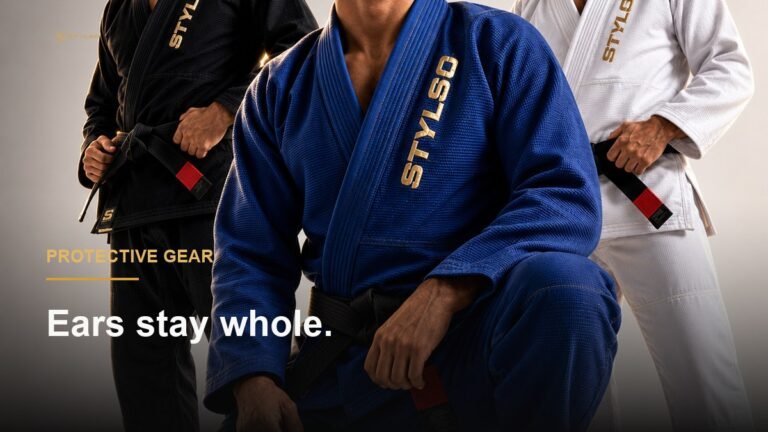
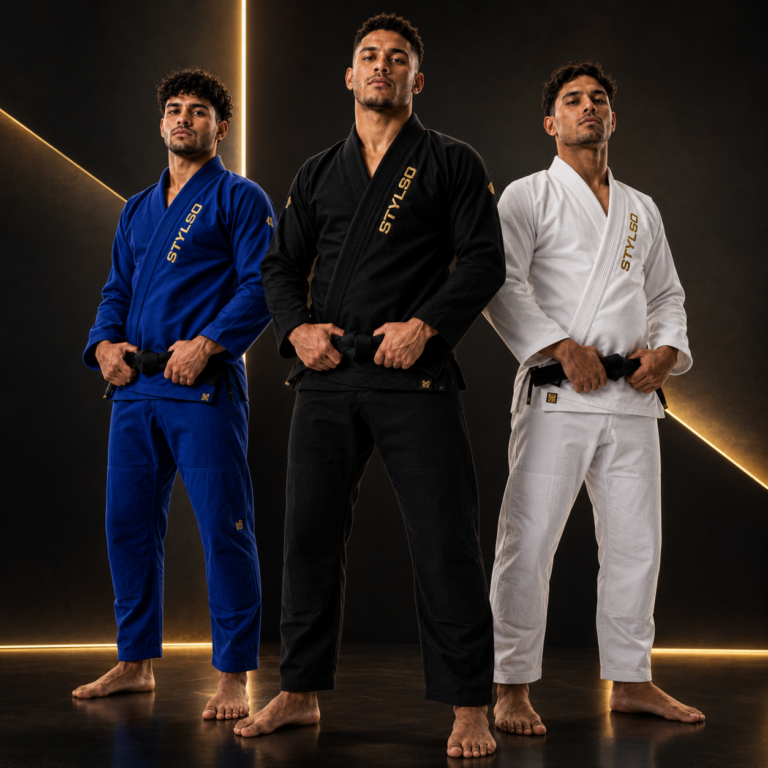
- Weave first. Pearl weave is the daily-training standard — durable, light enough to train in hard, IBJJF-legal in white, blue, or black.
- Size from the real chart. Gi sizes aren’t universal. Measure barefoot height and training-state weight; use a brand-specific chart. When in doubt, size up.
- No prices here. Gi prices shift weekly on Amazon. Your weave and size choice don’t. Check the current price when you’re ready to buy — never buy off a stale price someone posted in a forum six months ago.
Start With the Weave — Not the Brand
Most people start with the brand. That’s backwards.
Your gi’s weave controls how it feels on the mat, how long it holds up under daily training, and how hot it runs in a packed gym at 7 p.m. on a Wednesday. Four main types:
- Pearl weave — the default for a reason. Tight, durable, lighter than double weave, holds its shape wash after wash. If you’re buying your first gi and not sure what to get, get this.
- Single weave — lighter and cheaper. Good for hot gyms or travel. Wears faster under daily hard training.
- Double weave — heavy, durable, tough to grip. Common in judo. In BJJ, the extra weight tires you faster in long sessions and scrambles.
- Gold weave — a hybrid. Lighter than double, more durable than single. Good mid-range pick for practitioners who want longevity without the bulk of a competition judo gi.
That judo comparison isn’t random. Judo gis run intentionally loose and heavy — grip-fighting is part of the sport, so the lapels are cut wide and the fabric is thick. BJJ goes the opposite direction: tighter weave, pre-shrunk fabric, less for your opponent to grab from the guard. A gi that’s too baggy in BJJ isn’t just uncomfortable. It’s a handle. Size it right and get a weave that won’t stretch out after a few weeks — that’s the whole game.
For beginners: pearl weave, white or blue, pre-shrunk. You don’t need to spend more to train well.
Shop the Stylso Pearl-Weave Gi on Amazon
Then Pick the Weight (gsm)
Gi weight is measured in gsm — grams per square metre of fabric. Higher gsm means heavier, more durable material. Lower gsm means lighter and cooler to train in.
- ~350–450 gsm — lightweight. Good for summer training, hot gyms, or when you’re already soaked before the warm-up ends. Can feel thin; wears faster under heavy daily training.
- ~450–550 gsm — standard. The sweet spot for most training environments. Durable enough to hold up five days a week without cooking you in the third round.
- ~550–700 gsm — heavyweight. Tough as canvas, lasts years. Not ideal if your gym runs warm or you’re training through the summer.
Most people do best in the 450–550 gsm range — heavy enough to train hard in, light enough not to feel like a wet sleeping bag by round three. If your gym runs warm, lean lighter. Cold space or year-round outdoor training? Go heavier and it’ll last.
The Stylso 3-Step Gi Method
Three questions decide your gi. Apply these to any brand, any price point.
- Weave — train daily? Pearl or gold weave. Hot gym or casual training? Single weave is fine.
- Weight — warm space? Stay under 500 gsm. Cold gym or heavy daily training? 500 gsm and up.
- Size — measure barefoot height and weight in training shape. Match to the chart below. Size up when you’re between two.
Run these three in order before you look at a brand page. You’ll know what you need before the marketing hits you.
Get the Size Right the First Time
Gi sizing is the most common buying mistake. An A2 from one brand fits completely differently than an A2 from another. Never size off “medium = 170cm.” Use the actual chart for the gi you’re buying.
For Stylso gis, here’s the real sizing data — measured in cm, barefoot, in normal training shape:
| Size | Height (cm) | Height (in) | Weight (kg) | Weight (lbs) |
|---|---|---|---|---|
| A0 | 162–168 | 64–66″ | 64–70 | 141–154 |
| A1 | 168–170 | 66–67″ | 70–77 | 154–170 |
| A2 | 170–178 | 67–70″ | 77–86 | 170–190 |
| A3 | 178–188 | 70–74″ | 86–102 | 190–225 |
| A4 | 185–193 | 73–76″ | 104–118 | 229–260 |
| A5 | 190–200 | 75–79″ | 118–136 | 260–300 |
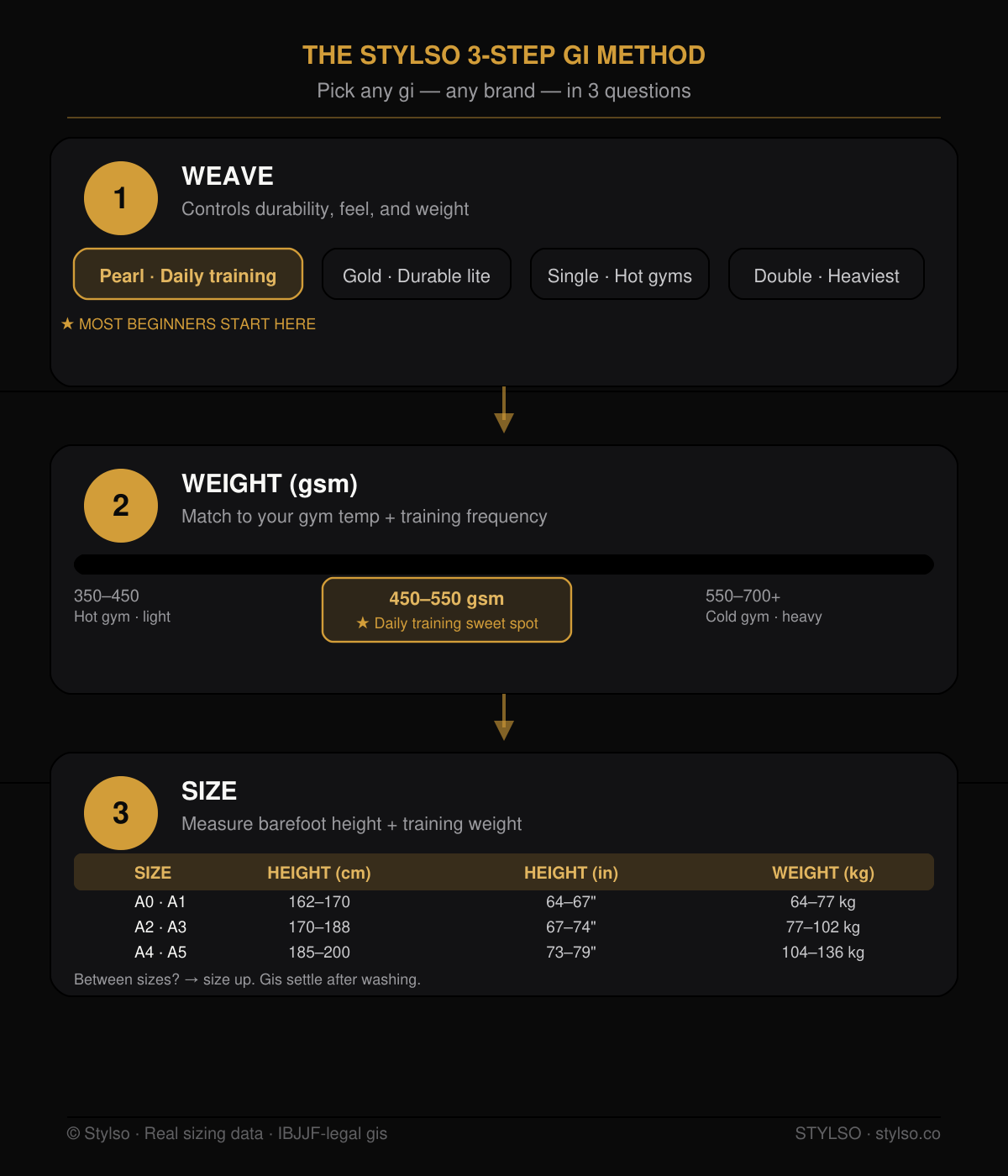
Between sizes? Size up. Gis settle slightly after the first few washes — a gi that fits snug off the shelf usually fits right after washing. See our full BJJ Gi Size Guide for the kids’ K-series chart and sleeve-length tips.
Quick sleeve check: before ordering online, measure from the back of your neck to your wrist with your arm relaxed at your side. A well-sized gi sleeve should land about 2–3 cm above the wrist bone. One measurement tells you more than the size tag on the collar.
Color: What Gyms Actually Require
Ask before you buy. That’s the real answer, and it takes 30 seconds to text your coach.
IBJJF rules allow white, blue, or black. Most academies follow that. Some gyms require white for white belts; others don’t care what color you train in as long as it’s legal for competition. Patterned, camo, or neon gis are usually training-only — never competition-legal under IBJJF rules.
When you’re not sure: go white first. It’s universally accepted, easy to bleach clean after a hard week on the mats, and some beginner programs require it anyway. More on what’s legal in our IBJJF legal gi colors guide.
Which Gi Should You Buy?
Two straightforward picks. No prices — check the current Amazon listing when you’re ready, because prices shift and we don’t publish numbers that go stale:
| Pick | Best For | Weave | Who It’s Wrong For | Shop |
|---|---|---|---|---|
| Stylso Men’s BJJ Gi | Beginners to experienced practitioners who want a durable, competition-legal pearl-weave gi. Pre-shrunk. IBJJF-legal colours (white, blue, black). | Pearl weave · standard gsm · pre-shrunk | Athletes who need a kids’ size, or those specifically seeking a heavyweight competition judo-style gi | Shop on Amazon |
| Stylso Kids’ BJJ Gi | Young grapplers ages 5–12 who need a durable, IBJJF-legal gi. Sizes K000–K4. Same pearl weave and colourways as the adult line. | Pearl weave · kids’ sizing | Adult athletes (use the A-series above) | Shop on Amazon |
If you’re comparing the pearl vs gold weave side-by-side before deciding, our pearl weave vs gold weave breakdown goes deep on the difference. And if budget is the deciding factor, the best budget BJJ gi guide covers what to prioritise when every dollar matters.
Free: BJJ Gi Buyer’s Checklist
A printable one-pager — weave guide, sizing chart, color rules, and 6 questions to ask before you buy. Instant download.
Frequently Asked Questions
What BJJ gi weave is best for beginners?
Pearl weave. It’s durable, light enough for daily training, and IBJJF-legal across all competition levels. Single weave is cheaper but wears faster. Double weave is heavier than most beginners want starting out. Pearl weave is the safe, smart default.
How do I know what size BJJ gi to buy?
Measure your barefoot height and your weight in normal training shape. Then use a brand-specific size chart — gi sizes aren’t universal across brands. For Stylso gis, the A-series chart in this guide matches you directly. When between sizes, go up — gis settle slightly after washing.
Can I use a judo gi for BJJ?
For casual training at some gyms, sometimes — but judo gis are heavier and cut looser, giving opponents more fabric to grip. Most competition organizations require a BJJ-specific gi. See our BJJ gi vs judo gi guide for the full breakdown.
Full guide: BJJ gi vs judo gi — what’s the difference?
White or blue gi — which should I buy first?
Ask your gym first. Most academies accept both. White is the most universally accepted color — IBJJF-legal, easy to bleach when training gets messy, and some beginner programs require it. When in doubt, start with white.
What does gsm mean on a BJJ gi?
GSM stands for grams per square metre — it measures how heavy the fabric is. Lower gsm (350–450) means a lighter, cooler gi. Higher gsm (550+) means heavier and more durable. The 450–550 gsm range is the sweet spot for most daily training environments.
Do BJJ gis shrink in the wash?
Pre-shrunk gis shrink very little under cold or warm wash cycles. Non-pre-shrunk gis can shrink noticeably on the first hot wash. Stylso gis are pre-shrunk. To be safe with any gi, wash cold and hang-dry — never put a gi in the dryer on high heat. See our guide on how to stop a gi from shrinking for the full care routine.