Stylso — BJJ gis and combat-sports apparel, built for athletes who train.
Most beginners should buy a gi first. Gi BJJ is available at nearly every gym, and the grip and technique skills you build transfer directly to no-gi. If your gym is no-gi only, start with a rashguard and shorts. When in doubt, ask your coach before you buy anything.
- Gi training runs at almost every BJJ academy — it’s the safer first investment.
- No-gi gear costs less upfront but limits your options if your gym runs gi classes.
- Buy what your gym actually runs — then expand from there.
What’s the difference between gi and no-gi BJJ?
Gi BJJ means you train wearing a traditional jacket and pants — the kimono. No-gi means athletic gear: a rashguard and shorts, or spats.
The positions and submissions are mostly the same. What changes is the grips. In gi BJJ you grab the jacket, collar, and sleeves — those grips open up collar chokes, sleeve guards, and lapel techniques that simply don’t exist in no-gi. In no-gi you only grip limbs and the neck. That limits some entries and submissions but also makes the game faster and more explosive.
Gi training tends to be slower and more technique-heavy. No-gi is faster with more scrambles and athleticism. Both are legitimate BJJ. They’re different tools for different contexts — most serious grapplers eventually train both.
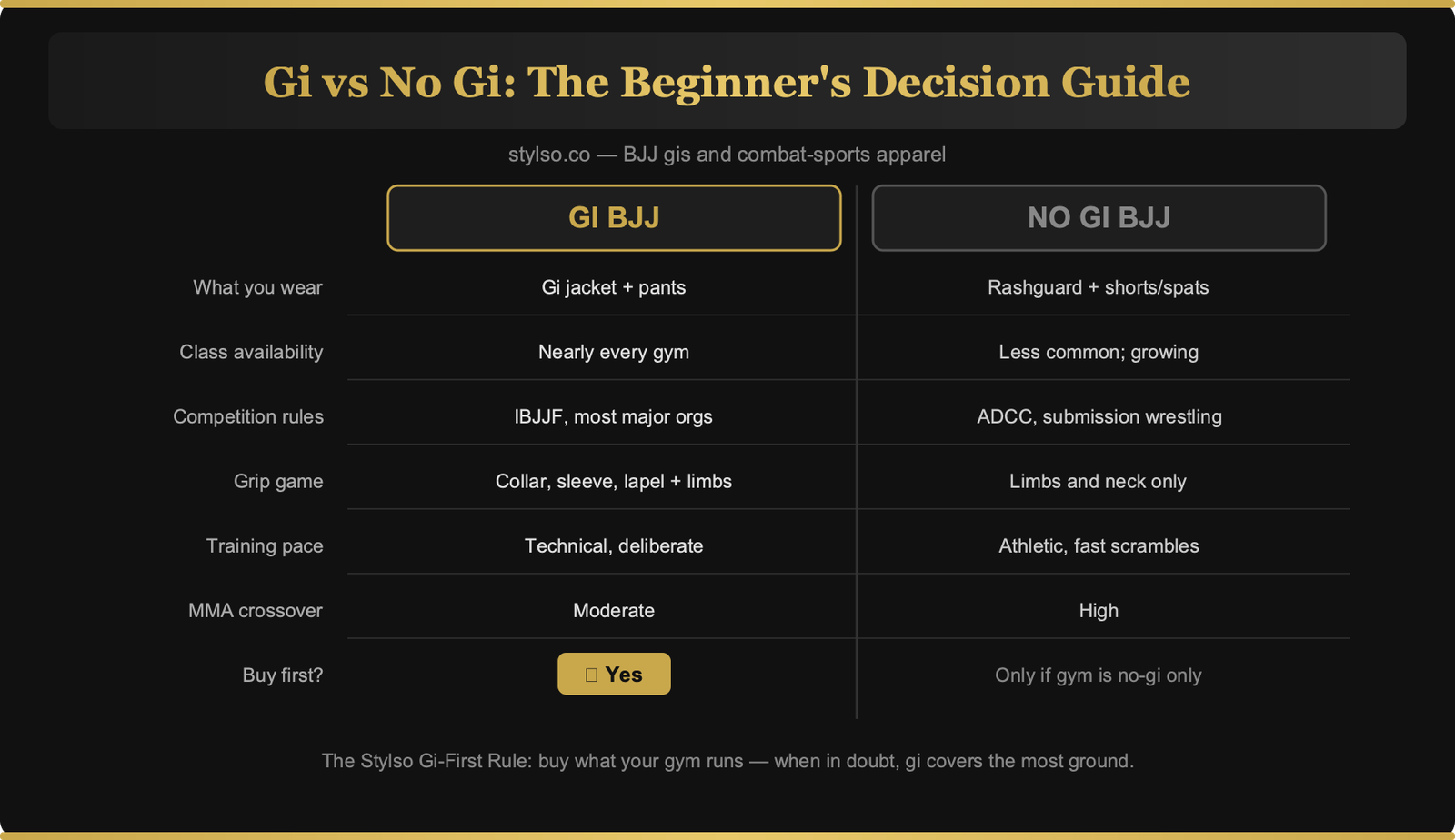
| Gi BJJ | No-Gi BJJ | |
|---|---|---|
| What you wear | Gi (jacket + pants) | Rashguard + shorts or spats |
| Class availability | Nearly every BJJ gym | Less common; growing fast |
| Competition ruleset | IBJJF, most major orgs | ADCC, submission wrestling |
| Grip game | Collar, sleeve, lapel — full range | Limbs and neck only |
| Training pace | Technical, deliberate | Athletic, fast scrambles |
| Crossover to MMA | Moderate (collar grips don’t apply in cage) | High (matches MMA grip game closely) |
| Best first purchase? | ✓ Yes — covers most gyms | Only if your gym is no-gi only |
Shop No-Gi Rashguard on Amazon
Which should you buy first?
Buy a gi first — unless your gym tells you otherwise.
Most BJJ academies run the majority of their schedule in gi. If you walk into a gi class wearing shorts and a rashguard, you’re either watching from the side or borrowing a spare from the lost-and-found. Neither is a great first session.
There’s a technical case too. Gi training slows the game down and forces precision. You learn where your grips should be, why posture matters, and how to move someone with technique rather than just muscle. That base transfers cleanly. Many coaches actively recommend starting in gi because the skills carry over when you later roll no-gi — the reverse isn’t always true.
No-gi is a great supplement. At most academies it’s a supplement, not a starting point.
The Stylso Gi-First Rule: buy what your gym runs. When in doubt, the gi covers the most ground — it’s available at nearly every academy and builds the base that transfers to every other grappling format.
If your gym is no-gi only or MMA-focused: start with a rashguard and shorts. The gi won’t serve you in that environment. Ask your gym’s front desk before you buy — class requirements vary by academy.
Starting with a gi? Here’s where to look
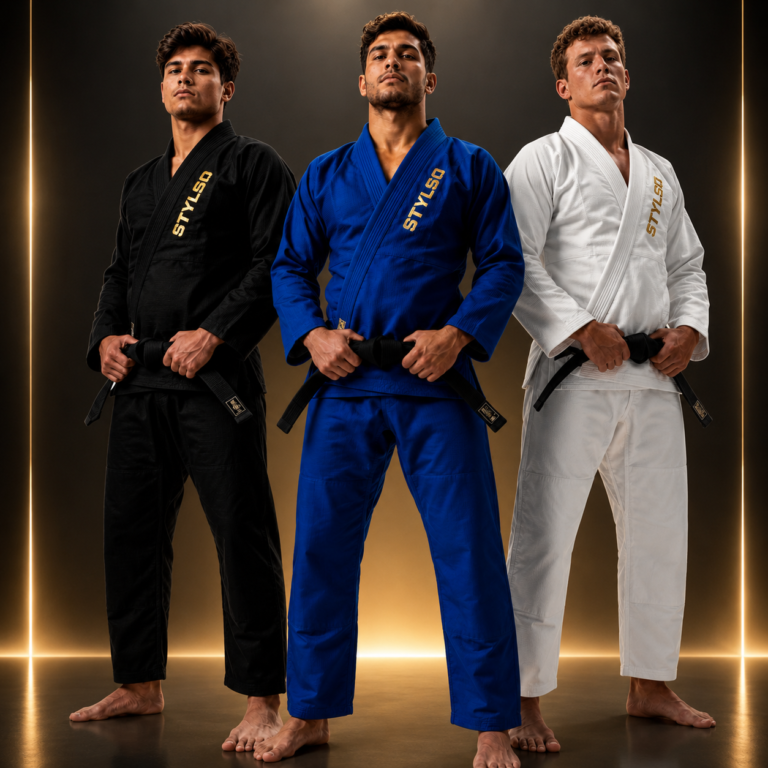
The Stylso pearl-weave BJJ gi is pre-shrunk and IBJJF-approved. It’s built for training — not marketing copy. Check it on Amazon, compare the A-series sizing chart, and order before your first class.
Shop Stylso Men’s Gi on Amazon
Need a full honest comparison of beginner gis? Read our Best BJJ Gi for Beginners guide.
Starting no-gi? Here’s what you need
A rashguard protects your skin from mat burns and a pair of board or grappling shorts keeps you legal in class. That’s the complete kit. You don’t need spats on day one, but they’re worth adding once you’re rolling regularly.
For a breakdown of what to look for in a rashguard, read our Best Rashguard for BJJ guide.
Buying for a child?
Most kids’ BJJ classes run gi. Get a kids’ gi — not a cut-down adult size. Kids’ gis are proportioned for smaller builds; they move and fit differently on the mat.
The Stylso K-series kids’ gi is moisture-wicking and covers sizes K000 through K4 — matched to height and weight. Measure your child before ordering.
For a full guide on what to look for, see our Best BJJ Gi for Kids guide.
Gi sizing: get this right before you order
Gi sizing isn’t the same as clothing sizing. You go by height AND weight — not just one dimension. Use this Stylso A-series chart as your guide:
| Size | Height (cm) | Height (in) | Weight (kg) | Weight (lbs) |
|---|---|---|---|---|
| A0 | 162–168 | 64–66 in | 64–70 | 141–154 lbs |
| A1 | 168–170 | 66–67 in | 70–77 | 154–170 lbs |
| A2 | 170–178 | 67–70 in | 77–86 | 170–190 lbs |
| A3 | 178–188 | 70–74 in | 86–102 | 190–225 lbs |
| A4 | 185–193 | 73–76 in | 104–118 | 229–260 lbs |
| A5 | 190–200 | 75–79 in | 118–136 | 260–300 lbs |
Between sizes? Size up — pearl-weave gis settle slightly after the first few washes. See the full BJJ Gi Size Guide for the complete A and K-series charts.
Free: BJJ Starter Gear Guide
Gi vs No Gi decision table + printable A-series size chart. Know exactly what to buy before your first class.
Do you need both eventually?
Most serious grapplers end up training both gi and no-gi. But you don’t need both on day one — or even in your first year.
The typical progression:
- Start gi — learn the full grip game and build your defensive base.
- Add no-gi after typically 6–12 months once your fundamentals are solid.
Buying no-gi gear before you’ve built your gi base means buying equipment you won’t fully use yet. Lock in the fundamentals first. The no-gi purchase will make more sense once you understand what changes without the jacket.
Frequently asked questions
- Can I wear a rashguard under my gi?
- Yes — many grapplers wear a fitted rashguard under the gi jacket for comfort and rash prevention. It’s allowed in IBJJF competition and at most academies. Some gyms make it optional, some require it. Ask your coach.
- Is no-gi cheaper to get started?
- The upfront kit (rashguard + shorts) costs less than a full gi. But if your gym runs gi classes, you’ll need a gi at some point regardless. Don’t try to save money by buying the wrong gear — you’ll end up buying both. Buy what your gym runs first.
- Can I attend a gi class without a gi?
- No. Gi classes require a gi — the jacket grips are part of the training itself. Show up without one and you’re watching from the side or borrowing from the spare pile. Get the right gear before your first class.
- What makes a gi IBJJF-legal?
- IBJJF requires a gi in white, blue, or black that meets their fit and patch standards. Sleeve length, collar thickness, and badge placement are all regulated. Check IBJJF.com for current rules before entering any competition — regulations can change.
- Does gi training help no-gi?
- Yes. Gi training forces you to be precise because the slower pace and extra grips make sloppy technique visible immediately. That precision base transfers clearly when you remove the jacket. Many coaches actively recommend starting gi for this reason.
- When should I add no-gi gear?
- When your gym runs no-gi classes and you want to train in them. Don’t buy equipment for a class you’re not attending yet. Add it when you need it — not before.
Stylso Editorial Team | About Stylso