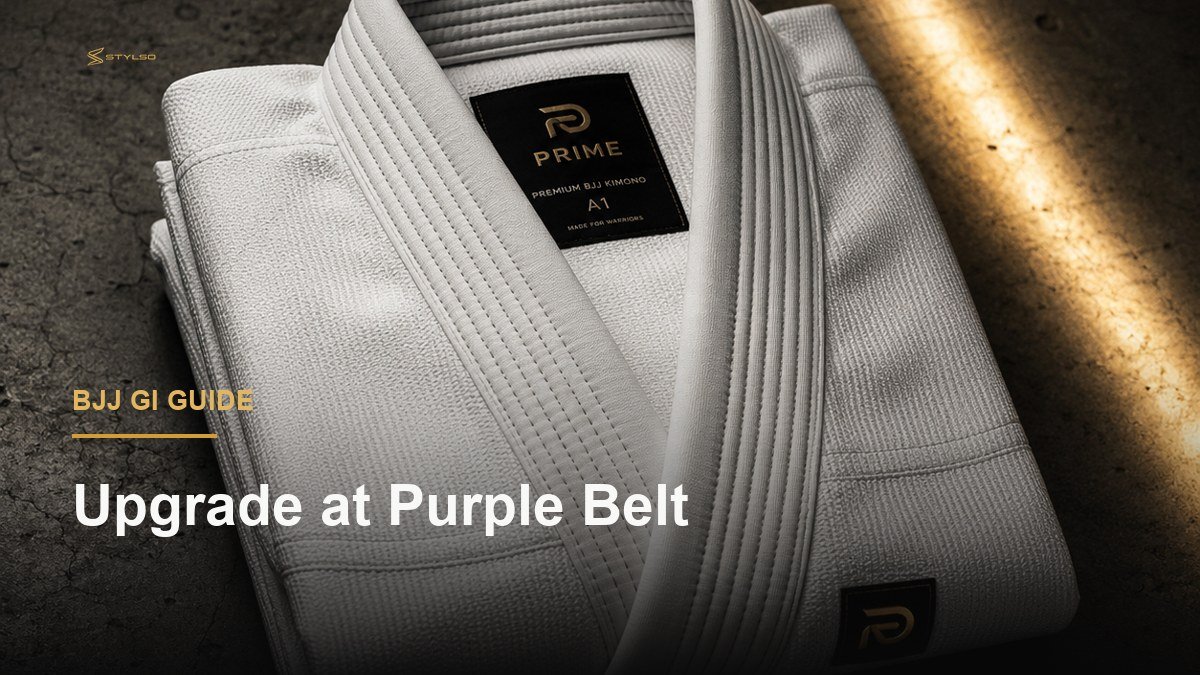
Best BJJ Gi for Purple Belt: 4 Honest Picks for 2026
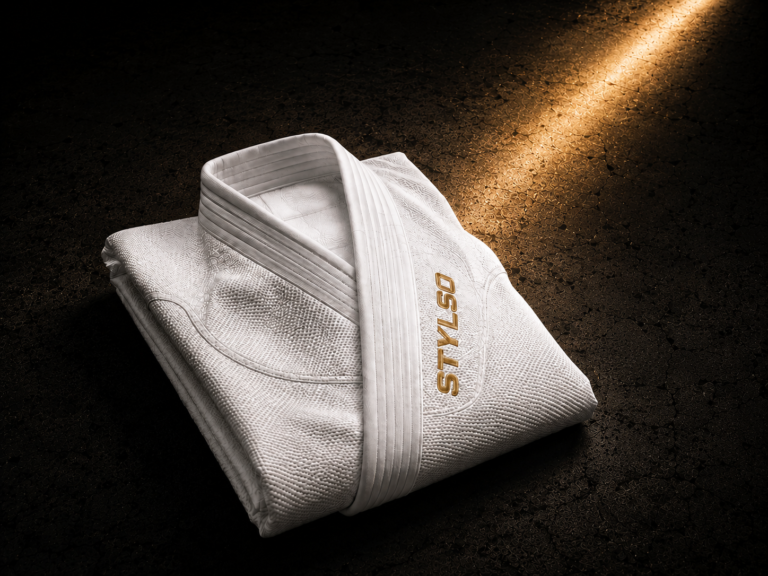
The best BJJ gi for purple belts is a pearl or gold weave gi between 350–550 GSM — lighter for competition, heavier for daily hard training. IBJJF compliance, pre-shrunk fabric, and a tighter collar matter more at this stage than brand logos. Check the current price on Amazon; picks below cover every use case.
By Stylso Editorial Team · Stylso
Here’s a thing nobody mentions when you get your purple belt: your old gi feels wrong now.
Not wrong like it doesn’t fit. Wrong like it’s working against you. The collar’s too floppy and your training partners are eating your lapel all session. The fabric’s heavy enough that you’re gasping at the end of drilling when you used to be fine. You start noticing the gis your higher belts wear — slimmer cut, crisper collar, lighter on the body. That’s not coincidence. They’ve figured out something you’re about to figure out too.
- Purple belts need two different gis: a lighter one for competition weigh-ins and a tougher one that survives daily hard sparring.
- Pearl or gold weave holds up better than single weave under constant training pressure — single weave thins out fast when you’re rolling 4–5 times a week.
- Pre-shrunk fabric is non-negotiable at this stage — you’re washing your gi constantly, and an unshrunk gi will change size on you inside three washes.
What Changes at Purple Belt
At white and blue belt, you’re mostly focused on surviving. The gi is a uniform — it just needs to be legal and not embarrassing. By purple, that changes. You’re competing more seriously, rolling harder, and washing the gi two or three times a week. The gi itself becomes a real training variable.
Weight matters for competition. A heavy gi adds real grams at the scale. At IBJJF events, weigh-ins include your gi and belt. A 550 GSM gi can weigh 1.5–2 kg by itself. That’s weight you could have spent on your body. Most serious purple belts own a lighter gi (350–450 GSM) specifically for tournament day. Our BJJ gi weight guide (GSM explained) breaks down exactly what those numbers mean and how they affect you on the scale.
Weave matters for durability. Single weave is thin. It’s fine when you’re training twice a week as a beginner. But when you’re rolling hard five days a week, single weave thins and tears faster than you’d like. Pearl weave or gold weave at 450–550 GSM holds up to that load. The collar stays stiff, the fabric doesn’t pill, and the seams don’t blow out mid-roll.
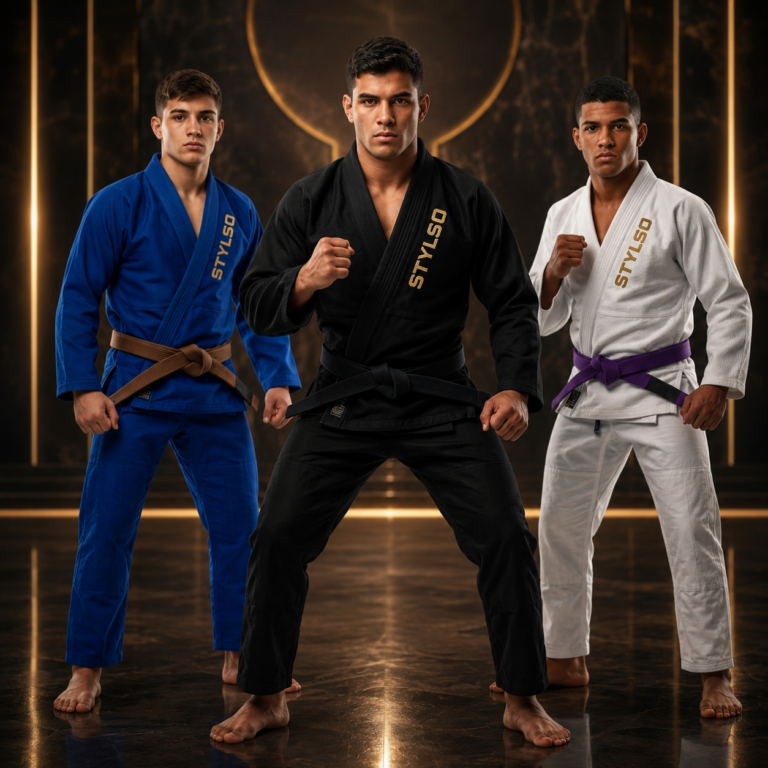
IBJJF compliance isn’t optional anymore. White, blue, or black only. No unorthodox patches in the wrong places. If you’re competing at IBJJF events — or their affiliates — your gi needs to meet construction specs on sleeve length, collar width, and lapel thickness. A flashy gi that fails inspection is a wasted entry fee.
Collar stiffness is a tactical detail. A thicker, reinforced collar is slightly harder for your opponent to grip cleanly. That’s a small edge, but at purple belt, small edges matter. A floppy collar is a handle your training partners are happy to use.
Pre-shrunk is a washing problem, not a buying problem. You’re washing this thing constantly. An unshrunk gi shifts a full size in hot water. Buy pre-shrunk, and the sizing you order is the sizing you keep — through 200 washes.
The Best BJJ Gis for Purple Belts
Four picks. Each one fills a different slot in a serious grappler’s rotation. No fake specs, no fabricated ratings. Check the current price on Amazon — it changes and the listing always shows the real number.
| Pick | Weave | Weight (GSM) | Best For | IBJJF Legal? | Shop |
|---|---|---|---|---|---|
| Stylso Men’s Gi Competition pick |
Pearl weave | Training weight (check listing) | Tournament day + daily training; white, blue, black available | Yes — white, blue, black; approved construction | Shop on Amazon |
| Lightweight Training Gi 350–400 GSM pick |
Pearl or ripstop | 350–400 GSM | Hot gyms, weigh-in sensitive competitors, summer training | Yes — check colour before buying | Shop on Amazon |
| Budget-Friendly Upgrade Value pick |
Single-double weave | 400–480 GSM | Upgrading from a beginner gi without spending full comp-gi money | Check listing — white/blue/black only | Shop on Amazon |
| Premium Daily Trainer Heavy-use pick |
Gold weave | 500–550 GSM | 5-day-a-week grapplers who need something that outlasts a year of hard rolling | Yes — white/blue/black standard | Shop on Amazon |
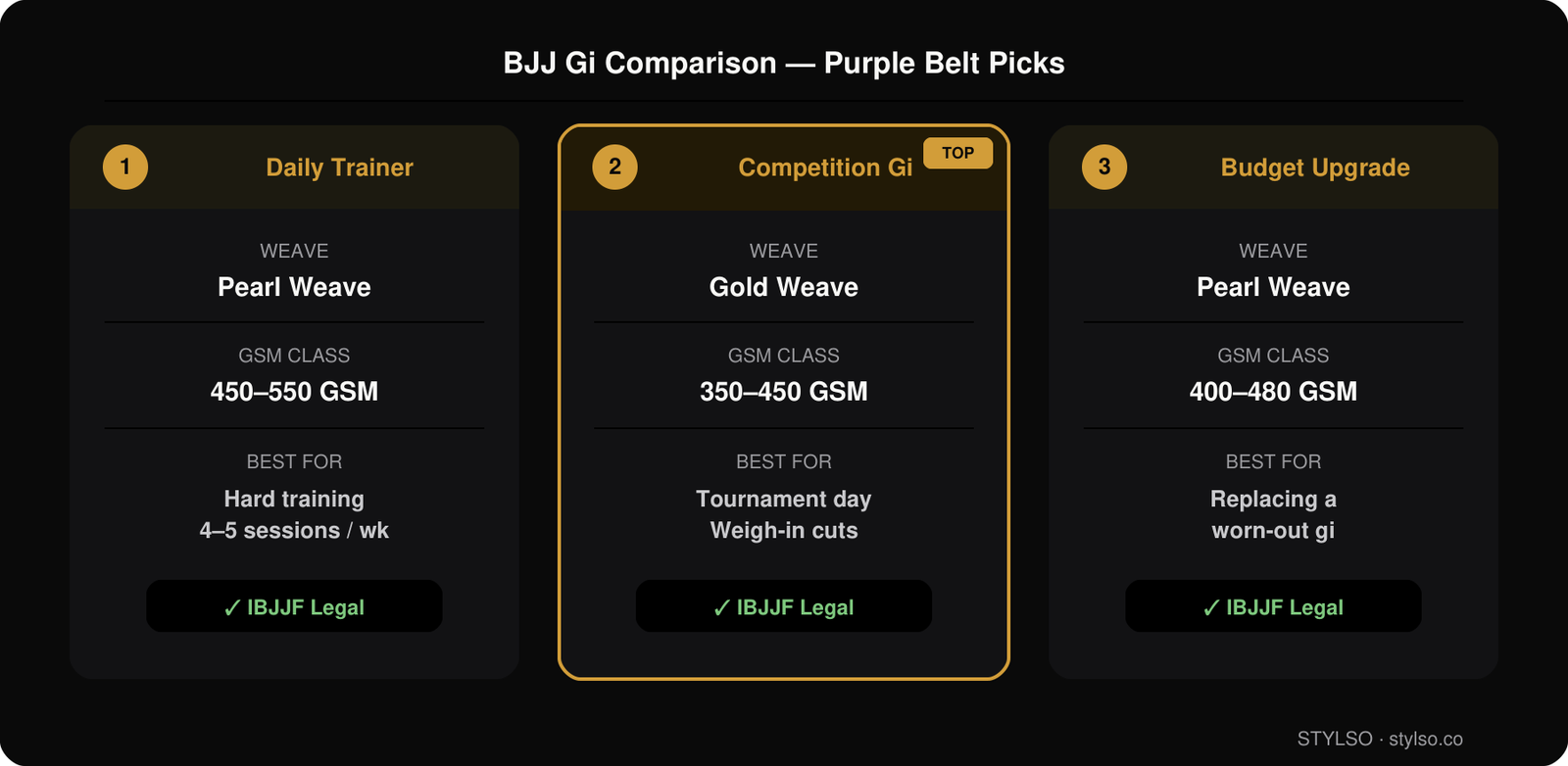
Check the current price on Amazon — we don’t list prices here because they shift. The listing is always accurate.
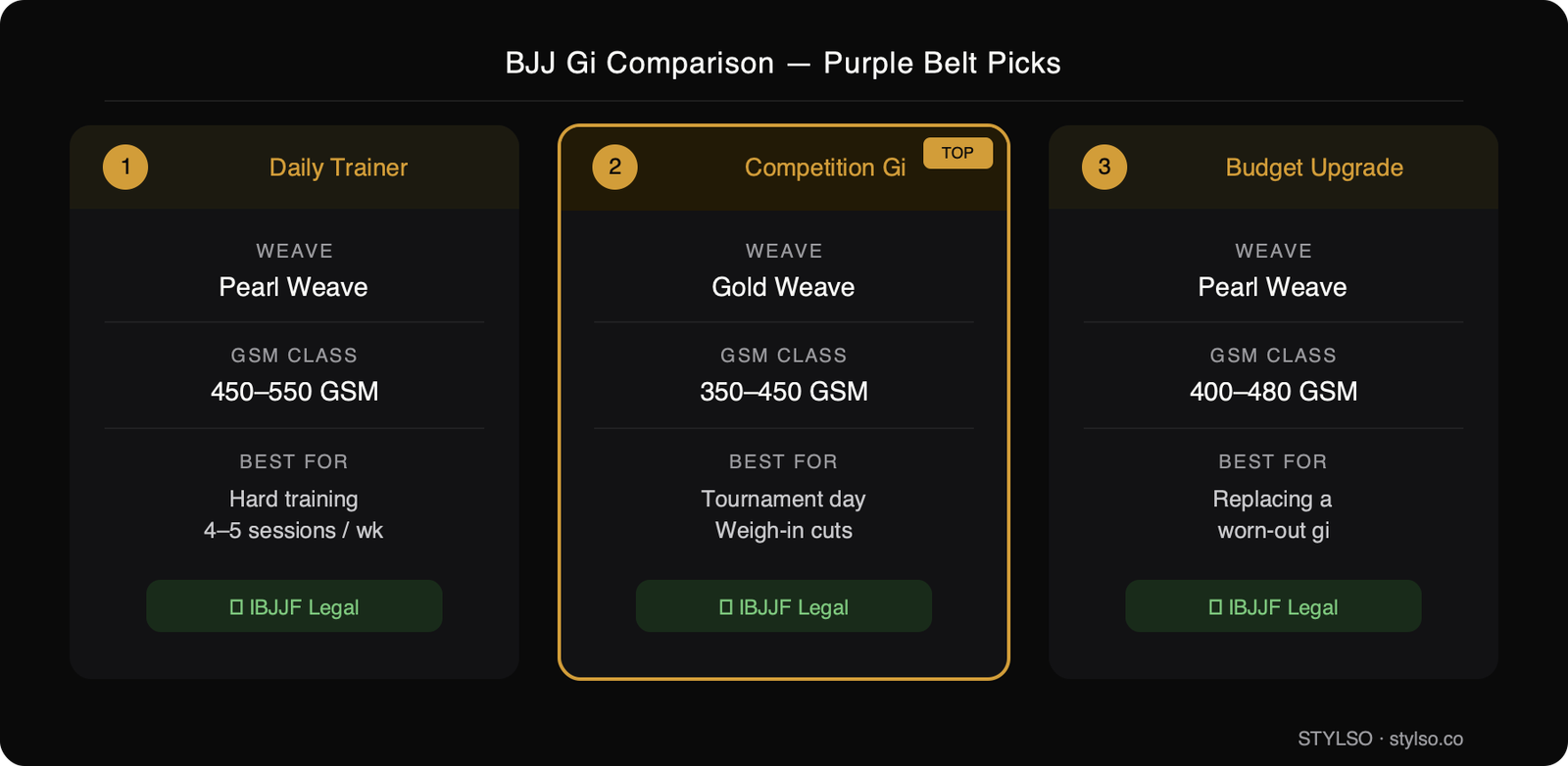
Not sure whether lightweight or heavier is right for where you train? Read through the softest BJJ gi options for the full breakdown on fabric feel vs. durability trade-offs. And if you’re still watching your budget while upgrading, the best value BJJ gi guide lays out where to spend and where to save.
Size & Fit for Purple Belts
You probably know your size by now — but purple belt is also when sizing decisions get more intentional.
Competition gi: size down slightly if you’re between sizes. At a tournament, a slightly slimmer fit means less fabric for your opponent to grip. It also means you’re closer to the actual weight of the gi at the scale. Between A2 and A3? Try A2 first for your comp gi if you’re at the lighter end of the A3 range.
Training gi: size for comfort. You’re drilling for an hour and then sparring for another hour. A gi that pulls at the shoulders because it’s a half-size small makes you miserable by the end of the session. Go true to size or one up for your daily trainer.
Jacket vs. pants discrepancy. Some grapplers have longer torsos or longer legs that put them in different sizes for the top and bottom. Most premium gis sell tops and bottoms separately for that reason — check the listing before assuming it’s a set.
If you’ve ever been unsure whether you’re an A2 or A3, the A2 vs A3 sizing guide walks through height, weight, and body proportion — it’s the clearest breakdown of that specific decision.
One Drill for Purple Belts: The Judo Collar Grip Entry
Here’s something from judo that most BJJ players at purple belt haven’t drilled enough: the sleeve-and-collar entry with a strong high collar grip.
In judo, the standard grip is ippon seoi nage grip — your right hand goes to the opponent’s left collar, high up near the neck, thumb inside. The grip is deep and tight, not lazy. Judokas drill this entry thousands of times because the grip is where the technique either works or doesn’t.
In BJJ, your collar grip matters the same way — especially for collar chokes from guard and for controlling posture. But most BJJ players develop a sloppy collar grip because they’ve never drilled the entry the way judokas do.
The drill (do it with a partner, slowly):
- Start in closed guard. Your right hand grabs the collar high — thumb inside, four fingers outside, knuckles pointing toward their spine.
- The moment you grip, your elbow drops and stays close to your body. Don’t let it flare. The grip is strong because your shoulder is connected, not because your hand is squeezing harder.
- Your partner actively tries to strip the grip for 10 seconds. You maintain without muscling — just position and elbow connection.
- Switch. They grip, you strip.
Do 5 rounds of 10 seconds each side, then immediately flow roll from closed guard. You’ll notice the quality of your collar control is completely different.
What this has to do with your gi: this drill exposes collar quality fast. A floppy, unsupported collar bunches when you grip deep. A reinforced collar — like the kind on a proper pearl weave competition gi — stays rigid and gives your partner a consistent grip surface to work against. You learn the drill correctly because the gi behaves correctly.
FAQ
What GSM is best for a purple belt gi?
It depends on what you’re using it for. Competition day: 350–450 GSM keeps you lighter at the scale. Daily hard training: 450–550 GSM holds up better over hundreds of sessions. Most purple belts end up with one of each. See our BJJ gi weight guide (GSM explained) for the full breakdown.
Does a purple belt need an IBJJF-approved gi?
If you’re competing at IBJJF or affiliated events, yes. The approval covers construction — sleeve length, collar thickness, lapel width — and colour. White, blue, and black are the only legal options. Your specific gi brand doesn’t need to be on an “approved list,” but it needs to meet the construction specs when inspected.
Is pearl weave or gold weave better for purple belt training?
Both are solid choices over single weave. Pearl weave is slightly lighter and more common. Gold weave is thicker and typically more durable for heavy daily use. If you’re training 4–5 days a week and the gi needs to survive a year of that, gold weave is worth considering. For competition, pearl weave is the standard.
Can I use the same gi for training and competition?
You can, but most purple belts don’t recommend it after a while. A competition gi that you also train in every day wears out before it should. Most serious competitors keep a “comp gi” that they only wear to tournaments and a separate daily trainer. It makes both gis last longer and keeps your comp gi in good condition for weigh-ins.
Does gi fit actually affect my game at purple belt?
More than most people think. A gi that’s too big gives your training partners more fabric to grip — you’re making their collar chokes and sleeve controls easier. A tighter, well-fitted gi is a small tactical edge and also feels better to move in during long training sessions. Fit matters more as the level goes up, not less.
Free: Purple Belt Gi Buying Cheat Sheet
GSM guide, weave comparison, IBJJF colour rules, and a one-page sizing reference — instant PDF download, no spam.
Stylso Editorial Team — honest gear guides for grapplers. Real product line, zero fake specs. About Stylso