Most BJJ gis fail in the first year — and it’s almost never the fabric. A quality gi lasts 2–5 years of regular training with proper care: cold wash, air dry, hang it the minute you get home. Skip those habits and that drops to 6–12 months. Here’s what actually kills a gi, and five fixes that buy you years more. Stylso — pearl-weave BJJ gis for men and kids, available with verified reviews on Amazon.
- Budget gis last 6–18 months; quality pearl-weave gis last 2–5 years — the difference is care as much as cost
- The collar and knees fail first — heat drying and wet bags are the main killers
- Two gis rotating is the single biggest lifespan move for grapplers who train 3+ times a week
What Actually Affects How Long a BJJ Gi Lasts
Four things drive gi lifespan. Get these right and your gi outlasts most people’s interest in the sport. Get them wrong and you’re replacing it inside a year.
| Factor | What kills it | What saves it |
|---|---|---|
| Wash temperature | Hot water shrinks the collar, warps the weave | Cold wash, every time — no exceptions |
| Drying method | Tumble-drying on high cracks the rubber collar core and shrinks the jacket | Air-dry flat or hang in shade — tumble-dry is the #1 gi killer |
| Damp time | Leaving it wet in your bag for hours breeds bacteria and breaks down fibres | Hang it out the second you get home — even just off your car seat |
| Weave quality | Single-weave compresses flat under heavy rolling and doesn’t recover | Pearl weave — tighter weave, holds its shape, survives the mat better |
How Long Do Different BJJ Gis Last? (Honest Breakdown)
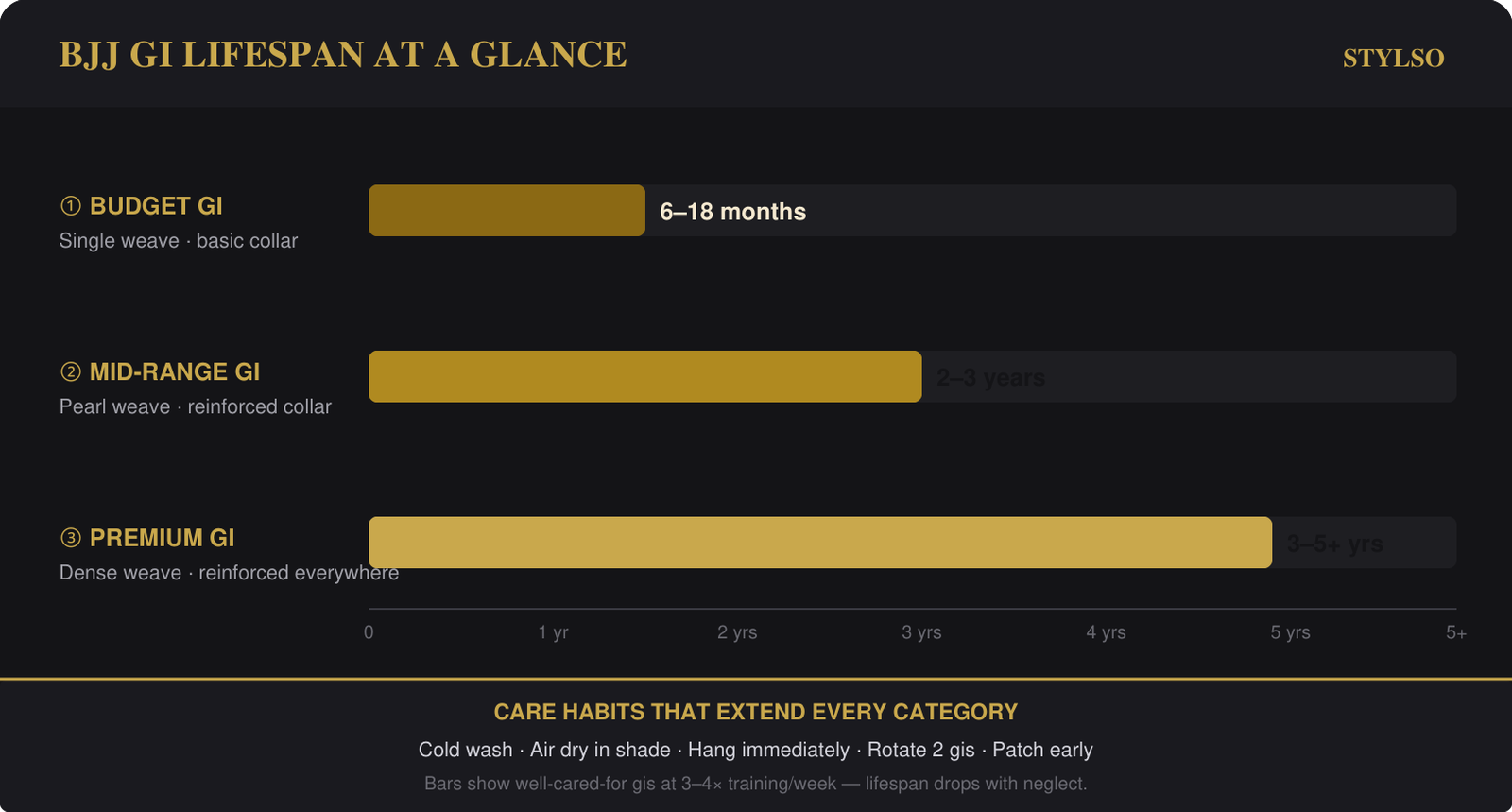
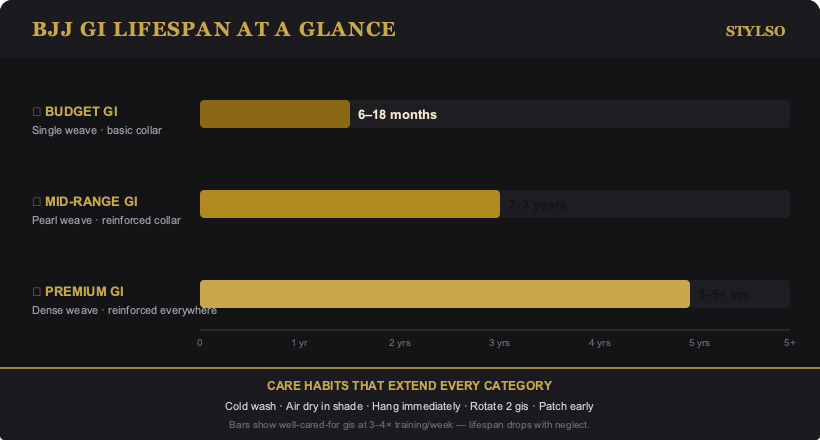
There’s no universal answer because how you train matters as much as what you bought. But here’s a real-world framework:
| Gi type | Typical lifespan | Training load | First failure point | Shop |
|---|---|---|---|---|
| Budget gi Single weave, basic collar |
6–18 months | 2–3×/week | Collar frays, knees go thin | Shop → |
| Mid-range gi Pearl weave, reinforced collar |
2–3 years | 3–4×/week | Skirt hem wear, patch edges lift | Shop → |
| Premium gi Dense pearl/gold weave, reinforced everywhere |
3–5+ years | 4–6×/week | Embroidery wear (often outlasts the gym membership) | Shop → |
Check the current price on Amazon before you buy — listings update regularly and you’ll often find a mid-range gi closer to budget territory. The Amazon listing also carries the brand’s own fit and care notes.
5 Habits That Double Your Gi’s Life
None of these are hard. Skipping even one consistently costs you six months of lifespan.
- Cold wash only. Hot water is the gi’s enemy. It shrinks the collar unevenly and loosens the weave. Drop the temperature — and stop adding fabric softener. Softener coats the fibres, traps bacteria, and actually speeds breakdown. Plain cold detergent wash. Done.
- Air-dry — no exceptions. Tumble-drying is the number-one killer. The rubber core inside a BJJ gi collar cracks from heat; once it cracks, the collar never grips or protects the same way. Hang the gi in the shade. Direct sunlight bleaches the colour and weakens the fibres over time. Shade or inside is fine.
- Hang it immediately after training. This one saves the fabric AND the person training next to you. A wet gi in a sealed bag for 12 hours grows bacteria faster than a petri dish. Bacteria eat fibres. They’re also why a gi develops that persistent smell you can’t wash out — because by the time you smell it, it’s already set in. Hang it out as soon as you get home. Your gi, your training partners, your car — all better for it.
- Rotate two gis. If you train 3–4 times a week on one gi, it never fully dries between sessions. Damp fibres weaken faster than dry ones. Two gis means each one gets a full 48-hour rest cycle. This single habit is worth more lifespan than buying premium over budget.
- Patch weak spots before they split. The knees and inner collar brace are the first failure points. A small fraying spot caught early takes five minutes and a few stitches. Leave it and you’re replacing the whole gi two weeks later when the tear spreads. Check the knees and collar seams every month.
The Judo Lesson Your Gi Needs
Judoka have been throwing each other in thick cotton and synthetic gis since the 1880s — and the tradition is simple: hang the judogi after every session, every time, no exceptions. No debate. No “I’ll do it in the morning.” It’s the one habit that separates the grapplers who replace their gi annually from the ones still in the same gi at their five-year anniversary. The Japanese word for it is soji — the after-practice care ritual. Wipe down the mat, hang your gear, bow out. Borrow the tradition. Ten seconds when you get home saves you a gear purchase.
Signs Your Gi Is Done
You don’t need to replace a gi the moment it looks worn. These signs mean it’s actually time:
- Collar cracks or splits. The rubber core inside is gone. It won’t protect your neck or grip the same way. This isn’t fixable — it’s end of life.
- Knee fabric goes translucent. Hold it up to the light. If you can see through it, one hard knee slide splits it completely. Replace it before a training partner’s grip goes through the fabric during a pass.
- Patches keep lifting no matter how many times you re-stitch them. When stitches won’t hold, the base weave has lost its tensile strength. Patches need something to grip.
- A smell that survives washing. Your training partners will quietly mention this before you notice it yourself. If the smell won’t wash out after two cold cycles, the bacteria have colonised the fibres permanently. The gi’s done.
How Many Gis Do You Actually Need?
Training 3–4 times a week? Two gis. No argument needed — it’s the rotation rule above, and it extends both gis significantly while keeping hygiene where it should be.
Competing? Add a third: a dedicated competition gi. Keep it cleaner, less beat-up. You want it looking sharp on the day, not smelling like a Tuesday night sparring session.
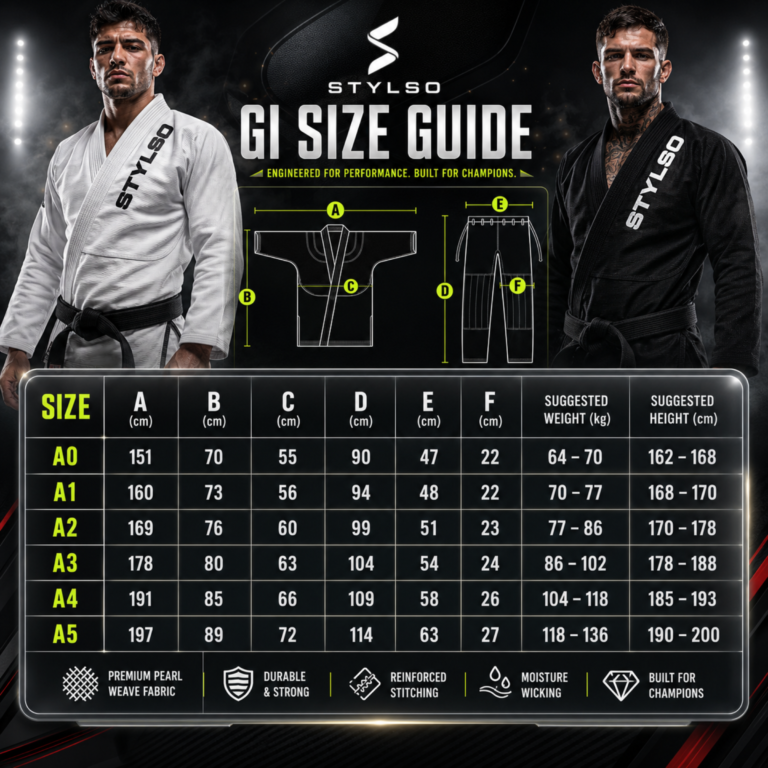
Just starting out? One good gi is fine. But get the fit right from the beginning — a gi that fits correctly takes less stress at the seams and wears more evenly over time. Our BJJ gi measuring guide walks through exactly how to get your size right before you order. The A2 vs A3 guide is also useful if you’re sitting between standard sizes.
Shop Stylso Men’s Gi on Amazon
Shop Stylso Kids’ Gi on Amazon
Free: BJJ Gi Care & Lifespan Checklist (Printable PDF)
One page: every care habit ranked by impact, the warning signs to watch, the wash rules that add years, and a sizing quick-reference. Get it instantly.
Frequently Asked Questions
How long does a BJJ gi last on average?
With proper care — cold wash, air dry, hang immediately — a quality BJJ gi lasts 2–5 years of regular training. Budget gis average 6–18 months; premium pearl-weave gis often reach 3–5 years or more.
What wears out first on a BJJ gi?
The collar and the knees. The collar rubber core cracks from heat drying; the knee fabric thins from takedowns, guard passes, and mat kneeling. Both are clear end-of-life signals when they go.
Should I tumble-dry my BJJ gi?
No. Tumble-drying on high heat cracks the collar rubber core and shrinks the weave unevenly. Air-dry only — hang it in the shade. It’s the single easiest way to add a year or more to your gi’s life.
How often should I wash my BJJ gi?
After every session. Bacteria and sweat break down gi fibres quickly. Cold wash immediately after training and hang to dry — never leave it wet in your bag overnight.
Does washing a gi damage it?
Cold washing doesn’t damage a well-made gi — it’s the hot wash and tumble-dry that do damage. Regular cold washing actually extends a gi’s life by preventing bacterial buildup that weakens fibres over time.
Does the weave type affect how long a gi lasts?
Yes. Pearl weave and gold weave gis are denser and more durable than single-weave gis under regular rolling pressure. A single-weave gi is lighter but compresses and wears faster. For longevity, pearl weave is the better choice.