No-gi BJJ is Brazilian Jiu-Jitsu practiced without the traditional gi — the woven cotton jacket, pants, and belt. You train in shorts and a rashguard instead. The grips change, the pace picks up, and the game shifts. But the core submissions stay the same. Most gyms train both formats, and you’ll likely end up doing both too.
Key Takeaways
- No-gi = grappling in shorts and a rashguard, without the gi uniform
- Grips shift from collar and sleeve to wrist, neck, ankle, and body control
- Most gyms run gi and no-gi classes — beginners can start with either, though gi slows the game down, which helps early
What Is No-Gi BJJ?
Brazilian Jiu-Jitsu splits into two formats: gi and no-gi. The gi is the heavy cotton uniform — jacket, pants, and a ranking belt. In gi BJJ, the fabric itself is part of the game. Grapplers grab collars, sleeves, and lapels constantly. It’s in the rules; it’s woven into the technique.
No-gi strips that away. No jacket. No belt. You wear compression shorts or board shorts and a rashguard. The body’s natural contact points become the only grips: wrists, ankles, the back of the neck, the hips. Same submissions. Different timing.
Both formats share the same core rules — taps, positions, submissions. The difference is texture and tempo. No-gi tends to be faster and sweatier. There’s less to grab, so takedowns and scrambles happen differently. You’ll hear people say no-gi feels more like wrestling; that’s not wrong.
Gi vs No-Gi: What Actually Changes
| Gi | No-Gi | |
|---|---|---|
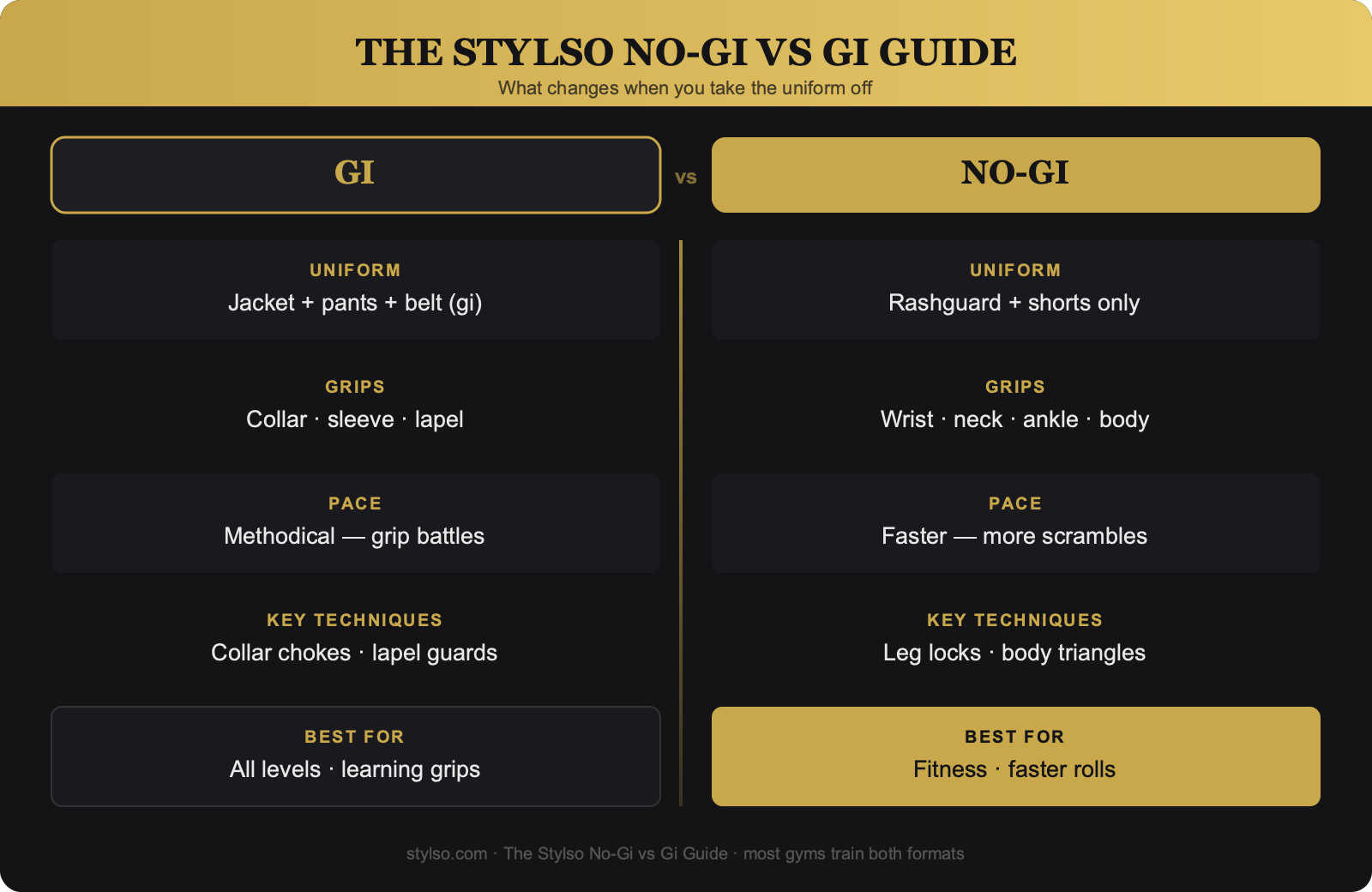
| Uniform | Jacket + pants + belt | Rashguard + shorts |
| Grips | Collar, sleeve, lapel | Wrist, neck, ankle, body |
| Pace | Methodical — more grip battles | Faster — more scrambles |
| Key techniques | Collar chokes, lapel guards | Leg locks, body triangles |
| Gear cost | Gi + belt to start | Rashguard + shorts only |
| Best for | All levels, especially beginners | Fitness focus, wrestling backgrounds |
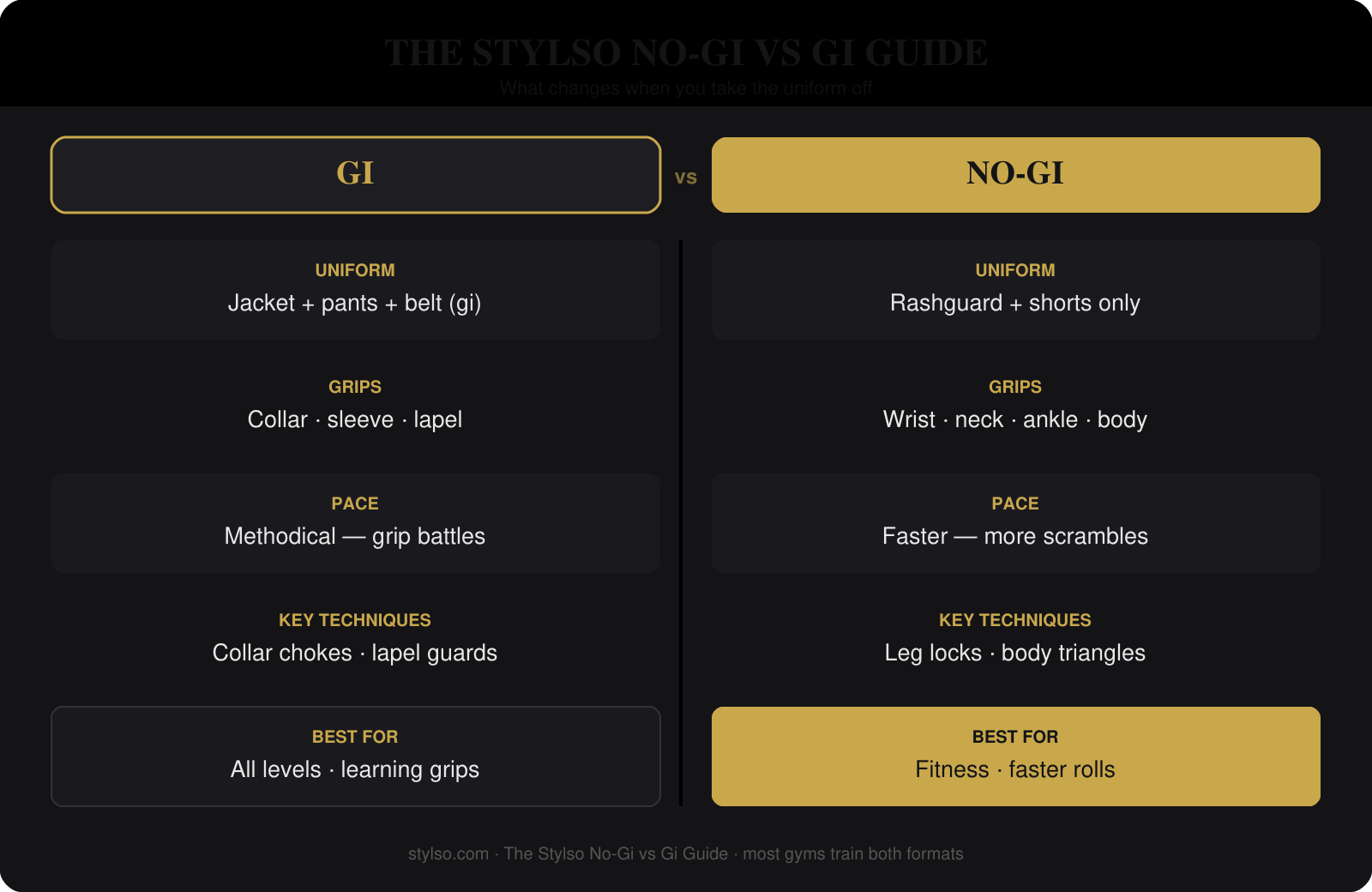
Both formats use armbars, rear-naked chokes, triangles, and heel hooks. What you can’t do in no-gi is grab the clothing — it’s a foul in competition. So any technique that depends on a collar grip or a lapel wrap doesn’t cross over.
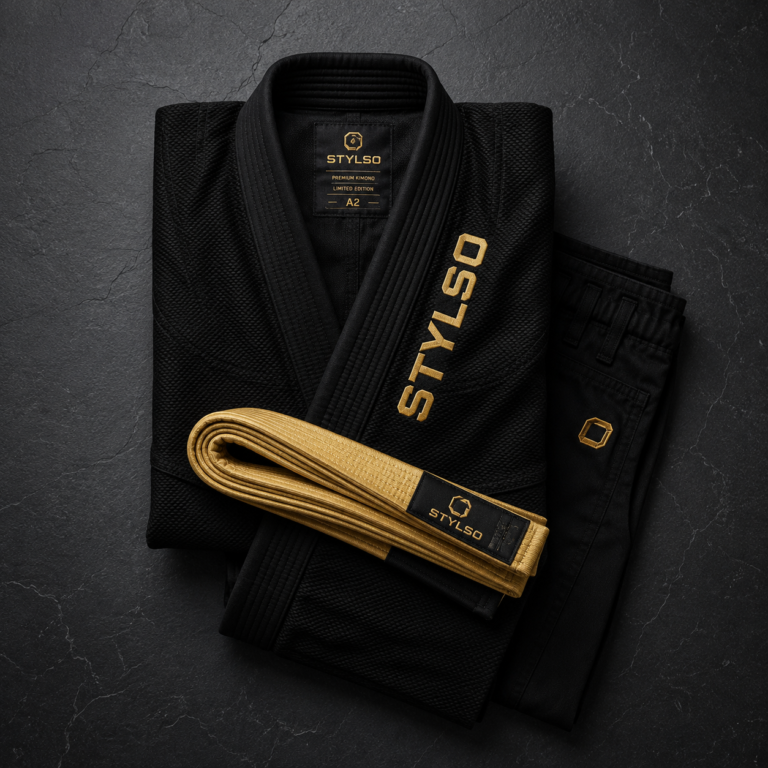
The Stylso men’s gi is IBJJF-approved and built for both gi and the transition to no-gi grappling. Check the current price on Amazon.
Shop on Amazon — Stylso Men’s Gi
The Grip Shift — and One Drill to Feel It
This is the biggest mental adjustment. In gi training, you hook a sleeve and control an arm at a distance. In no-gi, that same grip is illegal — grabbing clothing is a foul. So you shift to grabbing the wrist directly.
It sounds simple. It isn’t, until you drill it.
The wrist pummeling drill is the fastest way to build no-gi grip instincts. Here’s how it works:
- Stand chest-to-chest with a partner, both standing.
- Your left hand grabs their right wrist. They grab yours at the same time.
- Rotate — your right hand grabs their left wrist, releasing the first grip smoothly.
- Keep alternating, staying connected, not fighting hard. It’s a flow drill.
- Do 3-minute rounds. Switch partners. Repeat 3 times.
Most coaches teach this drill in the first no-gi class. It trains the no-gi reflex: secure the wrist before you get secured. It also makes your gi game sharper — wrist control is useful in both formats. One drill, two games improved.
Cross-discipline note: Wrestling uses this constantly. Folkstyle and freestyle wrestlers spend hours on wrist control as the setup for double-legs and snapdowns. If you’ve ever watched college wrestling, almost every scramble starts with a wrist fight. No-gi BJJ borrows this directly — so if you have a wrestling background, you’re already ahead.
What to Wear for No-Gi Training
You don’t need much. That’s one of the appeals.
- Rashguard — fitted compression fabric, long or short sleeve. It protects your skin from mat burns, wicks sweat, and gives your partner something to hold onto that won’t rip a seam. Not optional.
- Shorts — board shorts or compression shorts. No pockets, no metal zippers, no drawstrings that stick out. Competition rules (and common courtesy) ban anything that can catch fingers.
- Mouthguard — same as gi training. Scrambles happen fast. Get one before your first class.
No belt. No jacket. That’s the whole kit.
If you’re not sure what rashguard fits you, check the Rashguard Size Guide for BJJ — it covers the common brand sizing differences and what to do if you’re between sizes. For no-gi shorts, the Best No-Gi Shorts for BJJ guide breaks down the three main types.
Find Your Rashguard — Buyer’s Guide
Should Beginners Start Gi or No-Gi? (The Stylso 3-Question Check)
Most gyms give you both. But if you’re choosing where to start, three questions cut through the noise:
- Does your gym have a structured beginners’ gi class? → Start there. Gi slows things down — you’ve got more to grab, which makes technique easier to absorb at first. Most coaches recommend it for exactly this reason.
- Do you have a wrestling or combat sports background? → No-gi will feel natural right away. You can start with no-gi and layer in the gi game later.
- Just want to get moving, stay fit, and roll? → No-gi. The tempo is higher, the gear is cheaper, and you can show up in athletic shorts you already own.
There’s no wrong answer here. The format you’ll stick with is the one you enjoy. Most grapplers end up training both within six months. The real question isn’t gi or no-gi — it’s which door gets you through the gym entrance in the first place.
Rashguard Size Quick-Reference
Rashguards run compression-fitted. Here’s a general guide — always check the brand’s page for exact measurements.
| Size | Chest (approx.) | Weight (approx.) |
|---|---|---|
| S | 34–37 in | 130–155 lbs |
| M | 37–41 in | 155–175 lbs |
| L | 41–44 in | 175–200 lbs |
| XL | 44–48 in | 200–220 lbs |
| XXL | 48–52 in | 220–250 lbs |
Fit tip: if you’re between sizes, size up for no-gi shorts (you need room to move). Rashguards can go true-to-size or one down for a tighter compression fit. See the full rashguard sizing guide for brand-specific breakdowns.
Free: BJJ No-Gi Starter Guide (PDF)
Gear checklist, wrist drill steps, rashguard sizing, gi vs no-gi comparison — one printable page. Get it instantly.
FAQ
What does no-gi mean in BJJ?
No-gi means training Brazilian Jiu-Jitsu without the traditional gi uniform. You wear shorts and a rashguard instead. Grips shift from the fabric — collar, sleeve, lapel — to the body: wrist, neck, ankle, and hip. The submissions are the same; the texture of the game is different.
Is no-gi BJJ harder than gi?
Neither is harder — they’re different challenges. Gi training is slower and more grip-dependent, which can feel more technical at first. No-gi is faster with fewer control points, which rewards athleticism and wrestling instincts. Most athletes who train both say they make each other better.
Can you use gi techniques in no-gi?
Most of them, yes — any position or submission that doesn’t rely on grabbing the fabric. Triangles, armbars, rear-naked chokes, heel hooks, and guard passing all carry over. Collar chokes and lapel guard systems don’t, because gripping clothing is a foul in no-gi competition.
Do I need a gi to start BJJ?
Not if your gym offers no-gi classes. But a gi is worth getting early — it opens more class options, slows the game down for learning, and most beginners’ programs run gi format first. Check the best BJJ gi for beginners if you’re ready to pick one.
What’s the difference between no-gi BJJ and wrestling?
Wrestling focuses on takedowns and controlling dominant positions (back, top pin). No-gi BJJ adds submissions — chokes and joint locks — and a deeper groundwork game once you’re on the mat. Wrestling techniques transfer directly to no-gi, especially setups for double-legs, snapdowns, and back exposure.
Is no-gi BJJ good for self-defense?
Yes — arguably more directly applicable than gi BJJ for street situations, since no real-world attacker will be wearing a gi. No-gi movements, clinch control, and submissions apply directly to real-world grappling. Both formats build useful skills; no-gi just removes the gi-specific grip dependency.